





The decision to abrogate Article 370 was hard, and when it was done, it was met with both jubilation and criticism. Those criticising the move said that this was an attempt to snatch privileges away from Jammu & Kashmir.
Recently, Mehbooba Mufti’s PDP raised the issue in the Jammu & Kashmir legislative assembly and sought a resolution for the restoration of special status. To be sure, these are just theatrics, and the issue is done and dusted, and J&K has woken up to a new dawn.
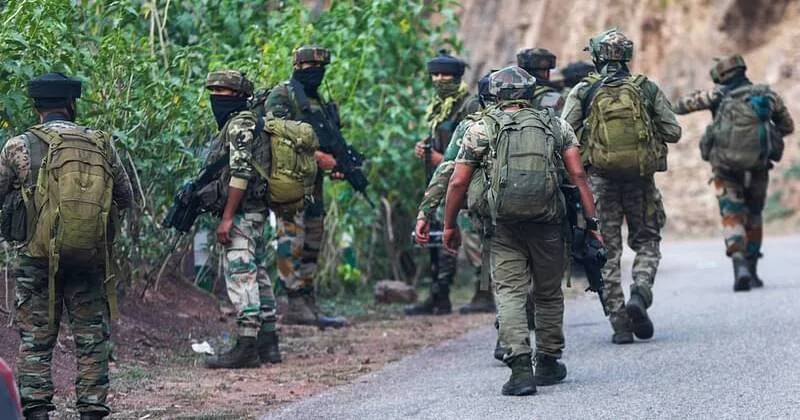
Those who have created fake narratives have managed to dominate the discourse, but the fact remains that statistics do not lie. There has been a major dip in the number of terror incidents in J&K since the abrogation of Article 370.
Statistics do not lie
Data analysed by the J&K police and Intelligence Bureau suggests a clear drop in terror incidents since the decision was taken in August 2019.
There were 1,458 terror incidents in the pre-abrogation period. This data was collected between April 2, 2014, and July 31, 2019. Data between August 2019 and December 2 2024 shows that the number of terror incidents had come down and stood at 896.
In the pre-period, the number of terrorists killed was 420, while in the post-era, it was 517. Further, the infiltrations, too, had remarkably gone down. In the pre-period, it was 469, while in the post-period, it came down to just 156.
The number of security forces killed, too, has gone down from 399 prior to the abrogation to 136 in the post-era. Grenade attacks, which had become a norm in the Valley, have decreased from 284 to 187, while IED blasts have gone down from 35 to 31.
Further, the stand-off firing attacks dropped from 358 to 240 data available until November 30, 2024. This is a dip of nearly 33 per cent.
Post the abrogation of special status, 1,517 terrorists, suspects and their associates have been arrested. Before this, the number was at 454. The last five years have witnessed just one bandh. The Friday stone pelting, too, has decreased considerably. It has gone down to 776 when compared to the 6,563 such incidents in the pre-era.
What worked for the security agencies
While abrogating Article 370, the government also declared Jammu & Kashmir a Union Territory. This brought the Lieutenant General to the helm, and the administration was under him.
A Jammu & Kashmir police official told the Organiser that keeping politics away for a while helped a great deal. Although today there is an elected government in the UT, law and order is still under the LG. It should remain this way for a couple of years more as political interference in a sensitive UT like J&K is a disaster for operations against terrorists, the officer also said.
He further added that one of the most important changes that took place in the post-era was the seamless coordination between the central and UT police. The UT police continued to provide the central agencies, such as the Army, with pinpointed actionable Intelligence. This explains the 100 per cent strike rate against terrorists, he also added.
The officer went on to explain that terrorists were treated as terrorists and not as martyrs. No public funerals where people would sign praises of dreaded terrorists were allowed. They are just criminals who are paid to disrupt peace and stability in J&K, the officer explained.
J&K now like any other state or UT
When Article 370 was abrogated the biggest message was that Jammu & Kashmir is like any other state or Union Territory. It is part of Bharat, and hence, no special status should exist.
Earlier, during the conferences of top police officers, while the security of the entire nation was discussed, there was a separate session on Jammu and Kashmir. For the first time in nearly two and a half decades, J&K was discussed as part of a broader management strategy at the DGP/IGPs conference. The conference was attended by Prime Minister Narendra Modi and Union Home Minister Amit Shah.
This itself is an indicator that the decision to repeal Article 370, which gave Jammu & Kashmir special status, was a move in the right direction. Further, the security mechanism has worked painstakingly to ensure that terror-related incidents are down. Terror attacks are being treated under the ambit of law, and if a terrorist survives, he is investigated, charged and then tried by a court of law. A State Investigation Agency has been set up. Further State Investigating Units were set up to coordinate. This has ensured that there is cross-agency coordination to counter terrorists.












Comments