




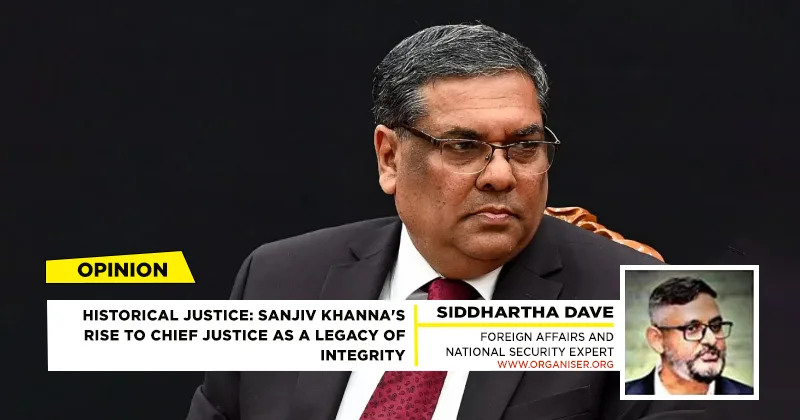
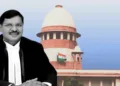
Justice Sanjiv Khanna is set to become the 51st Chief Justice of India, a position that symbolises not only judicial authority but also the moral weight of a nation’s conscience. His lineage is deeply rooted in the Indian judicial system—his father, Dev Raj Khanna, served as a judge in the Delhi High Court, and his uncle, the iconic Hans Raj Khanna, served in the Supreme Court. In a time when allegations of nepotism plague the judiciary, Sanjiv Khanna’s elevation is a story not of privilege, but of karmic justice and redemption for an injustice that occurred nearly half a century ago. It is a poignant reminder that the sacrifices of the past often find their redress in the present, and that the wheels of justice, though slow, eventually turn towards righteousness.
To understand why Justice Sanjiv Khanna’s appointment carries such significance, we must revisit the dark days of 1976, during the draconian Emergency imposed by then-Prime Minister Indira Gandhi. The nation was thrust into an authoritarian regime, where dissenters were jailed under the infamous Maintenance of Internal Security Act (MISA). The sweeping powers granted under MISA allowed the government to detain individuals without trial, leading to widespread fear and oppression. This led to the landmark ADM Jabalpur vs Shivkant Shukla case, also known as the Habeas Corpus case, which remains one of the most controversial judgments in Indian judicial history.
During the Emergency, Article 359(1) was invoked to suspend the fundamental rights of citizens, a move that divided the judiciary. While some High Courts across the country ruled in favor of the rights of the detainees under writ petitions, the government approached the Supreme Court for a final verdict in the Shivkant Shukla case, making it a matter of constitutional importance. The central question was simple but profound: Can the government, under the guise of an emergency, suspend the fundamental rights of its citizens, including the right to life and liberty under Article 21? This question struck at the very core of democratic values and tested the strength of India’s constitutional framework.
A five-judge bench was constituted to decide the case, and the nation watched as four of the five judges infamously sided with the government, endorsing its power to suspend fundamental rights without recourse to judicial review. It was a dark day for Indian democracy. However, there was one voice of dissent—Justice Hans Raj Khanna, the uncle of Sanjiv Khanna. Justice Khanna’s dissent was a beacon of hope for millions who had been stripped of their rights overnight. He stood as a solitary figure, a pillar of moral courage amidst an environment of fear and coercion, where the judiciary was being subjugated to the whims of an authoritarian government.
Justice Hans Raj Khanna knew the consequences of his decision. He wrote to his sister before delivering his judgment, “I have prepared my judgment, which is going to cost me the Chief Justice-ship of India.” And he was right. After delivering his dissenting judgment, which upheld the right to life and liberty even during an emergency, the government retaliated. Instead of Justice Khanna, M.H. Beg, who had praised the government’s actions as those of a benevolent mother, was appointed the Chief Justice of India. True to his principles, Justice Khanna resigned, refusing to compromise on his values. His resignation was not just an act of defiance but a powerful statement on the sanctity of judicial independence and the importance of standing up for what is right, regardless of the consequences.
Justice Khanna’s dissent was more than just a judicial opinion—it was a moral stand against tyranny. “Detention without trial is an anathema to all those who love personal liberty,” he wrote. His words resonated with countless Indians who yearned for justice and freedom during those dark times. Even after the Emergency ended, when the Janata Party government offered him the opportunity to lead an inquiry into the excesses of that dark period, Justice Khanna declined, lest he appear biased against Indira Gandhi. His integrity remained unwavering. He later headed the Law Commission, using his expertise where it could genuinely contribute to society. Justice Khanna’s refusal to exploit his position for personal or political gain is a testament to his character, and it highlights the values that should guide those in positions of power.
The courage of Justice Khanna was not lost on the legal fraternity. Nani Palkhivala, one of the greatest lawyers of India, hailed him as the gold standard of judicial integrity. He became the first Supreme Court judge to have his portrait installed in the court while still alive, a testament to the respect he commanded. Even Justice P.N. Bhagwati, who sided with the government in the 4-1 judgment, later expressed regret for his decision, acknowledging that it was a mistake that compromised the very principles of justice. Justice Y.V. Chandrachud, whose son D.Y. Chandrachud is the current Chief Justice, also acknowledged the blunder of siding with the government in that case. These admissions by his contemporaries serve as a reminder of the profound impact of Justice Khanna’s dissent, which became a symbol of judicial resilience and the unwavering pursuit of justice.
In 2017, in the Puttaswamy case, the Supreme Court finally overruled the ADM Jabalpur judgment, affirming that personal liberty and the right to life must always take precedence over state arbitrariness. The Puttaswamy judgment was a landmark moment, a long-overdue correction of a grievous wrong. It took 41 years, but the historical wrong was finally righted. And now, 48 years after Justice Hans Raj Khanna was denied the position of Chief Justice of India for his integrity, his nephew, Justice Sanjiv Khanna, will ascend to that very seat. It feels as though history is correcting itself—a testament to the enduring power of truth and righteousness. Justice Sanjiv Khanna’s elevation is not just a family achievement; it is a recognition of the sacrifices made by his uncle, whose moral courage and integrity set the highest standard for the judiciary.
Justice Hans Raj Khanna passed away in 2008, but his legacy lives on. He is remembered as the embodiment of courage, the epitome of what a judge should be—unflinching, principled, and willing to sacrifice everything for justice. His dissent in the Habeas Corpus case remains a guiding light for the judiciary, a reminder that the role of the courts is to protect the rights of the people, even in the face of overwhelming pressure from the state. As Sanjiv Khanna takes on the mantle of Chief Justice, it is not just the continuation of a familial legacy but the fulfillment of a karmic cycle that began with an act of tremendous moral courage.
Justice Sanjiv Khanna’s journey to becoming the Chief Justice of India is a story of resilience, integrity, and the triumph of justice over expediency. It underscores the importance of standing up for what is right, even when it comes at a personal cost. His uncle’s sacrifice and unwavering commitment to justice have paved the way for him, and as he takes on this prestigious role, the expectations are high. The hope is that Justice Sanjiv Khanna will carry forward the legacy of his uncle, ensuring that the judiciary remains a bastion of truth, fairness, and justice for all.
Salute to Justice Hans Raj Khanna, and best wishes to Justice Sanjiv Khanna—may his tenure honor the spirit of truth and justice that his uncle upheld against all odds. As the nation witnesses this historic moment, it serves as a powerful reminder that integrity and righteousness can never be suppressed, and that, in the end, justice always prevails. May Justice Sanjiv Khanna’s time as Chief Justice inspire future generations to value truth, uphold justice, and never waver in the face of adversity.













Comments