





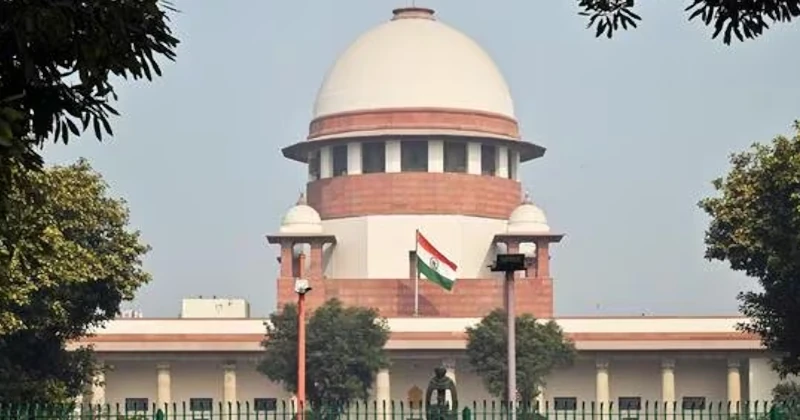
The Supreme Court of India on October 24 dismissed a contempt petition filed against government officials from Rajasthan, Uttar Pradesh, and Uttarakhand, accusing them of carrying out unlawful demolitions in violation of the court’s previous orders.
The petition, submitted by the National Federation of Indian Women (NFIW), alleged that several demolitions took place across the three states despite Supreme Court directives prohibiting such actions without prior judicial approval. According to the NFIW, these actions were in direct contravention of the court’s orders issued on September 17 and October 1, which explicitly stated that no demolitions should be carried out without the Supreme Court’s permission.
However, a bench comprising Justices B R Gavai, K V Viswanathan, and Prashant Kumar Mishra dismissed the plea, noting that the petition heavily relied on media reports and failed to present substantial evidence to prove that the court’s orders had been violated.
In its ruling, the court emphasised the insufficiency of basing legal actions solely on media reports, without providing concrete proof. “We don’t want to open a Pandora’s box,” the bench observed, referring to the potentially wide-reaching consequences of entertaining such petitions without solid evidence. The bench noted that the petitioner had not shown how the alleged demolitions personally aggrieved them, a critical requirement for filing such contempt proceedings.
The court further reviewed submissions made by Additional Solicitor General K M Natraj on behalf of Uttar Pradesh and Additional Advocate General Shiv Mangal Sharma, representing Rajasthan. These officials contended that the demolitions in question were lawful and did not breach the court’s earlier instructions.
In particular, the case in Rajasthan drew attention, as it involved the alleged demolition of a house belonging to an accused individual involved in an attack on 10 swayamsevaks of the Rashtriya Swayamsevak Sangh (RSS) during a Sharad Purnima event on 17 October. The demolition reportedly occurred three days later, on 20 October, and the NFIW claimed it violated the Supreme Court’s standing orders.
However, the court clarified that its previous rulings did not apply to unauthorised structures in public spaces, such as roads, streets, or footpaths, nor did they cover demolitions ordered by courts. The bench concluded that the demolition in Rajasthan appeared to fall under these exemptions, thus not violating the Supreme Court’s orders.
















Comments