





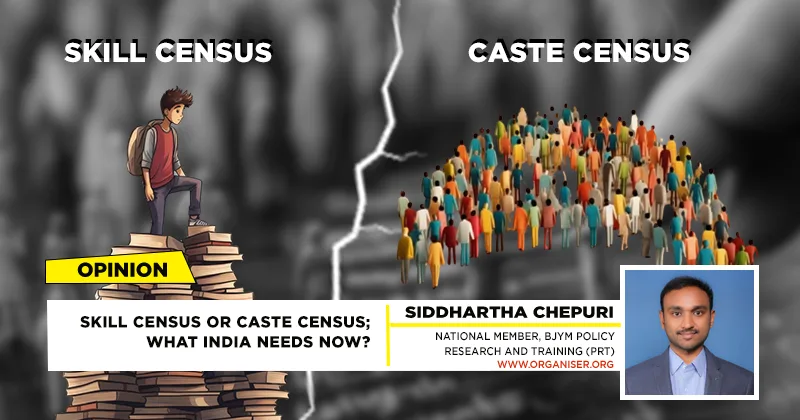
While the Opposition leader Rahul Gandhi talks about the Caste census, NDA led Andhra Pradesh government has launched the ‘Skill Census 2024’ to understand the competencies of the workforce and identify the skill sets that industries require. Skill Census enables the government to plan the upskilling of the workforce and help them find a suitable well-paying job, resulting in economic empowerment in the vulnerable sections of every community, on the contrary, the Caste census may disturb the existing harmony in the country and can become a divisive political tool to exploit the social fabric. Moreover, this exercise may make youth dependent on the sops given by political parties for their political gains.
India has the world’s largest youth population in the world with more than 60% of the population under 35, but the youth is facing a huge challenge of under-employment, more than unemployment. Predominantly, India is a labour-abundant and capital-scarce country, however, with the phenomenal rise in the FIIs and FDIs into the Indian market after 2014, capital inflow is not a major problem. Under-employment occurs when someone with a high level of education is employed in a job that doesn’t fully utilize their skills. This often happens when the workforce is unaware of industry needs and requirements. In addition, there are lakhs of students passing out from college every year with formal vocational or technical degrees, but they lack the relevant skills needed for the jobs available in the market. This job-skill mismatch is a huge problem that requires immediate attention, then the dubious Caste census.
A significant step towards this direction has started in Andhra Pradesh. The state government has started the pilot project in the Mangalagiri constituency and aims to expand it across the state. Skill Census aims to assess the skillsets present in the public, determine the specific skill requirements in different industries, evaluate the skill disparities, and provide recommendations to design effective employment and skill training policies.
Skill Census 2024 consists of two parts, namely, the Household census and the industry census. As part of the Household census, it plans to survey over 3.5 crore working population, aged 15 to 59 years, across 1.8 crore households. Data points such as age, education, work experience, skillset, preferred job location, and current employment status are captured. On the other hand, MSMEs and the major industries will be surveyed to evaluate the needs of the employers. Enumerators are trained to collect the data using the software application installed on their mobile phones. Post the enumeration, participants will receive a unique skill ID and have access to a portal, where they can check the skill profile, training opportunities, and the job market portal. This initiative will offer insightful data to the government and employers to establish targeted industries based on the high concentration of skills available in a particular region, boosting the local rural economies.
Skill Assessments proved to be successful in many countries such as Singapore, Canada, the United Kingdom, Australia, and Germany. According to a study conducted in Singapore, individuals who have undergone the assessment and the relevant training programs experienced improved employability rates, and a significant percentage of employers felt that such initiatives helped in the productivity of their employees, eventually resulting in better wages.
To ease unemployment and enhance workforce delivery, Various efforts have been made by the central government. In the budget speech, Finance Minister Nirmala Sitaraman announced the Rs 2 lakh crore Prime Minister’s package aimed at creating jobs and providing skilling to 4.1 crore youth in the country. Employment-linked incentives provide stipends to first job seekers and enhance support to employers. Also, the Modi government has launched an initiative called ‘KarmaYogi’, intending to upskill government officers and an enhance overall public service delivery.
The Government of India could explore the possibility of conducting a Skill Census across the country along with the Population Survey. The implementation of skill surveys in India offers far-reaching benefits for the nation’s development. By uncovering hidden talent among youth and providing essential upskilling opportunities, it enhances job opportunities and guides educational institutions in aligning their curricula with industry needs. It empowers individuals to make informed career choices, improving their employability. Such initiative results in a significant impact on the Indian economy, boosting incomes for both individuals and industries, thus contributing to the vision of ‘Viksit Bharat’. At this crucial juncture, our country needs innovative programs such as the Skills Census that provide equitable opportunities to Indian youth, unlike the Caste Census, which is only useful for the political existence of a few dynasts.
















Comments