





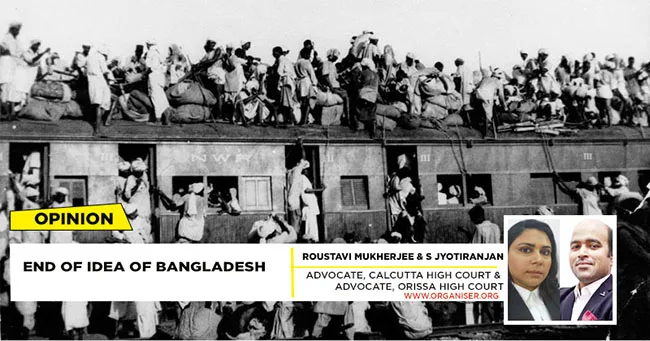
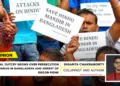
The tale of the Hindu exodus from Bangladesh is a narrative woven with threads of violence, forced displacement and a slow but deliberate erosion of secularism. What began with a hopeful promise in 1971 has since deteriorated into a tragic story of forced migrations and human rights violations, fuelled by religious extremism. While the world observes this with distant apathy, millions of Hindus in Bangladesh endure relentless persecution, gradually being erased from the demographic landscape of their homeland.
Islam Overtakes Secularism
When Bangladesh emerged from the ashes of the 1971 Liberation War, the promise of secularism was a beacon of hope for its citizens, particularly for the Hindu minority, who had borne the brunt of violence during the war. The original Constitution of Bangladesh enshrined secularism as one of its core tenets, a symbolic affirmation that all citizens, regardless of their faith, would be treated equally, however, this promise turned out to be ephemeral.
Shift in Ideology
In the years that followed Bangladesh’s independence, the very ideals that formed the bedrock of the new state began to crumble. Under various regimes of pro-Pakistani Governments, secularism was replaced and subsequently Islam was declared the state religion of Bangladesh. This shift marked the beginning of the state’s gradual departure from its secular roots, and the rising tides of Islamic extremism soon engulfed the country, leaving the Hindu minority vulnerable to systematic persecution.
Massacre of Sanatanis
In fact, the seeds of the exodus were sown in 1971, during the brutal crackdown by the Pakistani military on the Bengali independence movement, a massacre that Archer Blood, the US Consul General in Dhaka, rightfully described as a “genocide”. Hindus were particularly singled out for targeted violence. Operation Searchlight, initiated by the Pakistani military on March 25, 1971, was an orchestrated campaign of ethnic cleansing, and Hindus were its primary victims. An estimated 2.4 million Hindus were killed, according to some accounts, and countless others were subjected to rape, torture, and forced displacement.
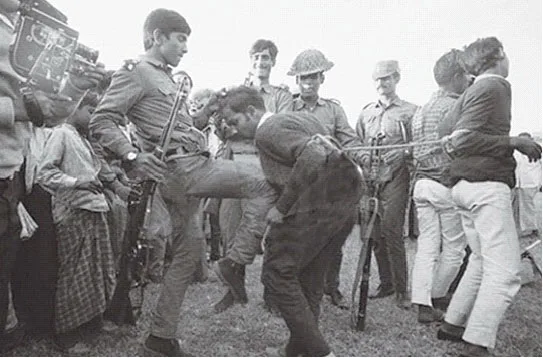
This genocide stands well-documented by survivors, human rights organisations and international bodies, although justice for these atrocities still remains elusive. The systematic targeting of Hindus during the war was not an isolated incident but a reflection of the deep-seated religious animosity that would continue to haunt the nation in the decades to come.
The removal of secularism from the Constitution was a harbinger of the grim future that awaited the Hindu minority in Bangladesh and over the years, radical Islamic groups gained significant traction, by injecting venomous ideologies of religious intolerance into the political and social fabric of the country. These groups, often with tacit support from the state, launched campaigns that targeted Hindus, leading to waves of violence, intimidation, and forced conversions. And quite unfortunately, from 1971 to 2023, the Hindu population in Bangladesh shrank dramatically from 13.5 per cent to less than 8 per cent and this staggering decline is not just a demographic anomaly but a direct consequence of the systematic persecution that Hindus have faced over the decades and the shrinking population is a silent testament to the violence, fear, and forced conversions that have become an everyday reality for Hindus in Bangladesh. The history of violence against Hindus in Bangladesh is long and punctuated by several major incidents that stand out for their sheer brutality and the indifference, if not complicity, of the state apparatus. And after Bangladesh’s independence, sporadic violence continued, but it escalated with the assassination of Sk. Mujibur Rahman in 1975, which created a power vacuum that emboldened extremist elements.
Punishing Awami League Supporters
Adding to the woes of the Hindu minority, the 1990s were particularly bloody for them, as Hindu temples were desecrated, homes were destroyed and thousands were displaced. This was followed by the 2001 post-poll violence, during which Hindus were targeted for their perceived support of the opposition Awami League and the coalition Government of the Bangladesh Nationalist Party (BNP) and Jamaat-e-Islami presided over a reign of terror, with Hindus bearing the brunt of the violence.
Nationwide Outcry for Desecrating Islam
More recently, in October 2021, during the Durga Puja celebrations, a viral social media post accusing a Hindu of desecrating Islam sparked a nationwide wave of violence and consequently, Hindu temples were attacked, homes were vandalised, and people were killed. The Bangladeshi Government’s response was criticised as slow and ineffective, raising questions about the state’s commitment to protecting its religious minorities.
Deprived of Ancestral Land
The persecution of Hindus is not limited to physical violence, but transcends beyond to include economic disenfranchisement, for example, the Vested Property Act, originally the Enemy Property Act, has been used as a tool to dispossess Hindus of their ancestral lands. Since 1965, nearly 2.5 million acres of land belonging to Hindus have been seized under this act, leaving thousands of families destitute and without a livelihood. It is a fact that, despite the official repeal of the act in 2001, its legacy persists and the local politicians, in collusion with radical groups, continue to orchestrate land grabs, often accompanied by violence. A report by the International Association for Human Rights (IAHR) documented over 5,000 cases of land grabs involving Hindu properties between 2009 and 2023. However, unfortunately these cases rarely see the inside of a courtroom, and the victims are often left with no recourse for justice. Consequent upon such combined effects of violence, intimidation and economic marginalisation, millions of Hindus have been forced to flee Bangladesh over the years. Since the 1970s, over seven million Hindus have fled to India, seeking refuge from the unrelenting persecution in their homeland and most of these refugees have settled in the Indian states of West Bengal, Assam, and Tripura.
The time for action is now and the story of the Hindus in Bangladesh is not just a story of persecution. it is a call to uphold the values of justice, equality, and human dignity
The exodus of Hindus is a phenomenon that has occurred in waves, often spiking during periods of political instability or communal violence. Interestingly, the Bangladesh Bureau of Statistics (BBS) reports that Hindu population has declined from 13.5 per cent in 1974 to just 7.9 per cent in 2023. This dramatic demographic shift is a stark reminder of the ongoing exodus of Hindus from Bangladesh.
The issue of persecution of Hindus in Bangladesh has been well documented and raised by various local and international organisations, who are also spreading awareness about their plight. Bangladesh Hindu Buddhist Christian Unity Council (BHBCUC), Human Rights Congress for Bangladesh Minorities (HRCBM) and Bangladesh Hindu Mahajote are among the most prominent groups advocating for the rights of Hindus in Bangladesh.
Not addressing Root Cause of Persecution
International organisations such as Human Rights Watch (HRW), Amnesty International, and the United Nations Human Rights Council (UNHRC) have also condemned the violence and discrimination faced by Hindus in Bangladesh. However, despite these efforts, there has been little tangible action to address the root causes of the persecution and the Bangladeshi Government continues to deny allegations of systematic discrimination, and international pressure has thus far failed to bring about meaningful change.
There is no denying that, at the heart of the persecution of Hindus in Bangladesh is the decay of secularism and the rise of Islamic extremism. This began with the declaration of Islam as the state religion in 1988 under President Hussain Muhammad Ershad, as it further cemented the religious hegemony that has fuelled the persecution of religious minorities.
On the other hand, the simultaneous rise of Islamic extremism has not only impacted the Hindu community but has also had far-reaching consequences for the broader fabric of Bangladeshi society. And making it even worse, the radical groups have used religion as a tool to justify violence, often with the complicity of local authorities and this toxic combination of state-sanctioned extremism and unchecked violence has created an environment of fear and insecurity for Hindus in Bangladesh. Therefore, faced with constant threats to their lives, property, and religious freedom, many Hindus have little choice but to flee the nation and as such India has witnessed a steady influx of Hindu refugees from Bangladesh over the years, particularly during periods of heightened violence. And while the Indian Government has implemented various policies to accommodate these refugees, the situation remains dire.
The Citizenship Amendment Act (CAA) of 2019, which offers a pathway to citizenship for Hindus fleeing religious persecution in Bangladesh, Afghanistan, and Pakistan, is a recognition of the crisis and it is a huge and brave step by the Indian government despite controversies and challenges to ameliorate the situation.
The exodus of Hindus from Bangladesh is not just a historical footnote but an ongoing crisis that demands immediate attention and therefore, the international community must put pressure on the Bangladeshi Government to restore secularism and protect the rights of all its citizens, regardless of their religious beliefs and allegiance. And the exodus of Hindus is a grim reminder of the dangers of religious extremism and the decay of secularism, and the world cannot afford to remain unperturbed and turn a blind eye to this tragedy any longer. The time for action is now and the story of the Hindus in Bangladesh is not just a story of persecution; it is a call to uphold the values of justice, equality, and human dignity. The exodus must end, and the rights of Hindus in Bangladesh must be recognised and upheld and only then can the promise of secularism that was enshrined in the original Constitution of Bangladesh be truly fulfilled.













Comments