





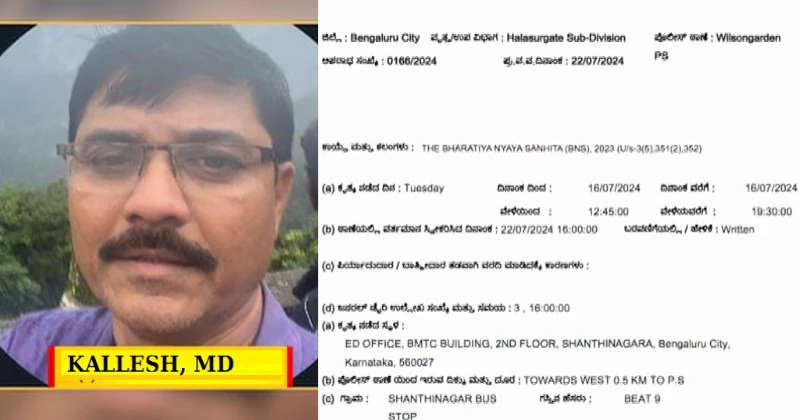
In a swift and controversial decision, the suspension of B. Kallesh, who had filed a complaint against Enforcement Directorate (ED) officials concerning the illegal transfer of funds at Valmiki Development Corporation, was lifted just three months after being suspended. Kallesh, suspended for failing to submit the grant utilisation certificate related to Rs 42.97 crore, has now been assigned a new post, raising eyebrows and sparking speculation.
Kallesh was suspended on June 22, 2024, for dereliction of duty after failing to submit grant utilisation certificates for funds allocated to the Maharshi Valmiki ST Development Corporation. The illegal transfer of funds had led to allegations of misconduct, with B. Nagendra, the former minister, being named the primary accused in the Enforcement Directorate’s charge sheet. Kallesh, who served as the ex-officio director of the corporation, was also implicated.
Despite these allegations, Kallesh’s suspension was lifted after he submitted a request on September 9, 2024, asking to be reinstated as Chief Administrative Officer of the Karnataka Institute of Medical Science, Koppal. The Congress-led government granted his request, sparking public outrage and doubts over the quick reinstatement.
Kallesh, previously Director of the Scheduled Castes Welfare Department, faced scrutiny over the underutilisation of public funds meant for scheduled programs. He was accused of failing to improve the SSLC results in residential and ashram schools and neglecting additional student training. Despite these serious allegations, Kallesh was reinstated under Karnataka Civil Service Rules, and his suspension was vacated by government order.
The Valmiki Development Corporation scandal involved Rs 42.97 crore in central government grants, of which Kallesh failed to submit utilisation certificates. He was also linked to the illegal transfer of Rs 21.59 crore under the PVTG scheme for the Scheduled Tribes Welfare Department, with a significant portion of the funds remaining unaccounted for.
Despite receiving several reminders from the central government, Kallesh did not provide the necessary financial progress reports or usage certificates, leading to his suspension. A show-cause notice was issued, but Kallesh failed to provide supporting documentation or satisfactory responses.
Social Welfare Minister Dr H C Mahadevappa reportedly discussed lifting Kallesh’s suspension with Chief Minister Siddaramaiah, further fueling suspicions of political favouritism. The fact that the Scheduled Castes Welfare Department refused to provide documents of Kallesh’s suspension file under the Right to Information Act (RTI) only added to the growing concerns.
RTI activists had requested the file in July 2024, but it was withheld under Section 8(h) of the RTI Act, which restricts access to information that could interfere with investigations. Critics argue that the cited section does not apply to Kallesh’s suspension order, raising questions about the government’s transparency.
Allegations of mismanagement have marred Kallesh’s tenure as Director of the Scheduled Tribes Welfare Department. He failed to inspect student dormitories, while essential materials were purchased without assessing the needs of the hostels. Public funds were not adequately used for their intended programs, resulting in poor outcomes, including subpar SSLC results in the schools under his supervision.
Kallesh’s suspension and reinstatement have drawn widespread criticism, particularly in light of the ongoing departmental inquiries into his conduct. His failure to submit grant utilisation certificates and the politicisation of related issues, including the suicide of the corporation’s Accounts Superintendent Chandrasekhar, have spotlighted potential corruption within the Valmiki Development Corporation.
The reinstating of Kallesh in a strategic position, while his role in financial mismanagement remains under investigation, has led to growing scepticism regarding the government’s actions.
The swift reinstatement of B. Kallesh, despite serious allegations and ongoing inquiries, has raised concerns about transparency and accountability within the state’s administration. The case has drawn attention to the challenges of properly utilising public funds and addressing corruption within government departments.
As the public and opposition parties demand greater transparency, the government’s handling of this case could have lasting political and legal implications. In this case, the ongoing inquiry and future actions of the Karnataka government will be closely watched.














Comments