





BENGALURU: Karnataka is currently in the grip of a severe dengue outbreak, forcing the state government to officially declare it an epidemic. Despite various efforts to curb the spread of the disease, the situation remains critical, particularly in the capital city, Bengaluru, which has become the epicentre of the crisis.
Recent data from the Karnataka Health Department reveals a startling rise in dengue cases, with over 25,000 cases reported across the state. The death toll has climbed to 12, underscoring the seriousness of the outbreak. Bengaluru alone has reported more than 11,000 cases, including three fatalities, making it the most affected city in the state. Other districts like Mandya, Hassan, Mysuru, and Kalaburagi have also experienced significant spikes in cases, contributing to the state’s mounting health emergency.
The surge in dengue cases this year has been unprecedented, surpassing 25,000 cases for the first time ever in Karnataka. Within just 45 days, over 15,000 new cases have been added to the total count. Active cases have reached 1,561, with 191 individuals currently hospitalised, including four in critical condition. Among the total cases, 516 involve infants under one year old, and 9,129 are children under 18. This dramatic increase has exposed the government’s struggles to effectively tackle the outbreak.
In response to the escalating crisis, the Karnataka government has launched several initiatives to control the situation, including setting up a toll-free helpline for dengue-related information and complaints. The government has also capped the prices of essential dengue diagnostic tests in private hospitals and laboratories, aiming to make testing more accessible.
However, despite these efforts, the measures taken have been largely reactive rather than preventive. The government’s strategy of reserving a specific number of beds for dengue patients in government hospitals, for example, has been criticized as insufficient, given the rapid rise in cases. Moreover, the initiative to empower officials to enforce penalties for non-compliance with dengue prevention measures has been limited in scope, applying only to Bengaluru and Mangaluru, leaving other districts without adequate legal enforcement.
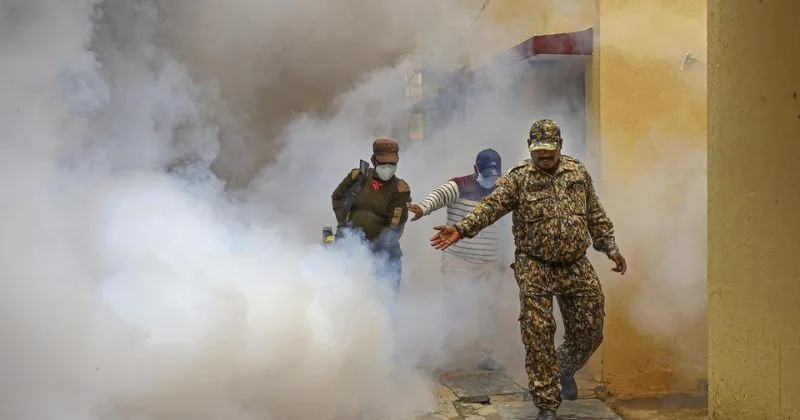
The surge in cases has highlighted the government’s lack of preparedness and inability to act decisively. Compared to the same period in 2023, when Bengaluru reported 3,759 cases, the city has already recorded 11,673 cases this year—a threefold increase. While the government has focused on mosquito control efforts, such as fumigation and public awareness campaigns, these measures appear to have been too little, too late.
Opposition leaders argue that the government’s response has been slow and inadequate. Despite setting up penalties for property owners who fail to eliminate mosquito breeding grounds, the fines are relatively modest—Rs 400 for residential properties and up to Rs 2,000 for construction sites in urban areas. These penalties have done little to deter negligence, and the measures to enforce them have been inconsistent.
The government has urged property owners to take proactive steps to prevent mosquito breeding, such as covering water storage containers and disposing of solid waste properly. Public awareness campaigns have been ramped up, emphasizing the importance of keeping surroundings clean and using mosquito repellents and protective clothing. However, the impact of these campaigns has been limited, as many areas continue to report stagnant water and poor sanitation conditions, which are ideal for mosquito breeding.
The current situation in Karnataka represents one of the most severe dengue outbreaks in recent years. While the declaration of an epidemic is a step towards mobilising resources, there are growing concerns about the government’s ability to effectively control the spread of the disease. As the number of cases continues to climb, both the state authorities and the public need to adopt more aggressive measures to prevent further escalation.
The government’s handling of the dengue crisis has been characterized by a lack of coordination and delayed response, raising questions about its capacity to manage public health emergencies. With Bengaluru bearing the brunt of the outbreak, the state’s efforts have so far proven insufficient to bring the situation under control. The onus now lies on the government to implement stronger, more effective strategies to combat the epidemic and prevent further loss of life.
















Comments