


New research on TB could change how we treat inflammatory disorders
December 5, 2025
  • Read Ecopy
  • Circulation
  • Advertise
  • Careers
  • About Us
  • Contact Us
Android AppiPhone AppArattai
Organiser
  • ‌
  • Bharat
    • Assam
    • Bihar
    • Chhattisgarh
    • Jharkhand
    • Maharashtra
    • View All States
  • World
    • Asia
    • Europe
    • North America
    • South America
    • Africa
    • Australia
  • Editorial
  • International
  • Opinion
  • RSS @ 100
  • More
    • Op Sindoor
    • Analysis
    • Sports
    • Defence
    • Politics
    • Business
    • Economy
    • Culture
    • Special Report
    • Sci & Tech
    • Entertainment
    • G20
    • Azadi Ka Amrit Mahotsav
    • Vocal4Local
    • Web Stories
    • Education
    • Employment
    • Books
    • Interviews
    • Travel
    • Law
    • Health
    • Obituary
  • Subscribe
    • Subscribe Print Edition
    • Subscribe Ecopy
    • Read Ecopy
  • ‌
  • Bharat
    • Assam
    • Bihar
    • Chhattisgarh
    • Jharkhand
    • Maharashtra
    • View All States
  • World
    • Asia
    • Europe
    • North America
    • South America
    • Africa
    • Australia
  • Editorial
  • International
  • Opinion
  • RSS @ 100
  • More
    • Op Sindoor
    • Analysis
    • Sports
    • Defence
    • Politics
    • Business
    • Economy
    • Culture
    • Special Report
    • Sci & Tech
    • Entertainment
    • G20
    • Azadi Ka Amrit Mahotsav
    • Vocal4Local
    • Web Stories
    • Education
    • Employment
    • Books
    • Interviews
    • Travel
    • Law
    • Health
    • Obituary
  • Subscribe
    • Subscribe Print Edition
    • Subscribe Ecopy
    • Read Ecopy
Organiser
  • Home
  • Bharat
  • World
  • Operation Sindoor
  • Editorial
  • Analysis
  • Opinion
  • Culture
  • Defence
  • International Edition
  • RSS @ 100
  • Magazine
  • Read Ecopy
Home World

New research on TB could change how we treat inflammatory disorders

New research on tuberculosis has the potential to revolutionise the treatment of inflammatory disorders. By uncovering novel insights into TB's mechanisms, scientists may develop innovative approaches that could benefit a range of inflammatory conditions. This breakthrough could lead to more effective therapies and a deeper understanding of immune responses

WEBDESKWEBDESK
Sep 3, 2024, 11:00 pm IST
in World, Health
Follow on Google News
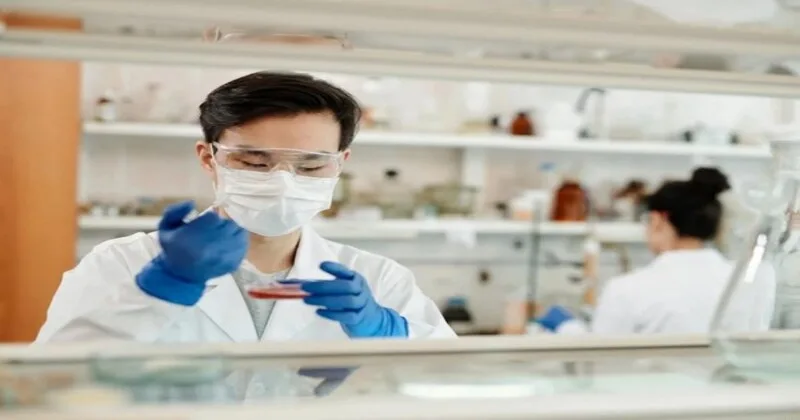
Representative image

Representative image

FacebookTwitterWhatsAppTelegramEmail

Tuberculosis is a perplexing disease. It is the largest cause of mortality from infectious disease worldwide, however, it is believed that such deaths account for just around 5 per cent of Mycobacterium tuberculosis (Mtb) infections. Antibiotics can be credited with saving the lives of some Mtb patients, but there is still a gap between the prevalence of infection and the intended severity of its effects. An increasing body of research implies that genetic susceptibility to tuberculosis accounts for the disparity.

Now, researchers at The Rockefeller University have discovered another unusual mutation that makes its carriers far more likely to develop tuberculosis–but not other infectious diseases. This finding, which was recently published in Nature, has the potential to challenge long-held beliefs about the immune system.

It’s long been known that an acquired deficiency of a pro-inflammatory cytokine called TNF is linked to an increased risk of developing TB. The current study, led by Rockefeller’s Stephanie Boisson-Dupuis and Jean-Laurent Casanova, revealed a genetic cause of TNF deficiency, as well as the underlying mechanism: a lack of TNF incapacitates a specific immune process in the lungs, leading to severe–but surprisingly targeted–illness. The findings suggest that TNF, long considered a key galvaniser of the immune response, might actually play a much narrower role–a discovery with far-reaching clinical implications.

“The past 40 years of scientific literature have attributed a wide variety of pro-inflammatory functions to TNF,” says Casanova, head of the St. Giles Laboratory of Human Genetics of Infectious Diseases. “But beyond protecting the lungs against TB, it may have a limited role in inflammation and immunity.”

Casanova’s lab has been studying the genetic causes of TB for more than two decades through fieldwork in several countries and a wide network of collaborating physicians across the world. They maintain an ever-growing database of whole-exome sequences from a global pool of patients–more than 25,000 people to date. Of those, some 2,000 have had TB.

Over the years, they’ve identified several rare genetic mutations that render some people vulnerable to TB. For example, mutations in a gene called CYBB can disable an immune mechanism called the respiratory burst, which produces chemicals called reactive oxygen species (ROS). Despite its pulmonary-sounding name, the respiratory burst takes place in immune cells throughout the body.

ROS help pathogen-consuming white blood cells called phagocytes (from the Greek for “eating”) to destroy the invaders they’ve devoured. If ROS aren’t produced, those pathogens can thrive unchecked, leading to debilitating complications. As a result, carriers of this CYBB mutation become vulnerable to not just TB but to a wide variety of infectious diseases.

For the current study, the team suspected that a similar inborn error of immunity may lay behind the severe, recurring TB infections experienced by two people in Colombia–a 28-year-old woman and her 32-year-old cousin–who had been repeatedly hospitalised with significant lung conditions. In each cycle, they initially responded well to anti-TB antibiotics, but within a year, they were sick again.

Puzzlingly, however, their long-term health records showed that their immune systems functioned normally and that they were otherwise healthy.

To find out why they were particularly prone to getting TB, the researchers performed whole-exome sequencing on the two, as well as a genetic analysis of their respective parents and relatives.

The two were the only members of their extended family with a mutation in the TNF gene, which encodes for proteins linked to the regulation of a variety of biological processes. Short for “tumor necrosis factor,” increased TNF production is also associated with a variety of conditions, including septic shock, cancer, rheumatoid arthritis, and cachexia, which causes dangerous weight loss.

The protein is largely secreted by a type of phagocyte called a macrophage, which relies on the ROS molecules generated by the respiratory burst to finish off pathogens they’ve consumed.

In these two patients, the TNF gene failed to function, preventing the respiratory burst from occurring, and thus the creation of ROS molecules. As a result, the patient’s alveolar macrophages, located in their lungs, were overrun with Mtb.

“We knew that the respiratory burst was important for protecting people against various types of mycobacteria, but now we know that TNF is actually regulating the process,” says Boisson-Dupuis. “And when it’s missing in alveolar macrophages, people will be susceptible to airborne TB.”

She adds, “It’s very surprising that the people we studied are adults who have never been sick with other infectious diseases, despite being repeatedly exposed to their microbes. They are apparently selectively at risk for TB.”

The discovery also solves a long-standing mystery about why TNF inhibitors, which are used to treat autoimmune and inflammatory diseases, raise the chances of contracting TB. Without TNF, a key part of the defense against it is defunct.

Also Read: Largest Chandipura virus outbreak in 20 years hits India, Reports WHO

The findings may lead to a radical reassessment of TNF’s role in immune function–and new treatment possibilities. “TNF is required for immunity against Mtb, but it seems to be redundant for immunity against many other pathogens,” Casanova says. “So the question is, what other pro-inflammatory cytokines are doing the jobs we thought TNF was doing? If we can discover that, we may be able to block these cytokines rather than TNF to treat diseases where inflammation plays a role.”

(with inputs from ANI)

Topics: TuberculosisTBInflammatory disordersMycobacterium tuberculosis infections
Share17TweetSendShareSend
✮ Subscribe Organiser YouTube Channel. ✮
✮ Join Organiser's WhatsApp channel for Nationalist views beyond the news. ✮
Previous News

Odisha: Ravenshaw University name change proposal ignites decolonisation debate  

Next News

Prakash Utsav of Sri Guru Granth Sahib Ji: History and Significance

Related News

Union Health Minister J.P Nadda and others in the 9th National Summit on Good and Replicable Practices and Innovations in Public Healthcare in Puri

India set to eliminate TB by 2025: Union Health Minister JP Nadda

Representative image

Study finds designing self-destructing bacteria make effective tuberculosis vaccines

Representative image

ICMR’s New TB Testing Technology: Affordable detection at just Rs 35

Representative image

Experts developing immune-enhancing therapies to treat TB: Study

Representative Image

New cancer therapy appears to be effective against TB

Reports of TB medicine shortages misleading: Health Ministry

Load More

Comments

The comments posted here/below/in the given space are not on behalf of Organiser. The person posting the comment will be in sole ownership of its responsibility. According to the central government's IT rules, obscene or offensive statement made against a person, religion, community or nation is a punishable offense, and legal action would be taken against people who indulge in such activities.

Latest News

PM Modi presents Putin with Bhagavad Gita, chess set, and silver horse

Cultural ties strengthened: PM Modi presents Putin with Bhagavad Gita, chess set, and silver horse

Image for representational purpose only, Courtesy Vocal Media

Bihar to get ‘Special Economic Zones’ in Buxar and West Champaran

Thirupparankundram Karthigai Deepam utsav

Andhra Pradesh: AP Dy CM Pawan Kalyan reacts to Thirupparankundram row, flags concern over religious rights of Hindus

23rd India-Russia Annual Summit

India-Russia Summit heralds new chapter in time-tested ties: Inks MoUs in economic, defence, tourism & education

DGCA orders probe into IndiGo flight disruptions; Committee to report in 15 days

BJYM leader Shyamraj with Janaki

Kerala: Widow of BJP worker murdered in 1995 steps into electoral battle after three decades at Valancherry

Russian Sber bank has unveiled access to its retail investors to the Indian stock market by etching its mutual fund to Nifty50

Scripting economic bonhomie: Russian investors gain access to Indian stocks, Sber unveils Nifty50 pegged mutual funds

Petitioner S Vignesh Shishir speaking to the reporters about the Rahul Gandhi UK citizenship case outside the Raebareli court

Rahul Gandhi UK Citizenship Case: Congress supporters create ruckus in court; Foreign visit details shared with judge

(L) Kerala High Court (R) Bouncers in Trippoonithura temple

Kerala: HC slams CPM-controlled Kochi Devaswom Board for deploying bouncers for crowd management during festival

Fact Check: Rahul Gandhi false claim about govt blocking his meet with Russian President Putin exposed; MEA clears air

Load More
  • Privacy
  • Terms
  • Cookie Policy
  • Refund and Cancellation
  • Delivery and Shipping

© Bharat Prakashan (Delhi) Limited.
Tech-enabled by Ananthapuri Technologies

  • Home
  • Search Organiser
  • Bharat
    • Assam
    • Bihar
    • Chhattisgarh
    • Jharkhand
    • Maharashtra
    • View All States
  • World
    • Asia
    • Africa
    • North America
    • South America
    • Europe
    • Australia
  • Editorial
  • Operation Sindoor
  • Opinion
  • Analysis
  • Defence
  • Culture
  • Sports
  • Business
  • RSS @ 100
  • Entertainment
  • More ..
    • Sci & Tech
    • Vocal4Local
    • Special Report
    • Education
    • Employment
    • Books
    • Interviews
    • Travel
    • Health
    • Politics
    • Law
    • Economy
    • Obituary
  • Subscribe Magazine
  • Read Ecopy
  • Advertise
  • Circulation
  • Careers
  • About Us
  • Contact Us
  • Policies & Terms
    • Privacy Policy
    • Cookie Policy
    • Refund and Cancellation
    • Terms of Use

© Bharat Prakashan (Delhi) Limited.
Tech-enabled by Ananthapuri Technologies