





Study finds new gene in progression of Huntington's disease
December 6, 2025
  • Read Ecopy
  • Circulation
  • Advertise
  • Careers
  • About Us
  • Contact Us
Android AppiPhone AppArattai
Organiser
  • ‌
  • Bharat
    • Assam
    • Bihar
    • Chhattisgarh
    • Jharkhand
    • Maharashtra
    • View All States
  • World
    • Asia
    • Europe
    • North America
    • South America
    • Africa
    • Australia
  • Editorial
  • International
  • Opinion
  • RSS @ 100
  • More
    • Op Sindoor
    • Analysis
    • Sports
    • Defence
    • Politics
    • Business
    • Economy
    • Culture
    • Special Report
    • Sci & Tech
    • Entertainment
    • G20
    • Azadi Ka Amrit Mahotsav
    • Vocal4Local
    • Web Stories
    • Education
    • Employment
    • Books
    • Interviews
    • Travel
    • Law
    • Health
    • Obituary
  • Subscribe
    • Subscribe Print Edition
    • Subscribe Ecopy
    • Read Ecopy
  • ‌
  • Bharat
    • Assam
    • Bihar
    • Chhattisgarh
    • Jharkhand
    • Maharashtra
    • View All States
  • World
    • Asia
    • Europe
    • North America
    • South America
    • Africa
    • Australia
  • Editorial
  • International
  • Opinion
  • RSS @ 100
  • More
    • Op Sindoor
    • Analysis
    • Sports
    • Defence
    • Politics
    • Business
    • Economy
    • Culture
    • Special Report
    • Sci & Tech
    • Entertainment
    • G20
    • Azadi Ka Amrit Mahotsav
    • Vocal4Local
    • Web Stories
    • Education
    • Employment
    • Books
    • Interviews
    • Travel
    • Law
    • Health
    • Obituary
  • Subscribe
    • Subscribe Print Edition
    • Subscribe Ecopy
    • Read Ecopy
Organiser
  • Home
  • Bharat
  • World
  • Operation Sindoor
  • Editorial
  • Analysis
  • Opinion
  • Culture
  • Defence
  • International Edition
  • RSS @ 100
  • Magazine
  • Read Ecopy
Home World

Study finds new gene in progression of Huntington’s disease

A recent study has identified a new gene linked to the progression of Huntington's disease, offering fresh insights into the condition. This discovery could pave the way for more targeted treatments and a deeper understanding of the disease's mechanisms. The finding marks a significant advancement in the quest to combat this neurodegenerative disorder

WEBDESKWEBDESK
Aug 28, 2024, 11:00 pm IST
in World, Health
Follow on Google News
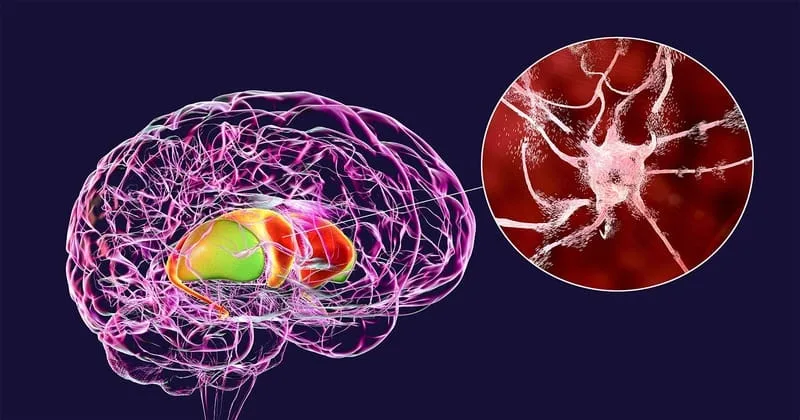
Representative image

Representative image

FacebookTwitterWhatsAppTelegramEmail

A novel gene has been linked by researchers in Berlin and Dusseldorf to the development of Huntington’s disease in a brain organoid model. Earlier than previously believed, the gene may play a role in brain disorders.

Researchers have discovered the gene CHCHD2 as a possible novel treatment target and have linked it for the first time to Huntington’s Disease (HD), an incurable inherited neurological illness.

The researchers discovered that mutations in the Huntington gene HTT also impact CHCHD2, which is necessary to preserve the proper function of mitochondria, in a brain organoid model of the illness. Nature Communications published the study.

Six different labs at the Max Delbruck Center participated in the study, led by Dr. Jakob Metzger of the “Quantitative Stem Cell Biology” lab at the and the “Stem Cell Metabolism” lab of Professor Alessandro Prigione at Heinrich Heine University Dusseldorf (HHU).

Each lab contributed their unique expertise to Huntington’s disease, brain organoids, stem cell research, and genome editing. “We were surprised to find that Huntington’s disease can impair early brain development through defects associated with mitochondrial dysfunction,” said Dr Pawel Lisowski, co-lead author in the Metzger lab at the Max Delbruck Center.

Moreover, “the organoid model suggests that HTT mutations damage brain development even before clinical symptoms appear, highlighting the importance of detecting the late-onset neurodegenerative disease early,” Selene Lickfett, co-lead author and a doctoral student in the Faculty of Mathematics and Natural Science in the lab of Prigione at HHU adds.

An organoid is a three-dimensional, organ-like structure that researchers grow in a laboratory from stem cells. Depending on the disease and research question, organoids can be grown from different types of tissue. Only a few millimetres in size, they serve as a model for how different cell types interact. No other bench-top model provides such a detailed look at the function of cells in the human body.

Huntington’s disease is caused when the nucleotides Cytosine, Adenine and Guanine are repeated an excessive number of times in the in the Huntington gene HTT. People with 35 or fewer repeats are generally not at risk of developing the disease while carrying 36 or more repeats has been associated with the disease.

The greater the number of repeats, the earlier the disease symptoms are likely to appear, explains Metzger, a senior author of the study. The mutations cause nerve cells in the brain to progressively die. Those affected steadily lose muscle control and develop psychiatric symptoms such as impulsiveness, delusions and hallucinations.

Huntington’s disease affects approximately five to 10 in every 100,000 people worldwide. Existing therapies only treat the symptoms of the disease; they don’t slow its progression or cure it.

To study how mutations in the HTT gene affect early brain development, Lisowski first used variants of the Cas9 gene editing technology and manipulation of DNA repair pathways to modify healthy induced pluripotent stem cells such that they carry a large number of CAG repeats.

This was technically challenging because gene editing tools are not efficient in gene regions that contain sequence repeats, such as the CAG repeats in HTT, says Lisowski.

The genetically modified stem cells were then grown into brain organoids – three-dimensional structures that resemble early-stage human brains. When the researchers analyzed gene expression profiles of the organoids at different stages of development, they noticed that the CHCHD2 gene was consistently underexpressed, which reduced the metabolism of neuronal cells.

CHCHD2 is involved in ensuring the health of mitochondria – the energy-producing structures in cells. CHCHD2 has been implicated in Parkinson’s disease, but never before in Huntington’s.

They also found that when they restored the function of the CHCHD2 gene, they could reverse the effect on neuronal cells. “That was surprising,” said Selene Lickfett. “It suggests in principle that this gene could be a target for future therapies.”

Moreover, defects in neural progenitor cells and brain organoids occurred before potentially toxic aggregates of mutated Huntingtin protein had developed, adds Metzger, indicating that disease pathology in the brain may begin long before it is clinically evident.

“The prevalent view is that the disease progresses as a degeneration of mature neurons,” says Prigione. “But if changes in the brain already develop early in life, then therapeutic strategies may have to focus on much earlier time points.”

Also Read: ICMR’s New TB Testing Technology: Affordable detection at just Rs 35

“Our genome editing strategies, in particular the removal of the CAG repeat region in the Huntington gene, showed great promise in reversing some of observed developmental defects. This suggests a potential gene therapy approach,” said Prigione. Another potential approach could be therapies to increase CHCHD2 gene expression.

The findings may also have broader applications for other neurodegenerative diseases, Prigione adds. “Early treatments that reverse the mitochondrial phenotypes shown here could be a promising avenue for counteracting age-related diseases like Huntington’s disease.”


Topics: Huntington diseaseNeurodegenerative disorder
ShareTweetSendShareSend
✮ Subscribe Organiser YouTube Channel. ✮
✮ Join Organiser's WhatsApp channel for Nationalist views beyond the news. ✮
Previous News

Assam CM Himanta Biswa Sarma to urge Tamil Nadu CM on curbing entry of illegal Bangladeshi workers in textile industry

Next News

Bangladesh: Yunus-led interim govt revokes ban on terror outfit Jamaat-e-Islami Ban imposed by Sheikh Hasina

Related News

Study discovers how new blood serum test detect neurodegenerative disorder

Load More

Comments

The comments posted here/below/in the given space are not on behalf of Organiser. The person posting the comment will be in sole ownership of its responsibility. According to the central government's IT rules, obscene or offensive statement made against a person, religion, community or nation is a punishable offense, and legal action would be taken against people who indulge in such activities.

Latest News

PM Modi presents Putin with Bhagavad Gita, chess set, and silver horse

Cultural ties strengthened: PM Modi presents Putin with Bhagavad Gita, chess set, and silver horse

Image for representational purpose only, Courtesy Vocal Media

Bihar to get ‘Special Economic Zones’ in Buxar and West Champaran

Thirupparankundram Karthigai Deepam utsav

Andhra Pradesh: AP Dy CM Pawan Kalyan reacts to Thirupparankundram row, flags concern over religious rights of Hindus

23rd India-Russia Annual Summit

India-Russia Summit heralds new chapter in time-tested ties: Inks MoUs in economic, defence, tourism & education

DGCA orders probe into IndiGo flight disruptions; Committee to report in 15 days

BJYM leader Shyamraj with Janaki

Kerala: Widow of BJP worker murdered in 1995 steps into electoral battle after three decades at Valancherry

Russian Sber bank has unveiled access to its retail investors to the Indian stock market by etching its mutual fund to Nifty50

Scripting economic bonhomie: Russian investors gain access to Indian stocks, Sber unveils Nifty50 pegged mutual funds

Petitioner S Vignesh Shishir speaking to the reporters about the Rahul Gandhi UK citizenship case outside the Raebareli court

Rahul Gandhi UK Citizenship Case: Congress supporters create ruckus in court; Foreign visit details shared with judge

(L) Kerala High Court (R) Bouncers in Trippoonithura temple

Kerala: HC slams CPM-controlled Kochi Devaswom Board for deploying bouncers for crowd management during festival

Fact Check: Rahul Gandhi false claim about govt blocking his meet with Russian President Putin exposed; MEA clears air

Load More
  • Privacy
  • Terms
  • Cookie Policy
  • Refund and Cancellation
  • Delivery and Shipping

© Bharat Prakashan (Delhi) Limited.
Tech-enabled by Ananthapuri Technologies

  • Home
  • Search Organiser
  • Bharat
    • Assam
    • Bihar
    • Chhattisgarh
    • Jharkhand
    • Maharashtra
    • View All States
  • World
    • Asia
    • Africa
    • North America
    • South America
    • Europe
    • Australia
  • Editorial
  • Operation Sindoor
  • Opinion
  • Analysis
  • Defence
  • Culture
  • Sports
  • Business
  • RSS @ 100
  • Entertainment
  • More ..
    • Sci & Tech
    • Vocal4Local
    • Special Report
    • Education
    • Employment
    • Books
    • Interviews
    • Travel
    • Health
    • Politics
    • Law
    • Economy
    • Obituary
  • Subscribe Magazine
  • Read Ecopy
  • Advertise
  • Circulation
  • Careers
  • About Us
  • Contact Us
  • Policies & Terms
    • Privacy Policy
    • Cookie Policy
    • Refund and Cancellation
    • Terms of Use

© Bharat Prakashan (Delhi) Limited.
Tech-enabled by Ananthapuri Technologies







