





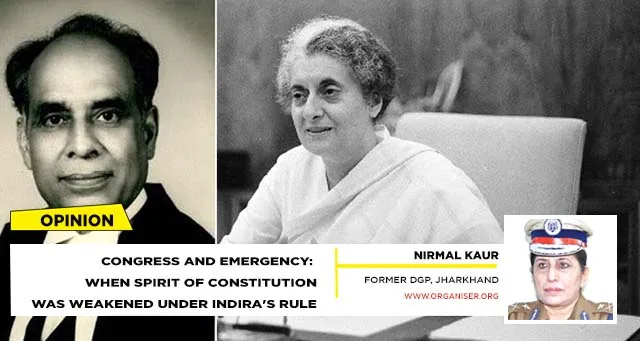
Sustained friction between the executive and judiciary, whittling down the spirit of the Constitution, is part of our legal history and legacy. Framing of the Bhartiya Constitution was a mammoth exercise consisting of debates, both in the plenary Assembly and at the committee level. Our Constitution, sculpted by the Drafting Committee headed by Dr BR Ambedkar, took three years in drafting. Drafts were discussed and debated upon clause by clause. The newly born enthusiastic nation included 22 paintings depicting Indian cultural heritage in the first copy of the Constitution.
Punished for Highlighting Woes of Victims of Partition
The Constitution came into effect on January 26, 1950. Immediately all existing laws in contravention of the Constitution became infructuous by the application of Article 13 of the Constitution. The present publication Organiser Weekly was reporting on the plight of the victims of Partition, evaluating the ground-level impact of the Union Government’s policies on the plight of refugees from East Pakistan. The Chief Commissioner of Delhi imposed a pre-censorship order on the Organiser Weekly under the East Punjab Public Safety Act, asking the then Editor Shri KR Malkani and publisher Shri Brij Bhushan to submit for prior approval of the Government all news “related to the plight of Hindus in East Pakistan”.
On April 10, publisher of Organiser Shri Brij Bhushan and Editor Shri KR Malkani filed a writ petition in the Supreme Court. Within a month, the court passed a judgement finding that the Government order in this case was violative of the Fundamental Right granting Freedom of Speech and Expression under Article 19 of the Constitution. (Brij Bhushan versus Chief Commissioner of Delhi).
Some other petitions violating such censorship orders violating the Freedom of Expression were filed too, for instance one by Romesh Thapar of Crossroads, a Leftist magazine of Kerala. All such orders were struck down under Article 13 of the Constitution by the Supreme Court as violative of the newly established Freedom of Speech.
This, amongst other rulings of the Courts, upset the Government. The then Prime Minister Jawaharlal Nehru moved the First Amendment under Article 368 of the Constitution on May 10,1951, in less than 16 months of the Constitution coming into force and before a democratically elected Parliament could even begin to function. The First Amendment was quickly passed within 38 days of being introduced, which inter alia curtailed Freedom of Speech by expanding the so-called “reasonable restrictions” that could be placed on the right. Crucially, Syama Prasad Mookerjee was one of the most steadfast opponents of the First Amendment in the provisional Parliament; he had questioned both the legitimacy of the provisional Parliament in enacting constitutional amendments and the design of the Government in curtailing speech critical of the newly-formed State of Pakistan.
Tussle between Executive & Judiciary
The cavalier manner in which the First Amendment was carried out not only undermined the sanctity of the Constitution but opened floodgates to a perpetual tussle between the Executive and the Judiciary. The First Amendment created a precedent that pre-empted a future culture of constitutionalism in which the necessity of constitutional amendments could be weighed by means of public debate. Thus, under Prime Ministers Jawaharlal Nehru and Indira Gandhi, the Constitution was amended each time the judiciary pronounced any significant law to be inconsistent with the Constitution: a cycle akin to cutting the arms of a person to fit the sleeves of a garment.
Notable amendments that came in the wake of judicial review of laws inconsistent with the Constitution inter alia are: 1st, 17th, 24th, 26th, 29th, 42nd. A few cases in which the law struck down under judicial scrutiny as ultra vires the Constitution was followed by amendment of the Constitution are: Kameshwar Singh vs State of Bihar, which dealt with the issue of land reform and was also set at naught by the 1st Amendment; IC Goloknath vs. State of Punjab, in which the 17th amendment was put to test. In Golaknath’s case, an 11-member bench of judges was constituted to decide on whether the power of Parliament to amend the Constitution is subject to any limitation. In it, the SC ruled that Art 368 merely lays down the procedure but all laws are made under Art 245. Hence, they are all reviewable.
Timeline of Emergency
1975
- June 12 : The event that triggered the Emergency took place on 12 June when the Allahabad High Court found Indira guilty of electoral malpractice. Raj Narain, rival in the Rae Bareilly constituency for the 1971 General Elections, had filed a case against her – alleging bribery and the use of Govt machinery to manipulate the election. Found guilty, she was disqualified, and barred from holding an elected office for six years
- June 22 : Opposition leaders addressed a public rally, after calling for daily anti-government protests after the High Court judgement
- June 24: The Supreme Court granted a conditional stay on the high court ruling. It allowed Indira Gandhi to remain as Prime Minister until her appeal was reviewed
- June 25: Led by Jayaprakash Narayan, protest took place in Delhi
- A few minutes before midnight, a state of emergency was declared by president Fakhruddin Ali Ahmed
- The supply of electricity to major newspaper offices was cut and opposition leaders were arrested
- June 26: Union Cabinet ratified the decision to impose the Emergency
- June 30: The Maintenance of Internal Security Act (MISA) was amended through an ordinance to allow the detention of any person who may pose a political threat by voicing opposition, without a trial
- July 5: Twenty six political organisations and social organisations, including the Rashtriya Swayamsevak Sangh (RSS) was banned
- July 23: The Rajya Sabha approved the Emergency
- July 24 : The Lok Sabha also passed the Emergency
- August 5: The Maintenance of Internal Security Act was imposed
1976
- May 4: As a result of a fallout with Sanjay Gandhi, Kishore Kumar’s songs were banned from playing on the AIR and Doordarshan
- September 1: Sanjay Gandhi’s notorious mandatory sterilisation programme was introduced to control the population
- November 2: The 42nd amendment, Indian Constitution’s most controversial one, was passed.
1977
- January 18: Indira Gandhi called for fresh Lok Sabha elections. Political prisoners were released
- January 20: The Lok Sabha was dissolved
- January 24: Several members of the opposition united against the Indira Govt to form the Janata Party, with Morarji Desai as its leader
- February 11: President Fakhruddin Ali Ahmed died, while still in office
- March 16: Both Indira Gandhi and Sanjay Gandhi lost their seats in the elections. The Janata Party and its alliance partners won 345 seats and came to power
- March 21: The Emergency was officially withdrawn
- March 24: Morarji Desai was sworn in as the Prime Minister of India
Struggle continued through important cases like Madhav Rao Scindia vs Union of India, in which the Presidential order abolishing Privy Purses was cancelled by the SC. Thereafter, Indira Gandhi dissolved the Parliament, came back with a greater majority and made the 24th Amendment to the Constitution, which inserted the fiction in Article 368 that it lays down not just the procedure but also the power of amendment.
Weakening Spirit of Constitution
The practice of amending the Constitution to neutralise became rampant in the Indira Gandhi era. For the flimsiest and most whimsical of reasons, the Constitution was amended over 40 times till the judiciary sat up and took notice of the harmful impact of the struggle of the executive against judiciary. This friction and tussle between the political executive and judiciary giving rise to amending the Constitution at the drop of a hat undoubtedly weakened the spirit of the Constitution. This process culminated in the case of Kesavananda Bharti, in which property of a Math in Kerala was acquired without due compensation. In this case, the Supreme Court propounded the Basic Structure Doctrine laying down that basic structure and features of the Constitution cannot be altered.
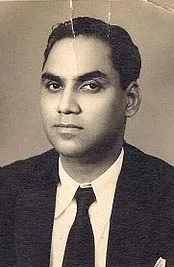
The climax of the aforesaid tussle came in 1975, when Allahabad High Court held that Indira Gandhi was guilty of electoral malpractice and thus disqualified her; subsequently, the Supreme Court refused to grant an absolute stay against this order. Having lost the mandate to be Prime Minister, Indira Gandhi imposed National Emergency citing reasons of internal security, putting all democratic norms to an end. This was a subterfuge to be able to continue ruling Bharat, which by then she had come to regard and treat as a family fiefdom. All Fundamental Rights were suspended and a litany of human rights abuses committed. All Opposition leaders and independent media publishers were jailed. MISA, a draconian and arbitrary law, was used against many innocent citizens, sometimes just for past personal grudges, as in the case of Maharani Gayatri Devi. All freedom for citizens came to an end.
Between 1967 and 1976, the glorious sense of the Nehru-Gandhi family burgeoned by their unchallenged ability to neutralise the judiciary. Indira Gandhi made mockery of the Constitution to be altered in any which way she liked. The idea of a “committed judiciary” proposed by her even led to the supersession of judges and the hand-picking of biddable justices. A similar process was carried out with respect to the bureaucracy and permanent executive. Gradually bureaucrats became increasingly partisan and loyalists of the Congress party. Loyalty to nation became synonymous with loyalty to Indira Gandhi with slogans like India is Indira and Indira is India.
The Preamble is most sacrosanct part of the Constitution that embodies the philosophy of the Constitution and aspirations of Bhartiya citizens. Even that was altered adding words Socialist and Secular to the Preamble by 42nd Amendment. The 42nd Amendment of Indian Constitution was enacted in 1976 and is the most controversial constitutional amendment in history. It tried to alter the basic structure of the constitution by limiting the powers of the court, altering preamble, state list, and more. It also introduced three major terms in the Constitution of India: Integrity, Socialist, and Secular. The Constitutional Spirit is often associated with the principles and values that underlie the holy document, illuminating the path of both Governments and citizens alike. Challenging the constitutional principles to serve myopic political agendas needs to be guarded against.













Comments