Know how Indira Gandhi autocratically called for an early election & led to the disruption of the democratic processes
December 5, 2025
  • Read Ecopy
  • Circulation
  • Advertise
  • Careers
  • About Us
  • Contact Us
Android AppiPhone AppArattai
Organiser
  • ‌
  • Bharat
    • Assam
    • Bihar
    • Chhattisgarh
    • Jharkhand
    • Maharashtra
    • View All States
  • World
    • Asia
    • Europe
    • North America
    • South America
    • Africa
    • Australia
  • Editorial
  • International
  • Opinion
  • RSS @ 100
  • More
    • Op Sindoor
    • Analysis
    • Sports
    • Defence
    • Politics
    • Business
    • Economy
    • Culture
    • Special Report
    • Sci & Tech
    • Entertainment
    • G20
    • Azadi Ka Amrit Mahotsav
    • Vocal4Local
    • Web Stories
    • Education
    • Employment
    • Books
    • Interviews
    • Travel
    • Law
    • Health
    • Obituary
  • Subscribe
    • Subscribe Print Edition
    • Subscribe Ecopy
    • Read Ecopy
  • ‌
  • Bharat
    • Assam
    • Bihar
    • Chhattisgarh
    • Jharkhand
    • Maharashtra
    • View All States
  • World
    • Asia
    • Europe
    • North America
    • South America
    • Africa
    • Australia
  • Editorial
  • International
  • Opinion
  • RSS @ 100
  • More
    • Op Sindoor
    • Analysis
    • Sports
    • Defence
    • Politics
    • Business
    • Economy
    • Culture
    • Special Report
    • Sci & Tech
    • Entertainment
    • G20
    • Azadi Ka Amrit Mahotsav
    • Vocal4Local
    • Web Stories
    • Education
    • Employment
    • Books
    • Interviews
    • Travel
    • Law
    • Health
    • Obituary
  • Subscribe
    • Subscribe Print Edition
    • Subscribe Ecopy
    • Read Ecopy
Organiser
  • Home
  • Bharat
  • World
  • Operation Sindoor
  • Editorial
  • Analysis
  • Opinion
  • Culture
  • Defence
  • International Edition
  • RSS @ 100
  • Magazine
  • Read Ecopy
Home Politics

Know how Indira Gandhi autocratically called for an early election & led to the disruption of the democratic processes

PM Modi's 'One Nation, One Election' initiative echoes a controversial past when Indira Gandhi prematurely dissolved the Lok Sabha in 1970 to consolidate her power, disrupting India's synchronised election cycle. This move foreshadowed the autocratic Emergency of 1975-1977

WEBDESKWEBDESK
Jun 7, 2024, 02:30 pm IST
in Politics, Bharat
Follow on Google News
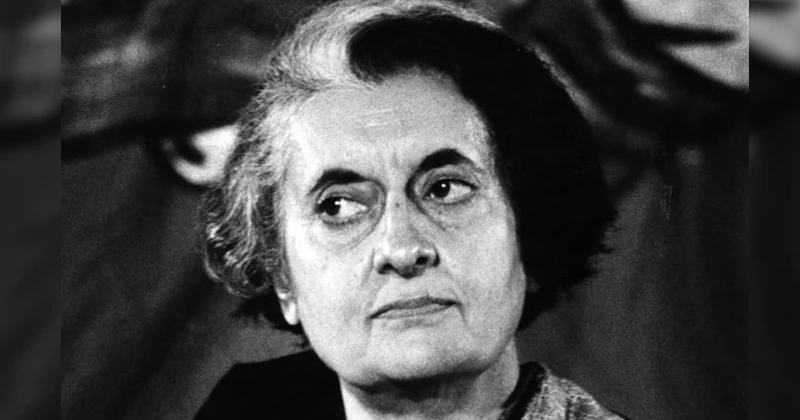
Former Prime Minister Indira Gandhi

Former Prime Minister Indira Gandhi

FacebookTwitterWhatsAppTelegramEmail

Prime Minister Narendra Modi’s recent push for ‘One Nation, One Election’ brings to light the controversial decisions of former Prime Minister Indira Gandhi, whose premature dissolution of the Lok Sabha in 1970 decoupled India’s synchronised election cycle. While this move secured her political power, it also began a series of autocratic measures that would later culminate in the infamous Emergency of 1975-1977. This article delves into the negative aspects of Indira Gandhi’s political legacy, highlighting the authoritarian streak that characterised her tenure.

On December 27, 1970, Indira Gandhi abruptly announced the dissolution of the Lok Sabha 15 months before its term ended. This unprecedented move was less about the nation’s welfare and more about consolidating her power. “In the present situation, we cannot go ahead with our proclaimed programme and keep our pledges to our people,” she stated. Still, critics argue that her true intention was to outmaneuver her political adversaries within and outside her party.

The dissolution was a calculated gamble aimed at sidestepping the growing opposition from the Congress’ Syndicate’—a powerful group of senior party leaders who viewed her with suspicion and sought to control her policies. By calling for early elections, Indira Gandhi effectively decoupled the national election cycle from the state assembly polls, disrupting a harmonious electoral process that had been in place since India’s first general elections in 1951-1952.

The late 1960s were a period of significant turmoil within the Indian National Congress. Following the deaths of Jawaharlal Nehru and Lal Bahadur Shastri, the party was rife with factionalism. Indira Gandhi’s assertive policies alienated senior leaders, including nationalising banks and abolishing privy purses.

In November 1969, she was expelled from the Congress for “violating party discipline.” Instead of stepping back, she formed a new faction, the Indian National Congress (Requisitions), which led to further party fragmentation. Her tactics were seen as a direct challenge to democratic norms within the party, as she sought to consolidate power by bypassing established structures and sidelining dissenting voices.

Indira Gandhi’s autocratic tendencies peaked with the Emergency declaration on June 25, 1975. Citing internal disturbances, she suspended civil liberties, imposed censorship on the press, and ordered the arrest of political opponents. These 21 months are widely regarded as one of the darkest chapters in Indian democracy, characterised by widespread human rights abuses, forced sterilisations, and the suppression of political dissent.

The Emergency was triggered by a court ruling that found her guilty of electoral malpractice and declared her 1971 election win void. Instead of stepping down, she clamped down on opposition, demonstrating a blatant disregard for democratic principles and judicial processes.

Her authoritarian streak marred Indira Gandhi’s political legacy. While her decision to dissolve the Lok Sabha early in 1970 successfully secured a decisive electoral victory, it set a precedent for the misuse of executive power. Her subsequent actions during the Emergency further underscored her willingness to undermine democratic institutions to retain control.

In contrast to Indira Gandhi’s disruptive actions, PM Modi has positioned himself as a proponent of electoral reform through his advocacy for ‘One Nation, One Election’. This policy aims to synchronise elections for the Lok Sabha, state assemblies, and local bodies, thereby reducing the frequency of elections and associated costs.

Modi argues that simultaneous elections will minimise the disruption of governance caused by the frequent imposition of the Model Code of Conduct, reduce election expenditure, and curb political instability and horse-trading. His administration has set up a high-level committee led by former President Ram Nath Kovind to explore the feasibility of this initiative, with recommendations to amend the Constitution and election-related laws to facilitate synchronised polls by 2029.

Unlike Indira Gandhi, who faced significant opposition within her party, Modi has maintained a strong grip on the Bharatiya Janata Party (BJP) and secured resounding electoral victories. Under his leadership, the BJP has won consecutive terms in the 2014 and 2019 general elections, achieving a majority in the Lok Sabha that surpasses the combined strength of the opposition parties.

Modi’s tenure has been marked by significant policy initiatives, including implementing the Goods and Services Tax (GST), introducing the Insolvency and Bankruptcy Code, and pushing for digitalisation through the Digital India campaign. Despite facing criticism on various fronts, including his handling of social issues and economic challenges, Modi’s governance style is characterised by a focus on decisive action and strong central leadership.

However, Modi’s administration has been subject to controversy. Critics argue that his policies often reflect a centralising tendency, echoing some of the autocratic measures seen during Indira Gandhi’s rule. Concerns have been raised about the erosion of democratic institutions, suppression of dissent, and the use of state machinery to target political opponents.

The abrogation of Article 370 in Jammu & Kashmir, the Citizenship Amendment Act (CAA), and the handling of protests against these measures have sparked significant debate and criticism, both domestically and internationally. While popular among his supporters, detractors have described Modi’s approach to governance as increasingly authoritarian, drawing parallels with Indira Gandhi’s more controversial actions.

Topics: PM ModiLok Sabha electionsIndira GandhiOne Nation One Election
Share1TweetSendShareSend
✮ Subscribe Organiser YouTube Channel. ✮
✮ Join Organiser's WhatsApp channel for Nationalist views beyond the news. ✮
Previous News

Nitish Kumar lashes out at I.N.D.I. Alliance, says they never worked for nation; Backs Narendra Modi in the third term 

Next News

Is EVM dead or alive?: PM Modi takes swipe at the opposition

Related News

Fact Check: Rahul Gandhi false claim about govt blocking his meet with Russian President Putin exposed; MEA clears air

“Inspiration for millions”: PM Modi gifts Russian edition of Bhagvad Gita to Putin

A representative image

‘One Nation, One Election’ gets constitutional green signal from law commission

Representative image

Navy Day 2025: Celebrating valour & strategic role of the Indian Navy in maritime security; PM Modi extends greetings

Prime Minister Narendra Modi

PM Modi pays tribute to Dr Rajendra Prasad on his birth anniversary

Prime Minister Narendra Modi

Historic November for India: From Ram Mandir to space-tech to global games, Bharat’s cultural, strategic & global rise

Load More

Comments

The comments posted here/below/in the given space are not on behalf of Organiser. The person posting the comment will be in sole ownership of its responsibility. According to the central government's IT rules, obscene or offensive statement made against a person, religion, community or nation is a punishable offense, and legal action would be taken against people who indulge in such activities.

Latest News

Image for representational purpose only, Courtesy Vocal Media

Bihar to get ‘Special Economic Zones’ in Buxar and West Champaran

Thirupparankundram Karthigai Deepam utsav

Andhra Pradesh: AP Dy CM Pawan Kalyan reacts to Thirupparankundram row, flags concern over religious rights of Hindus

23rd India-Russia Annual Summit

India-Russia Summit heralds new chapter in time-tested ties: Inks MoUs in economic, defence, tourism & education

DGCA orders probe into IndiGo flight disruptions; Committee to report in 15 days

BJYM leader Shyamraj with Janaki

Kerala: Widow of BJP worker murdered in 1995 steps into electoral battle after three decades at Valancherry

Russian Sber bank has unveiled access to its retail investors to the Indian stock market by etching its mutual fund to Nifty50

Scripting economic bonhomie: Russian investors gain access to Indian stocks, Sber unveils Nifty50 pegged mutual funds

Petitioner S Vignesh Shishir speaking to the reporters about the Rahul Gandhi UK citizenship case outside the Raebareli court

Rahul Gandhi UK Citizenship Case: Congress supporters create ruckus in court; Foreign visit details shared with judge

(L) Kerala High Court (R) Bouncers in Trippoonithura temple

Kerala: HC slams CPM-controlled Kochi Devaswom Board for deploying bouncers for crowd management during festival

Fact Check: Rahul Gandhi false claim about govt blocking his meet with Russian President Putin exposed; MEA clears air

Union Minister for Road Transport and Highways Nitin Gadkari (Right)

India set for highway overhaul as Union Minister Nitin Gadkari unveils nationwide shift to MLFF electronic tolling

Load More
  • Privacy
  • Terms
  • Cookie Policy
  • Refund and Cancellation
  • Delivery and Shipping

© Bharat Prakashan (Delhi) Limited.
Tech-enabled by Ananthapuri Technologies

  • Home
  • Search Organiser
  • Bharat
    • Assam
    • Bihar
    • Chhattisgarh
    • Jharkhand
    • Maharashtra
    • View All States
  • World
    • Asia
    • Africa
    • North America
    • South America
    • Europe
    • Australia
  • Editorial
  • Operation Sindoor
  • Opinion
  • Analysis
  • Defence
  • Culture
  • Sports
  • Business
  • RSS @ 100
  • Entertainment
  • More ..
    • Sci & Tech
    • Vocal4Local
    • Special Report
    • Education
    • Employment
    • Books
    • Interviews
    • Travel
    • Health
    • Politics
    • Law
    • Economy
    • Obituary
  • Subscribe Magazine
  • Read Ecopy
  • Advertise
  • Circulation
  • Careers
  • About Us
  • Contact Us
  • Policies & Terms
    • Privacy Policy
    • Cookie Policy
    • Refund and Cancellation
    • Terms of Use

© Bharat Prakashan (Delhi) Limited.
Tech-enabled by Ananthapuri Technologies