Somnath Mandir
The Somnath Temple was reconstructed by Sardar Vallabhbhai Patel, Babu Rajendra Prasad, and KM Munshi. Jawaharlal Nehru was the Prime Minister during that time. He didn’t visit Somnath.
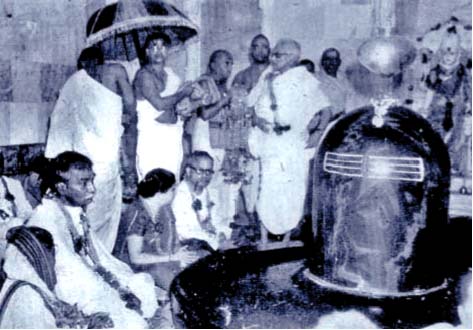
“I confess that I do not like the idea of your associating yourself with the spectacular opening of the Somnath Temple. This is not merely visiting a temple, which can certainly be done by you or anyone else, but rather participating in a significant function which unfortunately has some implications,” Nehru wrote to Rajendra Prasad, then President of India. Despite Nehru’s reservations, Prasad attended the Somnath temple’s inauguration in May 1951.
Ram Mandir
Congress leaders Sonia Gandhi, Mallikarjun Kharge, and Adhir Ranjan Chowdhury “respectfully” declined the invitation extended by Ram Janmabhoomi Temple Trust to attend the Pran Prathista ceremony in Ayodhya on January 22. In a statement, the Congress said that its senior leaders would not be attending the inauguration ceremony of the Ram temple in Ayodhya on January 22. “Lord Ram is worshipped by millions in our country” and “religion is a personal matter”.
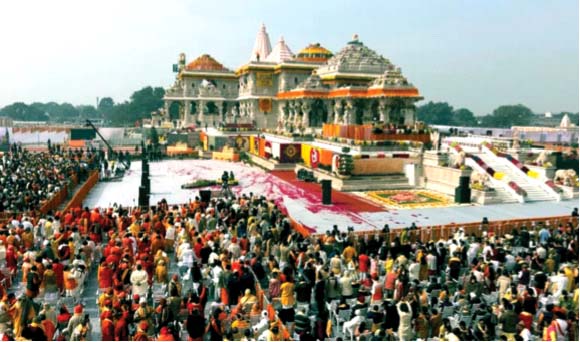
“Govind Vallabh Pant and Lal Bahadur Shastri, who were in the state government at that time, all wanted Ram temple but only one person was opposing it—Nehru,” wrote eminent author and former Rajya Sabha MP Balbir Punj, in his book Tryst with Ayodhya: Decolonisation of India.
Attack on Sadhus in 1966
Many political parties, Hindutva organisations and Sadhu Samaj came together. Their demand was a nationwide ban on cow slaughter. They also cited Article 48 of the Constitution in which ban on cow slaughter is enshrined. Children and women also took part in this movement. On November 7, 1966, the protest took a huge form. According to Hindu Panchang, that day was Gopashtami. Thousands of sadhus and other people had gathered outside Parliament. According to the Government’s figures, this number was only ten thousand, but if other sources were to be believed, this figure was up to 3 lakh. Demonstrators were protesting in a peaceful manner when suddenly some anti-social elements started climbing the walls of the Parliament and interrupted the peaceful protest. The crowd got out of control and lathi charge and tear gas were used to control the crowd. But seeing the crowd getting out of control, the police had to open fire.
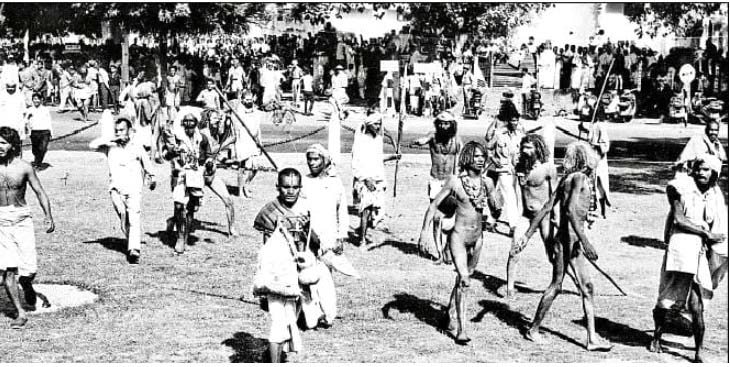
The agitators were accused of using violence, but if the purpose was violence, why would the children and women be made a part of this protest. Many small children died after being crushed in the stampede caused by the firing of bullets. Many sadhus also got killed. Neither did the issue of cow slaughter nor the massacre of sadhus arise later. The official figure is of the death of 250 people, but according to many eyewitnesses of this incident, this figure reaches 5000. Not only this, but all the evidence and documents related to this massacre were also destroyed. Saints never got justice and demand for justice for them vanished with their bloodspots. The then Prime Minister Indira Gandhi, not taking responsibility for this, had put the entire charge on the then Home Minister Gulzari Lal Nanda.
Waqf Act
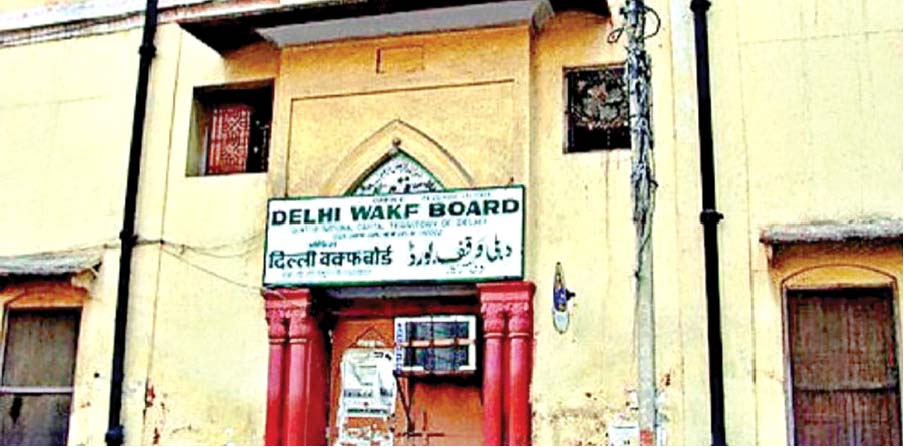
Waqf Act was first passed by Parliament in 1954. Subsequently it was repealed and a new Waqf Act was passed in 1995 which gave more powers to Waqf Boards. In 2013, this Act was further amended to give unlimited powers to Waqf Boards to claim on anyone’s property, which even could not be challenged in any court of law. In March 2014, just before the commencement of Lok Sabha Elections, the Congress gifted 123 prime properties in Delhi to Delhi Waqf Board by using this law.
Inserting secular word
If one were to go down the Indian history pages, there’s ample evidence to suggest that the words secular and socialist were never part of the Indian Constitution to start with. These words made their way into the preamble through the backdoor during the draconian internal emergency imposed by then Prime Minister Indira Gandhi on 25 June, 1975.
Places of Worship Act, 1991

Places of Worship (Special Provision) Act, 1991, was drafted to bar all cases seeking to restore Hindu Mandirs, even though it’s worded to cover all religious places, the factual and historical reality of last 1,000 years was one of the destruction of over 40,000 Mandirs by barbaric invaders and construction of towers of triumph upon many of them to suppress and destroy the spirit of our civilisation. The rationale peddled for PoW was that such a law is necessary to maintain peace and harmony.
Shah Bano Case

Mohd. Ahmad Khan v. Shah Bano Begum, commonly referred to as the Shah Bano case, was a controversial maintenance lawsuit in India, in which the Supreme Court delivered a judgment favouring maintenance given to an aggrieved divorced Muslim woman. The Muslim hardliners, clerics pushed the then Rajiv Gandhi government, elected in 1984, to pass the Muslim Women (Protection on Divorce Act), 1986. This law overturned the Supreme Court’s verdict in the Shah Bano case. The 1986 Muslim Women (Protection on Rights of Divorce) Act diluted the Supreme Court judgment and allowed maintenance to a divorced woman only during the period of iddat, or till 90 days after the divorce.
Hindu Refugees Denied citizenship
Congress refused to give citizenship to Hindu migrants from Pakistan, Bangladesh and Afghanistan Hindu Refugees till the party remained in power. After 7 decades, on December 11, 2019, the Citizenship (Amendment) Act, 2019 was passed by the Parliament under the Modi Government. It amended the Citizenship Act, 1955 by providing an accelerated pathway to Indian citizenship for persecuted religious minorities from Afghanistan, Bangladesh and Pakistan who arrived in India by 2014.
“Muslims should have first right to resources”
The Prime Minister Dr Manmohan Singh in December 2006 had said that Muslims should have first right to resources. He said, “We will have to devise innovative plans to ensure that minorities, particularly the Muslim minority, are empowered to share equitably in the fruits of development. They must have the first claim on resources. The Centre has a myriad other responsibilities whose demands will have to be fitted within the over-all resource availability.”
‘No historical evidence of existence of Bhagwan Ram’
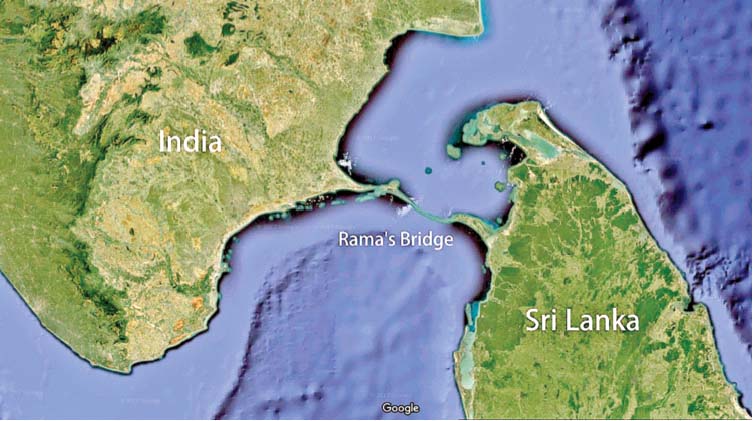
In September 2007, the then Congress-led UPA Government told the Supreme Court that there was no historical evidence to establish the existence of Bhagwan Ram or the other characters in Ramayana. In an affidavit filed before the apex court, the Archaeological Survey of India rejected the claim of the existence of the Ram Sethu bridge in the area where the project was under construction. The multi-crore rupee project proposes to provide a shorter sea route from Rameshwaram to Sri Lanka. Referring to the Ramayana, the affidavit said there is no “historical record” to incontrovertibly prove the existence of the character, or the occurrences of the events, depicted therein.
Coining “saffron Terrorism”
Leaders of Congress-led UPA coined the term “saffron terror” in the aftermath of the Malegaon blast of 2008. But this coinage it appears was an attempt at appeasement. There were recently exposed by the court.
“In malegaon bomb blast case the sc has stayed the trial against sameer sharad Kulkarni accused on my petition. The point is that there is no sanction for prosecution by the central government under sec 45 of the uapa act. Its a case of harassment a fake theory of hindu terror,” posted Advocate Vishnu Shankar Jain on X on April 30.
On January 20, 2013, Indian media across the country reported that the then Union Home Minister Sushil Kumar Shinde accusing BJP and RSS of conducting terror training camps and promoting “Hindu terrorism”! According to Outlook, Shinde at AICC meeting in New Delhi said, “One on hand we are trying to bring peace in this country. We are also taking steps against injustice to minorities as also against infiltration. But, in the midst of all this, we have got an investigation report that be it the RSS or BJP, their training camps are promoting Hindu terrorism. We are keeping a strict vigil on all this.”
According to a report published on First Post on September 12, 2013, addressing a Congress “Mahasammelan” at Kukshi in Madhya Pradesh, Digvijay Singh had used the word ‘Hindu terrorists’.