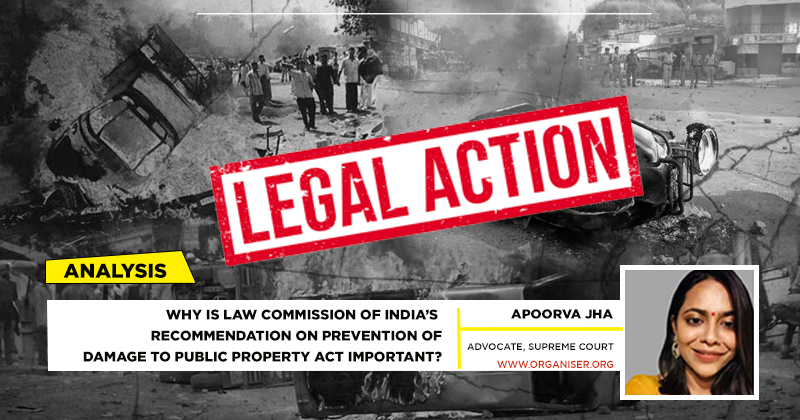
Why is the Law Commission of India’s Recommendation on the Prevention of Damage to Public Property Act important?
December 6, 2025
  • Read Ecopy
  • Circulation
  • Advertise
  • Careers
  • About Us
  • Contact Us
Android AppiPhone AppArattai
Organiser
  • ‌
  • Bharat
    • Assam
    • Bihar
    • Chhattisgarh
    • Jharkhand
    • Maharashtra
    • View All States
  • World
    • Asia
    • Europe
    • North America
    • South America
    • Africa
    • Australia
  • Editorial
  • International
  • Opinion
  • RSS @ 100
  • More
    • Op Sindoor
    • Analysis
    • Sports
    • Defence
    • Politics
    • Business
    • Economy
    • Culture
    • Special Report
    • Sci & Tech
    • Entertainment
    • G20
    • Azadi Ka Amrit Mahotsav
    • Vocal4Local
    • Web Stories
    • Education
    • Employment
    • Books
    • Interviews
    • Travel
    • Law
    • Health
    • Obituary
  • Subscribe
    • Subscribe Print Edition
    • Subscribe Ecopy
    • Read Ecopy
  • ‌
  • Bharat
    • Assam
    • Bihar
    • Chhattisgarh
    • Jharkhand
    • Maharashtra
    • View All States
  • World
    • Asia
    • Europe
    • North America
    • South America
    • Africa
    • Australia
  • Editorial
  • International
  • Opinion
  • RSS @ 100
  • More
    • Op Sindoor
    • Analysis
    • Sports
    • Defence
    • Politics
    • Business
    • Economy
    • Culture
    • Special Report
    • Sci & Tech
    • Entertainment
    • G20
    • Azadi Ka Amrit Mahotsav
    • Vocal4Local
    • Web Stories
    • Education
    • Employment
    • Books
    • Interviews
    • Travel
    • Law
    • Health
    • Obituary
  • Subscribe
    • Subscribe Print Edition
    • Subscribe Ecopy
    • Read Ecopy
Organiser
  • Home
  • Bharat
  • World
  • Operation Sindoor
  • Editorial
  • Analysis
  • Opinion
  • Culture
  • Defence
  • International Edition
  • RSS @ 100
  • Magazine
  • Read Ecopy
Home Analysis

Why is the Law Commission of India’s Recommendation on the Prevention of Damage to Public Property Act important?

The Law Commission of India's recommendation on the Prevention of Damage to Public Property Act holds significant importance due to its potential to address a pressing issue affecting public infrastructure and safety. By proposing amendments or updates to this legislation, the Commission aims to enhance the legal framework for safeguarding public property, promoting accountability, and deterring acts of vandalism or destruction

Apoorva JhaApoorva Jha
Feb 7, 2024, 05:00 pm IST
in Analysis
Follow on Google News
FacebookTwitterWhatsAppTelegramEmail

In a democracy, the ability of citizens to directly participate in public affairs and demand accountability from the Government is paramount. Article 19 of the Indian Constitution grants every citizen the right to freedom of speech and expression, including the right to dissent and criticise. The Supreme Court of India has repeatedly affirmed this right to peaceful protest. However, the Court has also repeatedly emphasised the Fundamental Duties of the citizens to safeguard public property and to abjure violence. A protest that turns violent or stops citizens from exercising their freedoms can be called an antithesis to the very idea of the right to protest under our Constitution. Therefore, reasonable restrictions can and must be placed on the freedoms granted under Article 19 of the Constitution.

The Prevention of Damage to Public Property Act of 1984 (PDPP Act) was implemented to prevent vandalism and destruction of public property during riots and public disturbances. However, the law proved insufficient to adequately deter offenders who engage in violence, destruction, or obstruction during protests. Recognising this shortcoming, the Supreme Court took Suo moto cognisance in June 2007 of various instances of large-scale destruction of public property. The Court appointed two committees headed by Justice K T Thomas and Fali S Nariman to provide recommendations to improve the existing law. Based on detailed recommendations by these committees, the Supreme Court issued multiple guidelines that would have been applicable the moment a demonstration was organised. Despite multiple recommendations by committees and judgments by the Supreme Court, the lawmaking process to amend the Prevention of Damage to Public Property Act moved slowly. In 2015, the Ministry of Home Affairs introduced the Prevention of Damage to Public Property (Amendment) Bill to update the existing Act. However, the amendment proposal could not advance at. Over the years, India has continued to grapple with widespread vandalism and destruction of public property by miscreants, despite existing laws. In 2018, the Supreme Court affirmed that violent demonstrations that disturb public order or threaten public property are not protected rights. For instance, the Court cited stone-throwing by crowds as a clear example of violent and disorderly conduct. The Court reiterated this view in the 2020 Shaheen Bagh case, underscoring the urgent need to strengthen the PDPP Act. Responding to the long-delayed implementation of recommendations, the 22nd Law Commission took Suo moto cognisance of the issue. After a careful review, of multiple violent protests, the Commission recently proposed necessary amendments and published its recommendations to urgently update the PDPP Act.

What are the recommendations?
Damaged Public Property? – Pay Up for Bail or Go to Jail

The committee has recommended amendments to Section 2 of the PDPPA Act, specifically stressing that in cases of public destruction, damages or losses to public property should be recovered from the culprits. The report cited the cases of Hemanth Kumar vs Sub Inspector of Police and Kamlesh vs Sub Inspector of Police, where the Kerala High Court ruled that compelling offenders to deposit the estimated value of the property in cases of public loss, as a condition for granting bail, would act as a sufficient deterrence. In case the court later finds the accused not guilty, the same amount will be refunded to them. Moreover, the committee has also proposed that the abetment of such violent protests should also be made an offence under the act. This would allow the law to hold any group calling for a protest resulting in public property damage liable for violating the act’s provisions unless proven otherwise.

The Police Should be Empowered to conduct Photography of incidents of Demonstrations

The Report cites the recommendation of the Supreme Court in the case of In Re: Destruction of Public & Properties Vs State of Andhra Pradesh. It was suggested that even if a trial takes place as per the provisions of the act, there are innumerable cases where a conviction does not take place due to lack of evidence. To address this problem, the areas of video evidence must be tapped into. The committee has suggested that Police should be empowered to make arrangements for videography in the areas where the protest is proposed to be held. Furthermore, copies of the video recordings must be kept as records and the videographer’s statement should also be recorded by the Sub-divisional Magistrate or the Executive Magistrate.

Obstruction of Public Places and Damage to Private Property
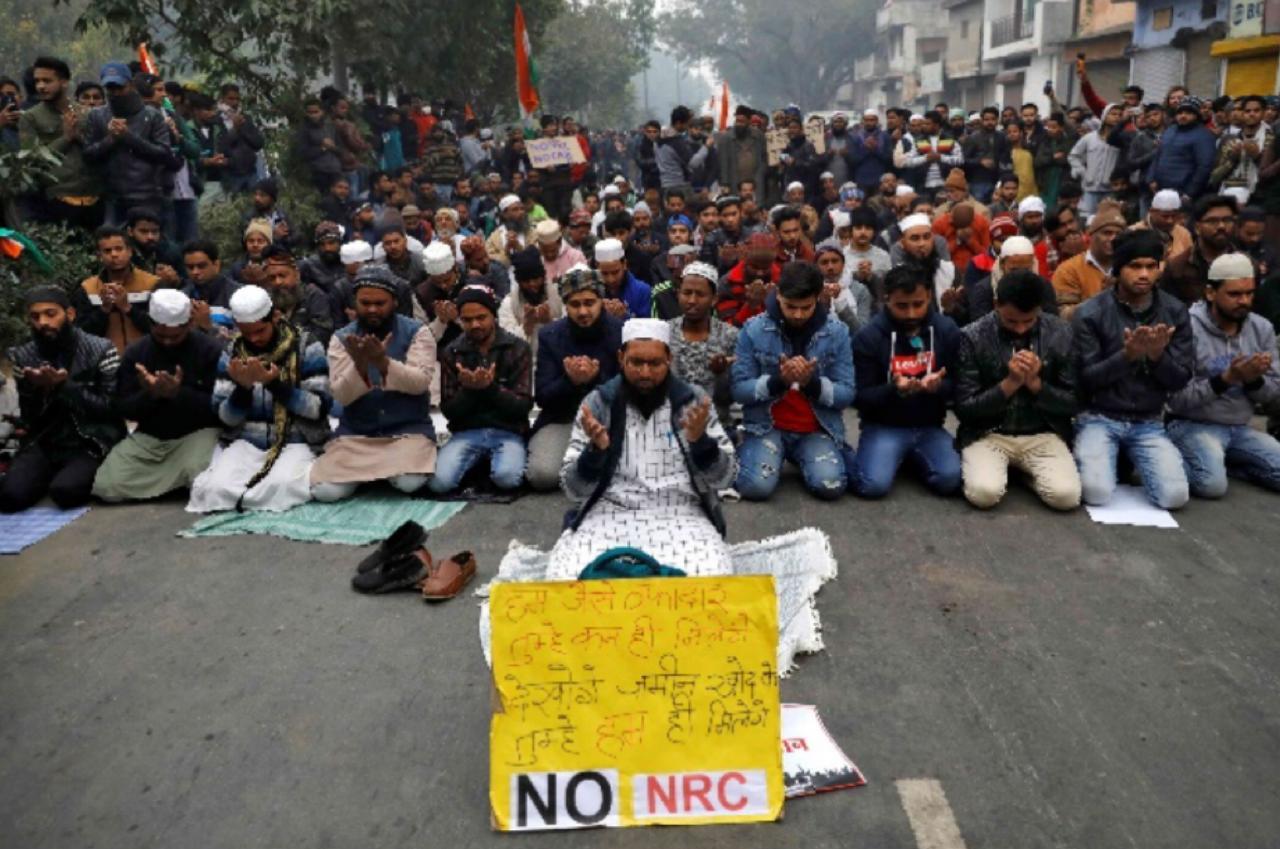
On the aspect of indefinite obstruction of public spaces, the committee highlighted the existing provisions dealing such with acts in the National HighWays Act 1956 & Railways Act 1989. However, the committee noted that the PPDA act does not specifically cover ‘Obstruction’ of public places. This leads to a situation where penalising obstruction of public places only applies to national highways and railways, leaving any paths not covered by these laws vulnerable to indefinite obstruction. During the Anti-CAA protests in 2019, roadblocks lasted for more than three months, causing grave inconvenience to the common citizens. Therefore, “either a new comprehensive law dealing with such obstruction be enacted, or specific provisions pertaining to the same may be amended in the Bhartiya Nyaya Samhita.”

Furthermore, in cases of damage to Private Property, the committee suggested that a separate law should be brought in as the Kerala Prevention of Damage to Private Property & Payment of Compensation Act, 2019, or relevant provisions should be added or amended in the Bhartiya Nyaya Samhita.

Over the past two decades, public and private property worth thousands of crores have been damaged during protests. While protests are an important democratic right, destroying public resources that belong to the society at large, negatively affects the common citizen. Any wilful damage to public property must not go unpunished. There must be a balance between allowing free speech while also protecting public property. The recommendations from the Law Commission aim to achieve this balance and must be implemented at the earliest to ensure that common resources of the country are not damaged by uncontrolled miscreants.

Topics: Supreme CourtPrevention of Damage to Public Property ActPDPPA Act
ShareTweetSendShareSend
✮ Subscribe Organiser YouTube Channel. ✮
✮ Join Organiser's WhatsApp channel for Nationalist views beyond the news. ✮
Previous News

Kerala one of most financially unhealthy States: Attorney General tells Supreme Court

Next News

PM Modi’s sarcastic swipe at Congress: ‘Pray You Secure 40’ quips in Rajya Sabha

Related News

The Supreme Court of India

Supreme Court allows extra support for overburdened BLOs, says SIR duties are mandatory for government staff

West Bengal Chief Minister Mamata Banerjee

West Bengal: NCBC delists 35 Muslim castes wrongly included in OBC category; Mamata govt’s appeasement politics exposed

Representation image of a Muslim woman (Tribune)

Supreme Court secures property rights of divorced Muslim women in landmark verdict

Supreme Court tears into Rohingya plea, says ‘Illegal entrants cannot claim rights meant for Indian citizens’

Supreme Court questions extending rights to illegal Rohingya entrants amid rising security fears

Supreme Court flags security concerns as Rohingya Habeas plea triggers sharp remarks

SC to Waqf Boards: Fix your own mess; UMEED portal deadline remains December 6

Load More

Comments

The comments posted here/below/in the given space are not on behalf of Organiser. The person posting the comment will be in sole ownership of its responsibility. According to the central government's IT rules, obscene or offensive statement made against a person, religion, community or nation is a punishable offense, and legal action would be taken against people who indulge in such activities.

Latest News

PM Modi presents Putin with Bhagavad Gita, chess set, and silver horse

Cultural ties strengthened: PM Modi presents Putin with Bhagavad Gita, chess set, and silver horse

Image for representational purpose only, Courtesy Vocal Media

Bihar to get ‘Special Economic Zones’ in Buxar and West Champaran

Thirupparankundram Karthigai Deepam utsav

Andhra Pradesh: AP Dy CM Pawan Kalyan reacts to Thirupparankundram row, flags concern over religious rights of Hindus

23rd India-Russia Annual Summit

India-Russia Summit heralds new chapter in time-tested ties: Inks MoUs in economic, defence, tourism & education

DGCA orders probe into IndiGo flight disruptions; Committee to report in 15 days

BJYM leader Shyamraj with Janaki

Kerala: Widow of BJP worker murdered in 1995 steps into electoral battle after three decades at Valancherry

Russian Sber bank has unveiled access to its retail investors to the Indian stock market by etching its mutual fund to Nifty50

Scripting economic bonhomie: Russian investors gain access to Indian stocks, Sber unveils Nifty50 pegged mutual funds

Petitioner S Vignesh Shishir speaking to the reporters about the Rahul Gandhi UK citizenship case outside the Raebareli court

Rahul Gandhi UK Citizenship Case: Congress supporters create ruckus in court; Foreign visit details shared with judge

(L) Kerala High Court (R) Bouncers in Trippoonithura temple

Kerala: HC slams CPM-controlled Kochi Devaswom Board for deploying bouncers for crowd management during festival

Fact Check: Rahul Gandhi false claim about govt blocking his meet with Russian President Putin exposed; MEA clears air

Load More
  • Privacy
  • Terms
  • Cookie Policy
  • Refund and Cancellation
  • Delivery and Shipping

© Bharat Prakashan (Delhi) Limited.
Tech-enabled by Ananthapuri Technologies

  • Home
  • Search Organiser
  • Bharat
    • Assam
    • Bihar
    • Chhattisgarh
    • Jharkhand
    • Maharashtra
    • View All States
  • World
    • Asia
    • Africa
    • North America
    • South America
    • Europe
    • Australia
  • Editorial
  • Operation Sindoor
  • Opinion
  • Analysis
  • Defence
  • Culture
  • Sports
  • Business
  • RSS @ 100
  • Entertainment
  • More ..
    • Sci & Tech
    • Vocal4Local
    • Special Report
    • Education
    • Employment
    • Books
    • Interviews
    • Travel
    • Health
    • Politics
    • Law
    • Economy
    • Obituary
  • Subscribe Magazine
  • Read Ecopy
  • Advertise
  • Circulation
  • Careers
  • About Us
  • Contact Us
  • Policies & Terms
    • Privacy Policy
    • Cookie Policy
    • Refund and Cancellation
    • Terms of Use

© Bharat Prakashan (Delhi) Limited.
Tech-enabled by Ananthapuri Technologies