





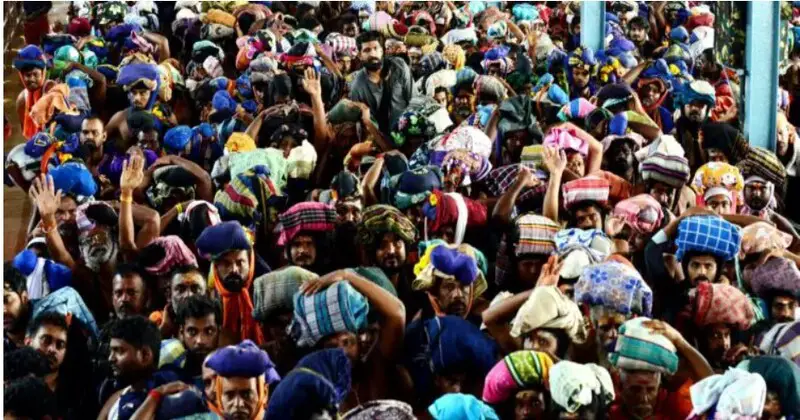
A recent Kerala High Court directive offers a glimmer of hope to the devotees visiting Sabrimala. The court has instructed the Travancore Devaswom Board (TDB), responsible for administering the temple, to address these critical issues and provide essential amenities for pilgrims.
This intervention underscores the longstanding concerns surrounding Sabarimala’s infrastructure. Hindu organisations, social workers, and even pilgrims themselves have raised these issues with successive governments and the TDB for decades, seemingly to no avail.
The High Court’s directive now puts the onus on the TDB to take concrete steps and alleviate the hardships faced by devotees. Ensuring adequate water sources, providing basic refreshments, arranging proper parking facilities, and expanding sanitation options are crucial to enhancing the pilgrimage experience.
Beyond addressing immediate concerns, this intervention also highlights the need for a long-term plan to develop Sabarimala’s infrastructure sustainably. The ever-increasing number of pilgrims necessitates improved facilities, particularly considering the challenging terrain and remote location.
This history of neglect, accusations of political capitalisation, and unaddressed grievances has fueled tensions between the temple administration, political parties, and Hindu groups.
The temple’s vast wealth, generated by the offerings of countless pilgrims, has attracted the attention of both the Left Democratic Front (LDF) led by the Communist Party of India (Marxist) and the Congress-led United Democratic Front (UDF). Both have been accused of treating Hindu affairs as political pawns, prioritizing electoral gains over the needs of devotees and the temple itself.
Historical Flashback: The 1950 Fire and Political Manoeuvres
The 1950 fire at the temple, a tragic event that saw the idol partially damaged, became a key chapter in this political drama. Both the Congress and Communist parties exploited the incident for their own agendas, promising swift action and investigations to woo voters. However, the promised report by the Tiru-Kochi government’s inquiry commission remained unpublished, fearing potential communal unrest.
The Communist government, despite publishing the report upon taking power in 1957, failed to take any action against the accused, citing “communal concerns.” This further fueled suspicions of political expediency and a lack of genuine interest in addressing the concerns of Ayyappa devotees.
Today, the RSS-inspired Hindu Aikya Vedi, VHP, and BJP continue to criticise both LDF and UDF, alleging their primary interest lies in the temple’s revenue rather than the welfare of devotees. They point to the long-standing issues with inadequate infrastructure, water scarcity, insufficient sanitation facilities, and limited safety measures despite the temple’s immense financial resources.
Beyond Politics: Addressing the Needs of Devotees
While the political tug-of-war over Sabarimala continues, the core issue lies in ensuring the safety, comfort, and spiritual experience of millions of devotees who undertake the arduous pilgrimage each year. Addressing the temple’s infrastructure deficiencies, implementing transparent financial management, and prioritising the needs of pilgrims over political agendas are crucial steps towards restoring trust and ensuring Sabarimala’s legacy as a revered centre of faith.
Pilgrims returning from Sabarimala paint a picture of a pilgrimage marred by overcrowding, inadequate facilities, and safety concerns. Despite the conclusion of the Mandala season (November-December), challenges persist as the temple prepares for the upcoming Makara Vilakku festival in mid-January.
Long queues stretching up to 15 hours, with some pilgrims managing only 8 hours, were the norm for reaching the holy 18 steps. Lack of drinking water, refreshments, and toilets added to the hardships. Many found their journeys cut short, forced to abandon the pilgrimage in Pandalam due to dehydration, hunger, and exhaustion. The 2018 floods significantly reduced Pampa’s capacity, exacerbating the overcrowding.
Parking woes plagued Nilackal, the intermediate station, with pilgrims stranded for hours under the scorching sun. Complaints were rife about exorbitant prices charged by food vendors, exploiting language barriers faced by pilgrims from other states.
Questions hang heavy over the adequacy of security personnel. The reported deployment of 615 police officers for eight-hour shifts during the busy mandala season, in stark contrast to the 2,000 assigned to Chief Minister Pinarayi Vijayan’s recent event, raises fears about crowd control. The tragic death of a 10-year-old girl and reports of police using force against protesting pilgrims further raise concerns.
The Travancore Devaswom Board (TDB) and Dewaswom Board Minister K. Radhakrishnan’s response, attributing the difficulties to an “unprecedented rush” and dismissing it as a “usual happening,” has drawn criticism.
With anticipation for the Makara Vilakku festival escalating, fears of similar chaos resurface. Reports suggest over one lakh pilgrims visited Sabarimala on January 5th, hinting at another season of overwhelming crowds.
Hindu organisations raise concerns about the uncleanliness of the Pampa riverbanks, possible water quality issues, and exorbitant KSRTC bus fares to Pampa, coupled with poor scheduling. December witnessed late-night protests by pilgrims highlighting these concerns.
As Sabarimala gears up for the next event, addressing the shortcomings of the mandala season becomes crucial. Ensuring proper crowd management, adequate facilities, and efficient safety measures are essential to preventing further hardship and tragedy. Addressing environmental concerns and pilgrim convenience are also vital. Only then can Sabarimala reclaim its sanctity and fulfil its role as a spiritual haven for millions of devotees.
Here is the relevance of the Kerala High Court (HC) Division Bench’s direction to the TDB to take efficient steps for crowd management and for the distribution of water and refreshments for the stranded pilgrims. HC asked the Board to urgently make arrangements for the same. The court directed the TDB to deploy a sufficient number of employees and volunteers, especially during the night, to lend a helping hand to the stranded pilgrims. Their presence is essential for U-turns and S-curves. HC also directed the brass of Kerala Water Authority and Public Health Department to consult TDB to ensure the implementation of the court order.
HC’s order was passed when it headed a suo moto petition regarding crowd management at Sabarimala during the Mandal – Makaravilakku seasons. Court court inquired about the parking facilities for the pilgrims. Court has also asked the TDB and Pathanamthitta District Police Chief to ensure the parking facilities for maximum number of vehicles at Nilackal. Bench said, even though Nilackal could contain 8,000 vehicles, the facility is partially underutilised. HC’s direction is based on the Amicus Curiae’s submission.
The court noted that they were informed that 100,372 pilgrims had darshan on January 2, 2024. The direction consists of the instructions to the Chief Police Coordinator at the shrine. HC ordered a special queue to be facilitated for the movement of women, small children, and disabled people.
HC also ordered the TDB to ensure cleanliness in queue complex and pilgrim sheds. Seventy-two employees to be deployed to work round-the-clock in shifts. An Executive Magistrate would carry out daily inspections to ensure cleanliness.
The same bench issued directions on December 13, 2023 regarding crowd management. The pitiable plight in Sabarimala speaks out the attitude and approach of the CPM and Congress regimes towards one of the largest Hindu pilgrims in Bharat despite it attracts pilgrims of other faiths too. The reason is too simple: Hindus are not a vote bank.
The High Court’s directive marks a significant step towards improving the Sabarimala pilgrimage experience. Whether the TDB effectively implements these recommendations and builds upon them for long-term development remains to be seen. However, it offers a ray of hope for the millions of devotees who undertake this arduous journey each year.













Comments