





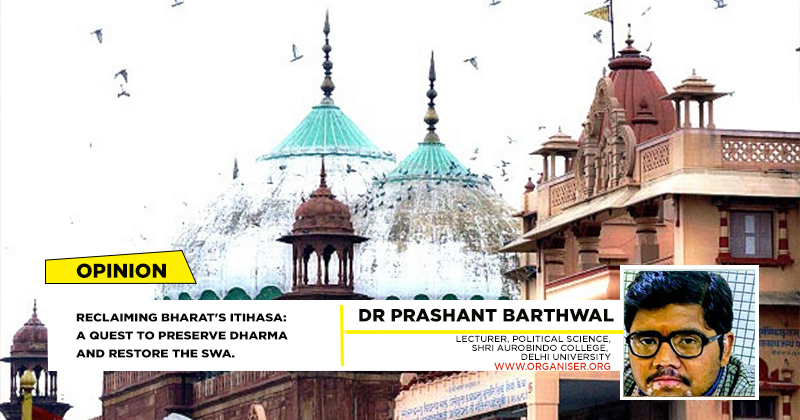
Bharat boasts a rich tapestry of history, culture, and spirituality that has evolved over millennia. Its ancient scriptures, epics, and philosophical treatises form the bedrock of what is collectively known as itihasa – the historical narratives that have shaped the ethos of the nation. However, the passage of time, colonial influences, and modernization have contributed to the gradual erosion of this invaluable heritage. In the face of such challenges, the question arises: How can Bharat reclaim its lost itihasa to safeguard Dharma (righteousness) and uphold the unique selfhood of the nation?
Preserving Ancient Texts and Traditions: Reclaiming Itihasà
The concept of ‘Itihasa’ in the Indian context refers to historical narratives, especially the epics like the Mahabharata and the Ramayana, which have shaped the cultural, spiritual, and ethical ethos of the Indian subcontinent for millennia. These narratives are not merely tales of yore but are considered ‘Itihasa’ – events that have unfolded in the past and have profound lessons for contemporary times. In recent times, there has been a growing concern about the dilution and distortion of Bharat’s Itihasà, which has led to debates about the need to reclaim it to safeguard Dharma and the unique identity of Bharat. The epics and other traditional texts like the Vedas and Upanishads provide a comprehensive framework for understanding Dharma, which encompasses righteousness, duty, and moral order. Itihasa serves as a repository of wisdom, ethical principles, and spiritual insights that have guided generations. However, with the advent of modernity and the influence of Western education and perspectives, there has been a tendency to view Itihasa through a reductionist lens, dismissing it as mere mythology or allegory rather than historical fact.
One of the primary steps towards reclaiming Bharat’s lost itihasa involves the meticulous preservation of ancient texts and traditions. The Vedas, Upanishads, Mahabharata, Ramayana, and Puranas hold the keys to understanding the philosophical, spiritual, and historical foundations of the nation. Initiatives must be undertaken to translate, transcribe, and disseminate these texts, making them accessible to the masses and future generations. Additionally, oral traditions, rituals, and folk practices that carry the essence of Bharat’s cultural identity need to be documented and conserved. To ensure the continuity of Bharat’s itihasa, a comprehensive overhaul of educational curricula is imperative. Schools and universities should incorporate a balanced and unbiased portrayal of Indian history, emphasising the contributions of ancient civilizations, scientific achievements, and cultural advancements. The teachings of revered sages, philosophers, and historical figures should be integrated into the educational system, fostering a sense of pride and connection to the nation’s heritage.
Promoting Cultural Awareness
Cultural awareness campaigns play a pivotal role in reclaiming lost itihasa. Initiatives that celebrate festivals, art forms, classical dance, music, and literature can help revive a sense of cultural pride among the populace. Museums and cultural institutions should actively work to showcase the rich history and diversity of Bharat, serving as repositories of knowledge for both locals and international visitors.
Harnessing Technology for Preservation
In the digital age, technology can be a powerful ally in reclaiming Bharat’s lost itihasa. Digitization efforts can ensure the preservation of ancient manuscripts, inscriptions, and artefacts, making them accessible to a global audience. Mobile applications, virtual reality experiences, and online platforms can be employed to disseminate historical information in innovative and engaging ways, particularly targeting the younger generation.
Fostering Interdisciplinary Research
Interdisciplinary research that brings together scholars, archaeologists, historians, linguists, and scientists is crucial for unravelling the layers of Bharat’s itihasa. Collaborative efforts can shed light on hitherto unexplored aspects of history, archaeology, and linguistics, providing a more holistic understanding of the nation’s past. This interdisciplinary approach can bridge gaps in knowledge and contribute to a more nuanced and accurate portrayal of Bharat’s historical narrative.
The Need for Reclamation
1. Preserving Cultural Identity: The distortion of Itihasa undermines the cultural and spiritual identity of Bharat. By reclaiming and interpreting Itihasa in its true essence, there can be a renewed sense of pride and connection to the ancient wisdom that has sustained the civilization for millennia.
2. Counteracting Western Narratives: The Western academic discourse has often portrayed Indian civilization through a colonial or orientalist lens, leading to misinterpretations and misrepresentations. Reclaiming Itihasa involves challenging and rectifying these narratives, presenting a more authentic and nuanced understanding of India’s past.
3. Reviving Dharma: Dharma is not just a religious concept but a holistic framework for righteous living. By reconnecting with the principles embedded in Itihasa, there can be a revitalization of Dharma, fostering ethical and moral values in society.
Strategies for Reclamation
1. Scholarly Research and Discourse: Encouraging rigorous academic research and scholarly discourse grounded in traditional Indian perspectives can provide a deeper understanding of Itihasa. This involves fostering collaborations between traditional scholars, academicians, and institutions to explore and interpret the texts authentically.
2. Educational Reforms: Integrating the study of Itihasa, along with other traditional texts, into the educational curriculum can ensure that future generations are exposed to the rich cultural and philosophical heritage from a young age. This involves developing curriculum frameworks that balance traditional wisdom with contemporary knowledge.
3. Cultural Revival: Promoting cultural practices, rituals, and traditions associated with Itihasa can foster a deeper appreciation and understanding of its significance. This includes organising festivals, seminars, workshops, and other cultural events that celebrate and explore the themes and narratives of the epics.
4. Digital Archiving and Dissemination: Leveraging digital technologies to archive, preserve, and disseminate Itihasa can make these texts more accessible to a global audience. Creating digital repositories, online courses, podcasts, and multimedia resources can facilitate wider dissemination and engagement with Itihasa.
Reclaiming Bharat’s lost itihasa is not merely an academic pursuit; it is a vital endeavour to safeguard the essence of Dharma and preserve the unique selfhood of the nation. Through concerted efforts in preserving ancient texts, revitalising educational curricula, promoting cultural awareness, harnessing technology, and fostering interdisciplinary research, Bharat can embark on a transformative journey towards reconnecting with its roots. In doing so, the nation can inspire a renewed sense of pride, identity, and unity among its people, ensuring that the timeless wisdom encapsulated in its itihasa continues to illuminate the path forward.
Further, this reclamation is not just an academic or cultural endeavour but a profound spiritual journey that holds the key to safeguarding Dharma and preserving the unique identity of Bharat for future generations.










Comments