





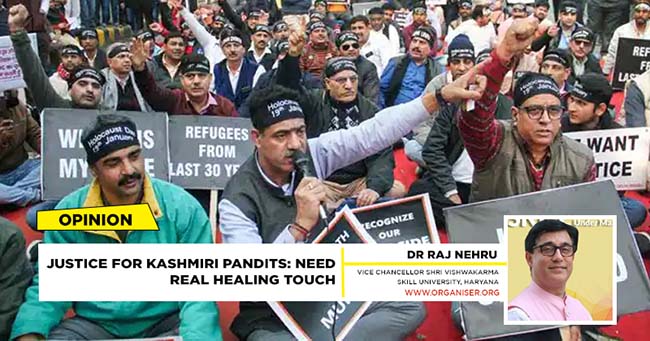
The recent Supreme Court remarks regarding the establishment of a Truth Commission and Reconciliation for Restorative Justice have sparked significant debate and reflection, especially amongst the Kashmiris in general and Kashmiri Pandit community in particular, on the challenges and opportunities such Truth Commissions can bring forth. While the honourable Supreme Court’s remarks are welcome and seem to aim at addressing historical injustices, fostering reconciliation, and promoting healing in this region that was once known for its spiritual pursuits.
Truth Commissions, in the last few decades, have gained importance in many countries and have become staple of post-conflict peacebuilding efforts. While such initiatives will hold promise for addressing past grievances and promoting peace, they also raise complex questions about the prospects for the return of the Kashmiri Hindu community to a completely transformed society that is fraught with religious radicalisation. The biggest challenge that Kashmir and Kashmiris are facing today is that the truth exists in many forms. My truth may not be yours and yours may not be mine and we still are strongly clinging to it resulting in the creation of multiple narratives. The lack of commonly accepted narrative regarding what happened, which socio-political structures were responsible for the atrocities and individual sufferings have further made the understanding and acceptance of the truth and the solution even more complicated.
Challenge of Rehabilitating Hindus
A broader examination of Truth Commissions set across the world provides a variety of perspectives. More than 35 Truth Commissions have been set up across the world in the last 50 years and among those the best known is the Truth and Reconciliation Commission of South Africa. It has become a model for other countries. Justice Sanjay Kaul has actually referred to this Commission and has mentioned that, “It served as a means of reckoning or catharsis for victims, and fostered peacebuilding.”
Kashmiri Pandits for long have been feeling a sense of abandonment. Any step in the direction of engaging them in a process where their experiences and grievances are heard, understood and acknowledged will be seen as an opportunity for healing and closure
Though South Africa was not the first country to set up the Truth Commission, many countries did, but arguably none of them achieved the success that South Africa did.
However, the proposed idea needs to be examined, before it has an official sanction from the Government, for its advantages and disadvantages from various dimensions, given that it has come from the highest institution of justice in India.
Advantages and Opportunities of a Truth Commission and Conciliation for Restorative Justice (TCCR):
Addressing Historical Injustices: The proposed Truth Commission and Conciliation for Restorative Justice can be a good potential platform where historical injustices committed can be highlighted, documented, and acknowledged. This has also been a long pending felt need of the community and will also uncover the core reasons for their forced exodus. Truth Commission and Conciliation for Restorative Justice can also help in understanding the complex dynamics that have shaped the region’s history in a more comprehensive manner. This can be undertaken by documenting and analysing the experiences of the affected individuals and communities. Through an empathetic process. by creating a shared understanding of historical events and promoting dialogue between different communities, it will also help balming the wounds. Examining historical events from social, political and economic dimensions will not only help shape the future mindset of the hapless community but will also help Governments to predict and place some strategic actions that can prevent such repetitions and address the grievances in an inclusive manner.
Facilitating Reconciliation: Truth Commission and Conciliation for Restorative Justice can facilitate in building an opportunity for mutual dialogue based out of empathising and understanding each other’s uniqueness at individual, community, and societal level. Kashmiri Hindus in general have gone through a heart wrenching sufferings for the past few decades. Truth Commission and Conciliation for Restorative Justice can nurture a mechanism where communities can understand each other’s stories and acknowledge the pain and sufferings they have gone through. A mere aspect of listening to each other with empathy, creating understanding of historical events and promoting dialogue between communities, has the power to repair the fractured relationships and a step to cement the lost mutual trust.
Healing and Closure: Kashmiri Hindus for long have been feeling a sense of abandonment by many and a mere lip service by few. They seriously feel a loss of identity and dignity and their grievance is that nothing concrete is done by anyone to restore this long pending complaint. Any step in the direction of engaging them in a process where their experiences and grievances are heard, understood and acknowledged will be seen as an opportunity for healing and closure. The Commission’s hearing can empower the victims to have their voice heard consequently raising their sense of recognition and justice.
Pathways to Return: The desire and question on return of Kashmiri Hindus to the Valley have never been addressed satisfactorily by anyone in the last few decades, in absence of a clarity. The progress and outcomes of Truth Commission and Conciliation for Restorative Justice can pave a way to reduce confusions, enhance clarity and build confidence of the various stakeholders for their future return and rehabilitation back in Kashmir with dignity and honour. The various options of returning to their original homes in Kashmir or few proposed townships or to one or two concentrated areas will also be seen through a broader spectrum with lesser doubt, suspicion and ambiguity and increased transparency.
Disadvantages and Challenges of a TCCR
Implementation Challenges: It is easier said than done. The kind of global radicalisation and its impact on the social developments that has shaped the thought process in the last few decades have deeply radicalised and polarised the society in Kashmir. Truth Commission and Conciliation for Restorative Justice requires detailed careful planning, unbiased resources, and community engagement at a broader level.
Community Willingness: While truth and reconciliation processes have the potential to promote healing and reconciliation, it is difficult to ensure the willingness and participation of different individuals, communities to engage in genuine dialogue and mutual understanding especially when fanaticism and communal divisions have deeply entrenched and made the situation complex and challenging. Truth Commission can be successful only when perpetrators are willing to come forward, face their victims and apologise for their actions. The success also depends on the willingness of the victims to understand the circumstances of the perpetrators and their willingness to forgive.
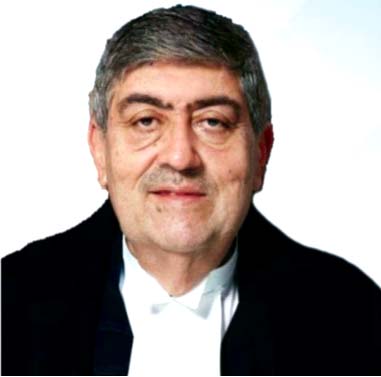
” I recommend the setting up of an impartial Truth and Reconciliation Commission. The commission will investigate and report on the violation of human rights both by State and non-State actors, perpetrated in Jammu & Kashmir at least since the 1980s and recommend measures for reconciliation ” -Justice Sanjay Kishan Kaul Supreme Court Judge
Politics of Opportunism: Kashmir has witnessed a history of opportunistic politics in last few decades and any move of Truth commission and Reconciliation for restorative justice will have to encounter the risk of political interference in the process. Truth Commission and Conciliation for Restorative Justice will have a serious challenge in building credibility for itself for want of having an impartial and independent commission that the people can trust for its findings and recommendations. The experience of political victimisation felt by Kashmiri Hindu community and radicalisation of political institutions has hardened the belief of minorities that the return to their homes will not be genuinely pursued, thereby endangering their physical, political, social and economic aspirations that are cornerstones for their return with dignity, safety and honour.
Lacking the Power: In the last few decades, the community has experienced and perceives that successive Governments have failed to prosecute the perpetrators who committed crimes, murders and were instrumental in their forced exodus, despite Governments in power. The question that will remain to be answered is what powers will this commission have in order to prosecute individuals. As unless the perpetrators are brought to justice, injustice will be seen unabated and the risk is that such Commissions may create a medium for perpetrators to further escape criminal accountability.
In conclusion, the establishment of a Truth Commission and Conciliation for Restorative Justice represent important steps toward addressing the historical injustices and fostering healing and reconciliation for Kashmiris in general and Kashmiri Pandits in particular. While the proposed idea holds potential, the prospect of the return of the Kashmiri Hindu community with dignity into a radicalised and polarised society demands a comprehensive and empathetic approach that prioritises their safety, security and rights community, while also addressing the broader societal dynamics that shaped their displacement. It is a call to action for all stakeholders to engage in an honest, sincere, and meaningful dialogue. However, this work of community, love, reconciliation, restoration cannot be entirely left to agencies and politicians. Society will play a key role if they collectively desire to see a peaceful tomorrow. It requires willingness, empathy, and inclusive decision-making to ensure that the wounds of the past are addressed, and the shared aspirations for peace, coexistence, and justice are realised for a Naya Kashmir.
Kashmir that has been the cradle of civilisation has been devastated by ongoing radicalisation and terrorism. Perhaps it is the right time to have such intervention through a Truth Commission as proposed by the honourable Supreme Court, given that the fatigue symptoms on ground are visible and a chance to provide a healing touch to dissolve intra community hurt and hate, desirable.
















Comments