Twenty Years of Iraq War: Unfinished agenda of ‘War on Terror’
August 4, 2026
  • Read Ecopy
  • Circulation
  • Advertise
  • Careers
  • About Us
  • Contact Us
Android AppiPhone AppArattai
Organiser
  • ‌
  • Bharat
    • Assam
    • Bihar
    • Chhattisgarh
    • Jharkhand
    • Maharashtra
    • View All States
  • World
    • Asia
    • Europe
    • North America
    • South America
    • Africa
    • Australia
  • Editorial
  • International
  • Opinion
  • RSS @ 100
  • More
    • Op Sindoor
    • Analysis
    • Sports
    • Defence
    • Politics
    • Business
    • Economy
    • Culture
    • Special Report
    • Sci & Tech
    • Entertainment
    • G20
    • Azadi Ka Amrit Mahotsav
    • Vocal4Local
    • Web Stories
    • Education
    • Employment
    • Books
    • Interviews
    • Travel
    • Law
    • Health
    • Obituary
  • Subscribe
    • Subscribe Print Edition
    • Subscribe Ecopy
    • Read Ecopy
  • ‌
  • Bharat
    • Assam
    • Bihar
    • Chhattisgarh
    • Jharkhand
    • Maharashtra
    • View All States
  • World
    • Asia
    • Europe
    • North America
    • South America
    • Africa
    • Australia
  • Editorial
  • International
  • Opinion
  • RSS @ 100
  • More
    • Op Sindoor
    • Analysis
    • Sports
    • Defence
    • Politics
    • Business
    • Economy
    • Culture
    • Special Report
    • Sci & Tech
    • Entertainment
    • G20
    • Azadi Ka Amrit Mahotsav
    • Vocal4Local
    • Web Stories
    • Education
    • Employment
    • Books
    • Interviews
    • Travel
    • Law
    • Health
    • Obituary
  • Subscribe
    • Subscribe Print Edition
    • Subscribe Ecopy
    • Read Ecopy
Organiser
  • Home
  • Bharat
  • World
  • Operation Sindoor
  • Editorial
  • Analysis
  • Opinion
  • Culture
  • Defence
  • International Edition
  • RSS @ 100
  • Magazine
  • Read Ecopy
Home World

Twenty Years of Iraq War: Unfinished agenda of ‘War on Terror’

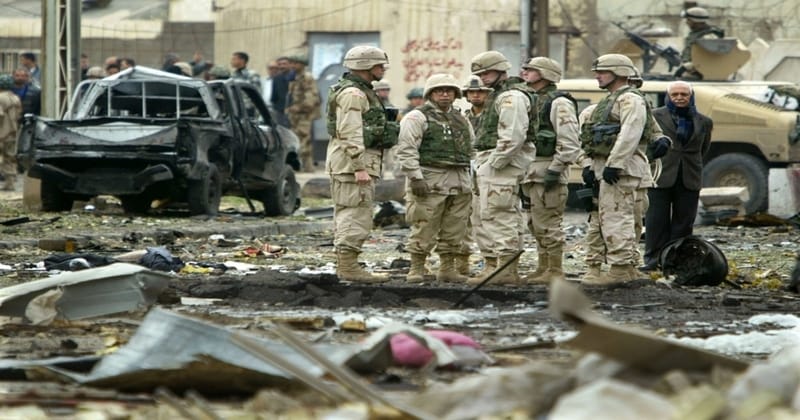
The Iraq War has been a prominent geopolitical conflict that has drastically altered the strategic environment and landscape of West Asia significantly

WEBDESKWEBDESK
Mar 23, 2023, 04:00 pm IST
in World
Follow on Google News
FacebookTwitterWhatsAppTelegramEmail

The Iraq War also known as the Second Gulf War was one of the most highly intense and highly contested politics West Asia has ever witnessed.

The main belligerents and key entities involved in this conflict were the United States of America, the United Kingdom, Australia and Poland along with forty other nations. They were referred to as “Coalition Forces.” The main antagonist in this conflict was Saddam Hussein and his Iraqi military.

The war began on March 19, 2003, and lasted for a period of eight years i.e. (2003-2011).

The September 11, 2001 attacks on the World Trade Center (WTC) were very well choreographed by a terrorist group operating from Afghanistan. It was Al-Qaeda. This attack led the US government to launch a campaign against terror entities. This was called the “Global War on Terror.”

In the aftermath of the First Gulf War, the Americans could not oust Saddam Hussein from his power. The American Intelligence community felt that Saddam must be eliminated to ensure world peace.

They created false and bogey narratives to fulfil their stated primary objectives. The first accusation the US placed on Iraq was that it harboured weapons of mass destruction. Secondly, they stated that Saddam’s government is supporting Al Qaeda.

Thirdly, they accused Saddam of purchasing uranium yellowcake from Niger and high-quality aluminium tubes for their covert and clandestine nuclear program.

They further justified their claims by stating that Saddam being a dictator committed grave human rights against Kurds and other Iraqis. The US gave a narrative that it was utmostly necessary to free the Iraqi people from his tyranny.

In 2002, President George W. Bush named three nations the “Axis of Evil”- These were Iraq, Iran and North Korea. According to the Bush government, America would not allow any of the three states to use weapons of mass destruction against anyone.

In reality, UN inspectors revealed that Iraq does not have any WMD program. It was also claimed by the intelligence of other leading nations that Iraq had no hand in supporting Al Qaeda and was not responsible for the September 11, 2001 attacks.

It is noteworthy to mention that France and Germany were not in favour of the Anglo-American Invasion of Iraq. Nevertheless, they gave an ultimatum to Saddam to leave Iraq within 48 hrs.

Saddam refused and on March 19, 2003, the Coalition forces launched “Operation Iraqi Freedom” by conducting heavy air strikes on Baghdad. Within a period of four weeks, Coalition forces captured major Iraqi cities.

On May 1, 2003, The US announced its victory. On 13 December 2003, Saddam was captured by American Forces from Ad-Dawr in an operation named “Red Dawn”.

He was tried for his war crimes and human rights violations and was hanged on 30 December 2006.

The US forces had to fight an eight-year-long insurgency organised by Saddam Fedayeen and his loyalist Baath Party supporters. In the year 2011, the American government under Barak Obama called off all US forces from Iraq.

Geopolitical Effects on West Asia

A political power vacuum engulfed the nation after the US invasion of Iraq and state institutions were significantly weakened. This created an environment or a breeding ground for terrorist outfits, especially ISIS (Islamic State of Iraq and Syria) also called Daesh and Al Qaeda.

This vacuum also allowed Iran to wield considerable influence in Iraq and West Asia. The balance of power shifted from Arab states to non-Arab entities namely the United States, Iran and Turkey.

Turkey is frustrated by the secessionist demands and activities of Kurds along its borders and Northern Iraq. The same concern is shared by Iran. Iraq and Afghanistan served as “strategic buffers” and helped in curtailing the influence of Iran in West Asia. Iraq has lost most of its influence to Iran.

The Iraq war has led to a high degree of sectarian violence. Multiple factions and militias have emerged. This has led to political instability.

After the Iraq War, the succeeding Iraqi government is plagued by problems of corruption, and demographic violence.

The war caused many peoples to become refugees and seek shelter in neighbouring nations of West Asia such as Jordan. The Jordanians are also worried about the spillover of violent extremism from Iraq to their country.

Topics: IraqTwenty years of the Iraq WarUnfinished Agenda on War of TerrorGeopolitical Effects on West AsiaWorld Trade CenterGlobal War on TerrorWar on Terror
Share5TweetSendShareSend
✮ Subscribe Organiser YouTube Channel. ✮
✮ Join Organiser's WhatsApp channel for Nationalist views beyond the news. ✮
Previous News

Chhattisgarh: Clash over burial of converted Christian; Tribals ask family to bury outside village or revert to Sanatan

Next News

India is secular because Hindus are in majority; former PM Atal Bihari Vajpayee’s interview with Javed Akhtar go viral

Related News

US President Donald Trump, Saudi Arabian Crown Prince Mohammed bin Salman, and Iranian cleric Mojtaba Khamenei

Saudi Arabia joins US in deadly strike on Iran-backed Iraqi Shia militia Popular Mobilisation Forces

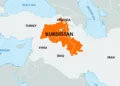
Kurdistan region - Courtesy: Britannica

Kurds remain strategic ally of USA despite being neglected

Popular Mobilization Forces (PMF) of Iraq who favours Tehran: An obstacle to West Asia strategy of the US

Iran’s Shadow Army: How Hashd al-Shaabi’s Drone War Unmasks Tehran’s Grip on Iraq | PMF

American journalist Shelly Kittleson

American journalist Shelly Kittleson kidnapped in Baghdad; Iraqi forces launch massive hunt, one suspect arrested

Massive US troop build-up and plans to capture Iran’s uranium stockpile signal a dangerous shift from diplomacy to potential conflict.

US eyes Iran ground raid as 57,000 troops mass in Gulf, fueling fears of major war escalation

Load More

Latest News

Keralam BJP VP KS Radhakrishnan alleges two Christian Bishops mobilised youths for CJP agitation

DRDO calls MSMEs to build swarm drones; The game-changing tech to consolidate India’s capabilities in next-gen warfare

Balochistan & Enthno-Nationalist Armed Resistance: A nightmare for the Pakistani Army

Tamil Nadu: Supreme Court refuses to stay HC order on Thiruparankundram Deepam; TVK govt faces legal setback

Beyond the “Gaumutra” jibe

FCRA and NGOs: Ensuring accountability, protecting sovereignty

Tamil Nadu: Hindu Munnani’s protest stops meat waste dumping at historic Shiva temple in Tiruvallur

Devotees throng Baba Baidyanath Dham in Deoghar

Jharkhand: Devotees throng Baba Baidyanath Dham in Deoghar on first Monday of Shravan

FCRA and NGOs: Rewriting the rulebook

India-China border trade resumes after 6 years; Himalayan routes of Nathu La, Shipki La & Lipulekh signal reset in ties

Load More
  • Privacy
  • Terms
  • Cookie Policy
  • Refund and Cancellation
  • Delivery and Shipping

© Bharat Prakashan (Delhi) Limited.
Tech-enabled by Ananthapuri Technologies

  • Home
  • Search Organiser
  • Bharat
    • Assam
    • Bihar
    • Chhattisgarh
    • Jharkhand
    • Maharashtra
    • View All States
  • World
    • Asia
    • Africa
    • North America
    • South America
    • Europe
    • Australia
  • Editorial
  • Operation Sindoor
  • Opinion
  • Analysis
  • Defence
  • Culture
  • Sports
  • Business
  • RSS @ 100
  • Entertainment
  • More ..
    • Sci & Tech
    • Vocal4Local
    • Special Report
    • Education
    • Employment
    • Books
    • Interviews
    • Travel
    • Health
    • Politics
    • Law
    • Economy
    • Obituary
  • Subscribe Magazine
  • Read Ecopy
  • Advertise
  • Circulation
  • Careers
  • About Us
  • Contact Us
  • Policies & Terms
    • Privacy Policy
    • Cookie Policy
    • Refund and Cancellation
    • Terms of Use

© Bharat Prakashan (Delhi) Limited.
Tech-enabled by Ananthapuri Technologies