
Hindutva – A Paradigm for Decolonisation
December 6, 2025
  • Read Ecopy
  • Circulation
  • Advertise
  • Careers
  • About Us
  • Contact Us
Android AppiPhone AppArattai
Organiser
  • ‌
  • Bharat
    • Assam
    • Bihar
    • Chhattisgarh
    • Jharkhand
    • Maharashtra
    • View All States
  • World
    • Asia
    • Europe
    • North America
    • South America
    • Africa
    • Australia
  • Editorial
  • International
  • Opinion
  • RSS @ 100
  • More
    • Op Sindoor
    • Analysis
    • Sports
    • Defence
    • Politics
    • Business
    • Economy
    • Culture
    • Special Report
    • Sci & Tech
    • Entertainment
    • G20
    • Azadi Ka Amrit Mahotsav
    • Vocal4Local
    • Web Stories
    • Education
    • Employment
    • Books
    • Interviews
    • Travel
    • Law
    • Health
    • Obituary
  • Subscribe
    • Subscribe Print Edition
    • Subscribe Ecopy
    • Read Ecopy
  • ‌
  • Bharat
    • Assam
    • Bihar
    • Chhattisgarh
    • Jharkhand
    • Maharashtra
    • View All States
  • World
    • Asia
    • Europe
    • North America
    • South America
    • Africa
    • Australia
  • Editorial
  • International
  • Opinion
  • RSS @ 100
  • More
    • Op Sindoor
    • Analysis
    • Sports
    • Defence
    • Politics
    • Business
    • Economy
    • Culture
    • Special Report
    • Sci & Tech
    • Entertainment
    • G20
    • Azadi Ka Amrit Mahotsav
    • Vocal4Local
    • Web Stories
    • Education
    • Employment
    • Books
    • Interviews
    • Travel
    • Law
    • Health
    • Obituary
  • Subscribe
    • Subscribe Print Edition
    • Subscribe Ecopy
    • Read Ecopy
Organiser
  • Home
  • Bharat
  • World
  • Operation Sindoor
  • Editorial
  • Analysis
  • Opinion
  • Culture
  • Defence
  • International Edition
  • RSS @ 100
  • Magazine
  • Read Ecopy
Home Editorial

Hindutva – A Paradigm for Decolonisation

Prafulla KetkarPrafulla Ketkar
Dec 6, 2022, 11:23 am IST
in Editorial
Follow on Google News
FacebookTwitterWhatsAppTelegramEmail

“So great, in fact, was the superiority of India in every respect, that it drew to her borders the hungry cohorts of Europe and thereby indirectly brought about the discovery of America. …And now, what has the world given to India in return for all that? Nothing but nullification [vilification] and curse and contempt. The world waded in her children’s life-blood, it reduced India to poverty and her sons and daughters to slavery, and now it adds insult to injury by preaching to her a religion which can only thrive on the destruction of every other religion. But India is not afraid.” –Swami Vivekananda, INDIA’S GIFT TO THE WORLD, Brooklyn Standard Union, February 27, 1895

Why are we embroiled in the issues of the past? Why bring past instances of aggression and mass murders into the present-day discussion when we are a composite, secular society? Is doing away with the symbols of colonisation going to solve the problems of poverty and inequality? English is the language of knowledge that connects us, so why harp on education in the mother tongue? The secular intellectuals usually raise these questions in response to the issues of revitalising Bharatiya Samskriti. These questions are nothing but the signs of colonial minds.

Every year, around December 6, there has been a fashion to talk about the death of democracy and secularism, citing the demolition of the controversial Babri structure. Taking laws into one’s own hands is not an appropriate resort in democracy. We must analyse the reasons behind a very patient and accommodative Hindu society opting for such an act. A large section of the intelligentsia was busy denying the historicity of Rama. They were taking pride in denigrating Hindu sentiments and whitewashing the barbarism of Islamist colonisers. The constant battle of Hindu society to reclaim the matter of faith was also mocked. A battery of legal luminaries using all the tricks were trying to delay the resolution of the problem. Karsevaks reinstalling the idol of Ram Lalla at the same site in Ayodhya was a reaction to all this hypocrisy going on by a group of historians, politicians and legal experts in the name of secularism. They see Ayodhya and other civilisational issues through a colonial prism and brand Hindutva as a communal expression. Hence, we need to apply the decolonisation paradigm to encapsulate the entire Hindutva movement, in which the liberation of Ram Janmabhoomi was a watershed moment.

As Pt Deendayal Upadhyaya had said, “As long as we are unaware of our national identity, we cannot recognise or develop all our potentialities”. British colonialism tried to suppress this very idea of our nationhood. Unlike the Babars and Ghoris, Macaulays and Trevelyans who not just politically and religiously subjugated the Bharatiya people but also tried to colonise us intellectually and morally. Though the aims of colonisation were identical, the instruments were different. The earlier invaders desecrated and destroyed the places of pilgrimage with the intent of attacking the dignity, unity, soul and sacredness of Mother Bharat. The British continued that process more clinically through laws, education and other instruments of servitude. This long and systematic process ingrained the divisive and degraded  self-perception. We gained political Independence politically, but the colonisation of intellectual space continued. That is why Gandhiji, in his Hind Swaraj, argues that the foundation that Macaulay laid of education has enslaved us.

Hindutva seeks to decolonise our national psyche as a thought movement and goes beyond religiosity. Viewing it as a political supremacist ideology is a flawed proposition. Our freedom fighters also expected complete decolonisation of our thought processes and structures throughout the freedom struggle.

Colonisation was a multi-dimensional and comprehensive process. Any attempt at decolonisation should address all those dimensions, and the intellectual and academic sphere is fundamental to it. Decolonisation has become a pressing academic issue in many British and American universities. Students are pulling down the statues of icons like George Washington and Cecil Rhodes, considering them as the symbols of slavery. There is no need to imitate the same blindly. We have had our knowledge tradition, the heritage of diverse languages and literature, an ideal combination of spiritual and scientific advancement and our own economic and business models that allowed us to dominate global trade for centuries without exploiting others. We need to revisit the same and recontextualise it in the present context. To do the same, we must unload the colonial baggage. Among the Panch Pran of Amrit Kaal, getting rid of the signs of slavery is essential to realise our true development potential. Strengthening and revitalising our cultural roots has become more critical while trying to spread the message of Vasudhaiva Kutumbakam with the assumption of the G-20 presidency.
 

Topics: Hindu societyHindutva movementBharatiya Samskriti
Prafulla Ketkar
Prafulla Ketkar
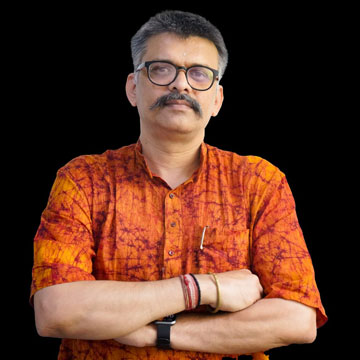
Prafulla Ketkar, is the Editor, Organiser (Weekly) since 2013. He has a experience of over 20 years in the fields of research, media and academics. He is also Advisory Committee School of Journalism, Delhi University. He has been writing on issues related to International politics and foreign policy, with special reference to China and Democracy, Hindutva, and Bharatiya Civilisation. He was also a member of the Editorial team of the recently published Complete Works of Pt Deendayal Ji in 15 Volumes. He has 2 books, 29 academic articles, 2 entries in Encyclopedia of India and numerous articles to his credit. [Read more]
Share7TweetSendShareSend
✮ Subscribe Organiser YouTube Channel. ✮
✮ Join Organiser's WhatsApp channel for Nationalist views beyond the news. ✮
Previous News

Since Indians wish to unite, it’s bounden duty of all Indians to own up Hindi as their language: Dr Babasaheb Ambedkar

Next News

Countering terror financing should be priority: NSA Doval at key Central Asian security ministers’ meeting

Related News

RSS: Century of thought

Pujya Swami Govinddev Giri Maharaj being conferred with the Dr Hedgewar Pragya Samman by Hon’ble Governor of Sikkim Om Prakash Mathur. Also seen (from left): Mahavir Prasad Rawat, Mahavir Bajaj, Dr Tara Dugad, Sajan Bansal, Lakshminarayan Bhala, Sajjan Kumar Tulsiyan, Mukul Kanitkar, Prof Ajay Pratap Singh, Banshidhar Sharma, Bhagirath Chandak, and Arunprakash Mallawat

Dr Hedgewar Pragya Samman Samaroh: Well being of the world lies in Hindutva

Celebrating 61 Years of Vishva Hindu Parishad: A look at the milestones and ongoing challenges

Sangha Shakha: Saraswati of harmony – Part 2

RSS Sarsanghchalak Dr Mohan Bhagwat inaugurating the new RSS karyalaya - Keshav Bhawan in Kanpur

“Dr Hedgewar and Dr Ambedkar aimed at eliminating selfishness and divisions”: RSS Sarsanghchalak, Dr Mohan Bhagwat

The state of harmony, strength and righteousness is Param Vaibhav: Dattatreya Hosabale, Sarkaryavah of RSS

Load More

Comments

The comments posted here/below/in the given space are not on behalf of Organiser. The person posting the comment will be in sole ownership of its responsibility. According to the central government's IT rules, obscene or offensive statement made against a person, religion, community or nation is a punishable offense, and legal action would be taken against people who indulge in such activities.

Latest News

PM Modi presents Putin with Bhagavad Gita, chess set, and silver horse

Cultural ties strengthened: PM Modi presents Putin with Bhagavad Gita, chess set, and silver horse

Image for representational purpose only, Courtesy Vocal Media

Bihar to get ‘Special Economic Zones’ in Buxar and West Champaran

Thirupparankundram Karthigai Deepam utsav

Andhra Pradesh: AP Dy CM Pawan Kalyan reacts to Thirupparankundram row, flags concern over religious rights of Hindus

23rd India-Russia Annual Summit

India-Russia Summit heralds new chapter in time-tested ties: Inks MoUs in economic, defence, tourism & education

DGCA orders probe into IndiGo flight disruptions; Committee to report in 15 days

BJYM leader Shyamraj with Janaki

Kerala: Widow of BJP worker murdered in 1995 steps into electoral battle after three decades at Valancherry

Russian Sber bank has unveiled access to its retail investors to the Indian stock market by etching its mutual fund to Nifty50

Scripting economic bonhomie: Russian investors gain access to Indian stocks, Sber unveils Nifty50 pegged mutual funds

Petitioner S Vignesh Shishir speaking to the reporters about the Rahul Gandhi UK citizenship case outside the Raebareli court

Rahul Gandhi UK Citizenship Case: Congress supporters create ruckus in court; Foreign visit details shared with judge

(L) Kerala High Court (R) Bouncers in Trippoonithura temple

Kerala: HC slams CPM-controlled Kochi Devaswom Board for deploying bouncers for crowd management during festival

Fact Check: Rahul Gandhi false claim about govt blocking his meet with Russian President Putin exposed; MEA clears air

Load More
  • Privacy
  • Terms
  • Cookie Policy
  • Refund and Cancellation
  • Delivery and Shipping

© Bharat Prakashan (Delhi) Limited.
Tech-enabled by Ananthapuri Technologies

  • Home
  • Search Organiser
  • Bharat
    • Assam
    • Bihar
    • Chhattisgarh
    • Jharkhand
    • Maharashtra
    • View All States
  • World
    • Asia
    • Africa
    • North America
    • South America
    • Europe
    • Australia
  • Editorial
  • Operation Sindoor
  • Opinion
  • Analysis
  • Defence
  • Culture
  • Sports
  • Business
  • RSS @ 100
  • Entertainment
  • More ..
    • Sci & Tech
    • Vocal4Local
    • Special Report
    • Education
    • Employment
    • Books
    • Interviews
    • Travel
    • Health
    • Politics
    • Law
    • Economy
    • Obituary
  • Subscribe Magazine
  • Read Ecopy
  • Advertise
  • Circulation
  • Careers
  • About Us
  • Contact Us
  • Policies & Terms
    • Privacy Policy
    • Cookie Policy
    • Refund and Cancellation
    • Terms of Use

© Bharat Prakashan (Delhi) Limited.
Tech-enabled by Ananthapuri Technologies