Pakistani Taliban is a volcano waiting to erupt
December 8, 2025
  • Read Ecopy
  • Circulation
  • Advertise
  • Careers
  • About Us
  • Contact Us
Android AppiPhone AppArattai
Organiser
  • ‌
  • Bharat
    • Assam
    • Bihar
    • Chhattisgarh
    • Jharkhand
    • Maharashtra
    • View All States
  • World
    • Asia
    • Europe
    • North America
    • South America
    • Africa
    • Australia
  • Editorial
  • International
  • Opinion
  • RSS @ 100
  • More
    • Op Sindoor
    • Analysis
    • Sports
    • Defence
    • Politics
    • Business
    • Economy
    • Culture
    • Special Report
    • Sci & Tech
    • Entertainment
    • G20
    • Azadi Ka Amrit Mahotsav
    • Vocal4Local
    • Web Stories
    • Education
    • Employment
    • Books
    • Interviews
    • Travel
    • Law
    • Health
    • Obituary
  • Subscribe
    • Subscribe Print Edition
    • Subscribe Ecopy
    • Read Ecopy
  • ‌
  • Bharat
    • Assam
    • Bihar
    • Chhattisgarh
    • Jharkhand
    • Maharashtra
    • View All States
  • World
    • Asia
    • Europe
    • North America
    • South America
    • Africa
    • Australia
  • Editorial
  • International
  • Opinion
  • RSS @ 100
  • More
    • Op Sindoor
    • Analysis
    • Sports
    • Defence
    • Politics
    • Business
    • Economy
    • Culture
    • Special Report
    • Sci & Tech
    • Entertainment
    • G20
    • Azadi Ka Amrit Mahotsav
    • Vocal4Local
    • Web Stories
    • Education
    • Employment
    • Books
    • Interviews
    • Travel
    • Law
    • Health
    • Obituary
  • Subscribe
    • Subscribe Print Edition
    • Subscribe Ecopy
    • Read Ecopy
Organiser
  • Home
  • Bharat
  • World
  • Operation Sindoor
  • Editorial
  • Analysis
  • Opinion
  • Culture
  • Defence
  • International Edition
  • RSS @ 100
  • Magazine
  • Read Ecopy
Home Opinion

Pakistani Taliban is a volcano waiting to erupt

To address the threat emerging from TTP, Pakistan needs to realise that a multidimensional approach is required that goes beyond kinetic operations

Manish RaiManish Rai
Jan 31, 2023, 10:00 pm IST
in Opinion, Jammu and Kashmir
Follow on Google News
FacebookTwitterWhatsAppTelegramEmail

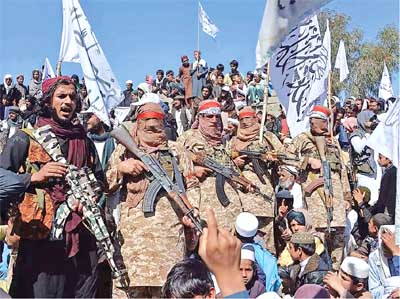
In June this year, Tehreek-e-Taliban Pakistan (TTP) declared an indefinite ceasefire to facilitate peace talks being brokered by the Afghan Taliban. But there have been regular clashes between TTP and Pakistan security forces since then, although both sides confirmed that the truce is still on. Recently, questions were raised over the fate of peace talks after some media publications reported that armed militants had returned to their former stronghold in Swat, Dir, and parts of the tribal districts of Khyber-Pakhtunkhwa province. Also, recently the Pakistan army said that five soldiers and at least four fighters died in a gun battle when security forces raided a hideout in Boyya, North Waziristan. TTP confirmed the clash and accused the government of bad faith, saying troops had recently attacked them in six districts, including Peshawar, the capital of Khyber Pakhtunkhwa province. Whether or not the negotiations progress, an imminent escalation of violence appears most likely. It has the potential to spread from the frontier into the urban areas, particularly given the fragile political and economic situation in the country.

Also, there are not many bright prospects for peace talks in the long term. The main sticking points are demands by the TTP to reverse FATA’s merger with Khyber Pakhtunkhwa province. Imposition of Sharia law in the area and the withdrawal of Pakistan’s military forces from the border region. These main demands of TTP are next to impossible to be fulfilled by the Pakistani deep state. The Taliban’s victory in Afghanistan emboldened the TTP, once one of the world’s most deadly terror groups. To intensify its insurgency against Islamabad. But it has also given it the confidence to expect a more deferential treatment from Islamabad that parallels that of the US toward the Afghan Taliban. Hence its highly unlikely that TTP will negotiate on any of its core demands. The Pakistani Taliban is trying to portray itself politically on the same lines as the Afghan Taliban but is essentially anti-Pakistan in its stance. The outfit has repeatedly refused to acknowledge the Durand Line; in this, they are getting tacit support from the Afghan Taliban.

It’s a matter of fact that TTP is the largest terrorist organisation in Pakistan. They may not be able to control large swaths of territory in tribal areas as they used to do till 2014. But certainly, it can launch a new wave of terrorist attacks across Pakistan if not checked in time

The alignment of interests between the Afghan Taliban and TTP goes deeper as the Afghan Taliban and TTP are Pashtun. It is thus alarming that, at the same time, the Afghan Taliban continues to challenge Pakistani territorial integrity by rejecting the Durand Line. The TTP is concurrently pressing for a reversal of the merger of the former Federally Administered Tribal Areas (FATA) and Khyber Pakhtunkhwa (KP). Together, these efforts could bring the idea of a mostly Pashtun-inhabited tribal borderland with a potential associated separatist movement into the mainstream.

Another source of the TTP’s aggressive stance is the perceived weakness of its opponent, i.e., the Pakistani State, which has been experiencing high levels of socio-economic and political instability. Mired in their own domestic problems, the Pakistani Government and military officials have come across as beleaguered, desperate for a peace deal to curtail violence. This perception is evident from the tones taken by the TTP’s chief, Mufti Noor Wali Mehsud, and spokesperson Muhammad Khurasani in their public statements since last October when these negotiations became public. For example, the TTP attributes the country’s problems like inflation and taxes, rising ethnic division, and government mismanagement of natural calamities to the “State cruel policies”, the corrupt practices of its civil and military leaders, and a lack of Sharia implementation.

The TTP’s links with transnational jihadi networks plus its demands to retain control of its weapons and de-merge FATA from KP, strongly suggests that the group intends to use the peace process to gain control of its old stronghold. In the past Afghan Taliban leaders like Mullah Umar and Sirajuddin Haqqani had repeatedly attempted to convince the TTP to focus on the Afghan Jihad and not to attack Pakistan. But these initiatives had always been futile because waging the Jihad against Pakistan forms the basis for TTP’s separate identity. These negotiations are most likely to be unproductive because TTP’s core has shown no indication of wanting to seek a peaceful resolution or of renouncing violence. The difficulties of negotiating a settlement with the TTP include its chequered history of violating previous agreements, such as the Malakand accord, and its fragmented nature. Peace negotiations often fail to work with a fragmented organisation because competing factions within the group will feel threatened if any political deal empowers their rivals. The TTP is not internally cohesive like the Afghan Taliban. And power struggles within different factions can result in heightened and prolonged violence as they will engage in outbidding and fratricidal violence. Internal competition can also result in defections, and in the TTP’s case, Islamic State Khorasan (ISK) has been and may continue to be an attractive alternative.

It’s a matter of fact that TTP is the largest terrorist organisation in Pakistan. They may not be able to control large swaths of territory in tribal areas as they used to do till 2014. But certainly, it can launch a new wave of terrorist attacks across Pakistan if not checked in time. The real operational strengths of the Pakistan Taliban are its affiliates and support networks, which still exist and are thriving inside Pakistan. Unlike the Afghan Taliban, the TTP has been designated as a foreign terrorist organisation by the US. The TTP is closer to the global jihadist agenda of targeting the far enemy. To address the threat emerging from TTP, Pakistan needs to realise that a multidimensional approach is required that goes beyond kinetic operations. In addition to building up military pressure on the TTP. Much effort and resources need to be poured into countering violent extremism (CVE) measures, deradicalisation programmes, and the potential reintegration of combatants in TTP-affected regions.

Topics: Afghan TalibanIslamic State Khorasanterrorist organisation in PakistanTehreek-e-Taliban PakistanTTP’s aggressivePakistan
Manish Rai
Manish Rai
The writer is a Political Analyst for West Asia and Af-Pak Region. [Read more]
Share12TweetSendShareSend
✮ Subscribe Organiser YouTube Channel. ✮
✮ Join Organiser's WhatsApp channel for Nationalist views beyond the news. ✮
Previous News

Baloch people running out of patience

Next News

Budget 2023-2024: Great Expectations amid global challenges

Related News

Representative Image

Pakistan slipping into authoritarian rule, lawyers of the country warn

Bangladeshi army officer and senior BNP leader Col Abdul Haque

A former Bangladeshi army officer & BNP leader urges youth to get army training to sever Northeast from India

Pakistani traders protest mounting losses as prolonged border closures disrupt regional commerce and strain ties with Kabul

Taliban strike back as Pakistan border shutdown with Kabul choke trade routes and trigger protest at home

Enforced disappearances and extra judicial killings by Pakistan authorities spike in Balochistan

Enforced disappearances & extra judicial killings spike in Balochistan; Reflects the atrocities of Pak security forces

Representative Image

Conflict escalates between Pakistan and Afghanistan: Four Afghan civilians killed, four injured near Spin Boldak border

Representative Image

Pakistan: Negligence of govt leads to decay of sacred Hindu temples in the country; Only 37 functional out of 1817

Load More

Comments

The comments posted here/below/in the given space are not on behalf of Organiser. The person posting the comment will be in sole ownership of its responsibility. According to the central government's IT rules, obscene or offensive statement made against a person, religion, community or nation is a punishable offense, and legal action would be taken against people who indulge in such activities.

Latest News

(From Left To Right) Karnataka Deputy CM DK Shivkumar, Supreme Court Lawyer Kapil Sibal, BJP MLA Basanagouda Patil Yatnal

Karnataka: Government’s use of Kapil Sibal in DK Shivakumar case not officially authorised, documents reveal

Representative Image

A Partnership Forged in History: The enduring strength of India–Russia Relations

Representative Image

A Song that Stirred Freedom—Why is Vande Mataram questioned today?

Madhya Pradesh: 10 Maoists including KB division’s most wanted commander Kabir surrender in Balaghat

Representative Image

150 Years of Vande Mataram: Know all about the ban imposed by Nizam’s ban, students’ revolt

Representative Image

Pakistan slipping into authoritarian rule, lawyers of the country warn

Representative Image

China-Japan face-off escalates across Indo-Pacific: An emerging threat to the peace & security of the maritime domain

Defence Minister Rajnath Singh(File Photo)

Defence Minister unveils Galwan War Memorial; Hails border connectivity as key to success in Operation Sindoor

UMEED Portal

UMEED Portal deadline ends: Logs 5.17 lakh Waqf properties, with 2.16 lakh approved, 2.13 lakh pending, 10,869 rejected

R. Sreelekha IPS (Retd.)

Kerala: Interview with R. Sreelekha IPS (Retd.) — BJP’s Thiruvananthapuram Municipal Corporation Candidate

Load More
  • Privacy
  • Terms
  • Cookie Policy
  • Refund and Cancellation
  • Delivery and Shipping

© Bharat Prakashan (Delhi) Limited.
Tech-enabled by Ananthapuri Technologies

  • Home
  • Search Organiser
  • Bharat
    • Assam
    • Bihar
    • Chhattisgarh
    • Jharkhand
    • Maharashtra
    • View All States
  • World
    • Asia
    • Africa
    • North America
    • South America
    • Europe
    • Australia
  • Editorial
  • Operation Sindoor
  • Opinion
  • Analysis
  • Defence
  • Culture
  • Sports
  • Business
  • RSS @ 100
  • Entertainment
  • More ..
    • Sci & Tech
    • Vocal4Local
    • Special Report
    • Education
    • Employment
    • Books
    • Interviews
    • Travel
    • Health
    • Politics
    • Law
    • Economy
    • Obituary
  • Subscribe Magazine
  • Read Ecopy
  • Advertise
  • Circulation
  • Careers
  • About Us
  • Contact Us
  • Policies & Terms
    • Privacy Policy
    • Cookie Policy
    • Refund and Cancellation
    • Terms of Use

© Bharat Prakashan (Delhi) Limited.
Tech-enabled by Ananthapuri Technologies