





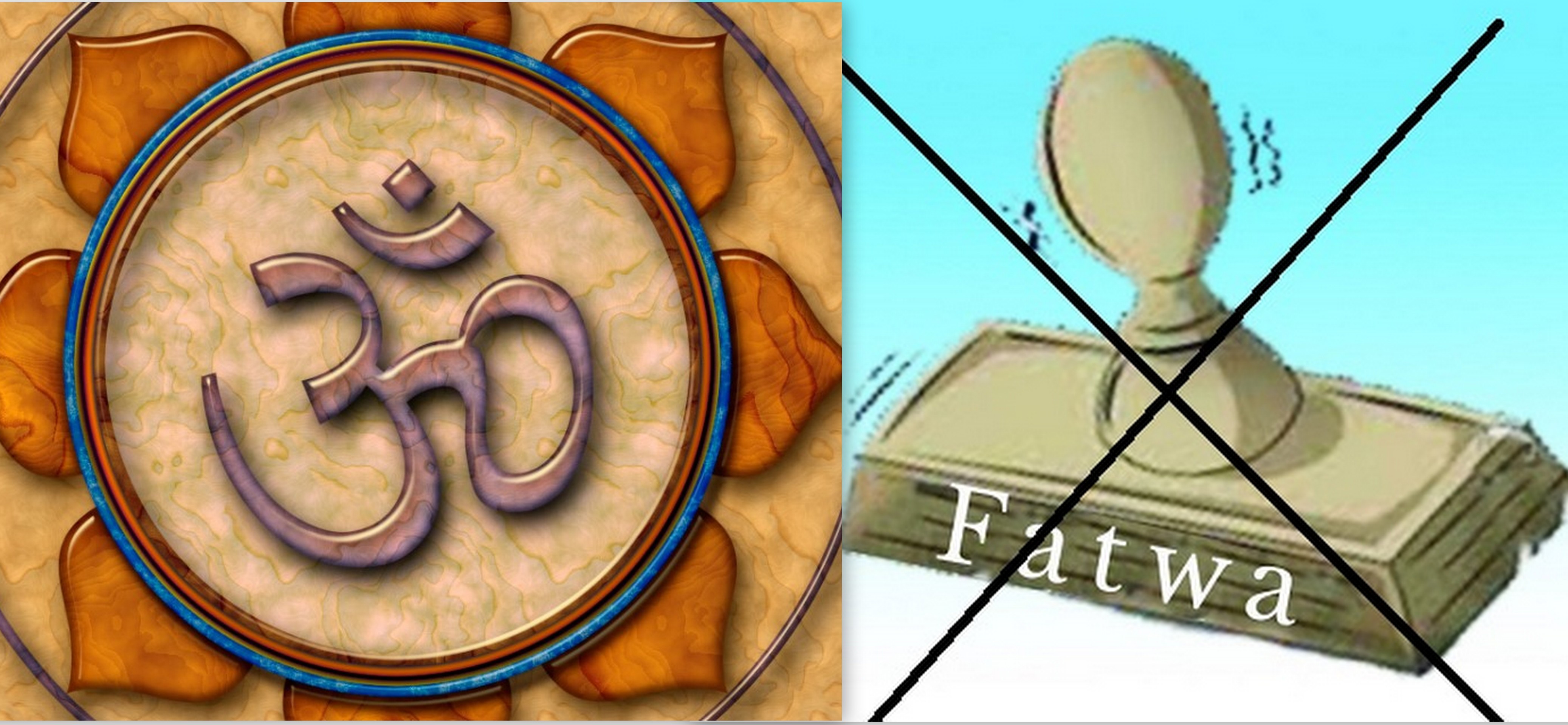
“A fatwa is usually an order issued by a religious leader. The Collins English dictionary defines it as a non-binding judgment according to the Islamic law given by a recognized religious authority. A fatwa is invalid in Indian law, but that does not prevent fatwas from being issued repeatedly. Fatwas have also been seen as a threat to human liberty. Fatwas against writers like Taslima Nasreen, for instance, have prevented them from traveling or delivering speeches. ”
Dr. Ashish Kumar Dwivedy
It was August 9, 2020. A Sunday. Amidst the shadows of a pandemic, the nation was gearing up for her 74th Independence Day celebrations. It again was the day when the country saw a record single-day jump of 64,399 coronavirus patients, taking the total tally past the 21 lakh mark. The Home Minister was receiving treatment, having tested positive. Covid-19 hospitals were erected on a war footing. The country needed more and more ventilators. More than anything else, it required its COVAXIN–the first indigenous Covid-19 vaccine of India.
August 9, 2020, was also the day when a series of posters were doing the rounds at Adwaita Nagar village in Murshidabad district, West Bengal. They contained a list of embargoed activities under a fatwa issued by a social reforms committee of the minority-dominated village. The fatwa imposed a fine of Rs 1000 for someone found watching TV, Rs 500 for playing carom, and Rs 2000 for buying the lottery. The issuers found no problem with the fatwa. They saw in it a move to correct the youth.
A fatwa is usually an order issued by a religious leader. The Collins English dictionary defines it as a non-binding judgment according to the Islamic law given by a recognized religious authority. A fatwa is invalid in Indian law, but that does not prevent fatwas from being issued repeatedly. Fatwas have also been seen as a threat to human liberty. Fatwas against writers like Taslima Nasreen, for instance, have prevented them from traveling or delivering speeches. There is no limitation to the type of fatwas that can be issued. Fatwas have ranged from the rational–such as the fatwa against terrorism and terrorist organizations, issued by 70,000 Indian clerics–to the most bizarre, such as prohibiting women from watching men’s football since the issuers strongly felt that women watched football to ogle at men’s thighs! Again there was a fatwa requiring men to go for clothing that covered their thighs. A Kolkata-based organization warned Sania Mirza to wear proper clothes (during tennis bouts) for not doing so had a corrupting influence on the youth. The fatwa at Adwaitanagar also carried a reward of Rs.200 – Rs.1000 for an informer who helps in catching the violators of the fatwa. The fatwa aimed at promoting halal (lawful) and suppressing haram (sinful).
Ideas of virtue and sin have existed in all religions. Performing acts, the scriptures approve of contributing to virtue, and those prohibited (by the scriptures) contribute to sins. We, in India, for ages have known them as papa (sin) and Punya (virtue). In Indian culture, there have been long-running discussions on what makes up a righteous act. To simplify the matters, expert advice was frequently sought as the disputes were so complex, and beyond the comprehension of the common human. For instance, the iconic statement “Astadasa Puranesu Vyasena Vachanam Dwayam, Paropakaraya Punyaya–Papaya Para Peedanam“, is a valiant attempt to simplify the distinction between virtue and sin. The above saying appears to a subh??ita (wise saying), listed as No. 3587 in the Maha Subhasita-Sangraha. When translated, it simply means that in the course of the eighteen Pur??as, the sage Vy?sa has made two significant statements: doing help to others results in religious merit, doing injury to others brings about sin. Going by the above thumb rule, any so-called religious decree that ends up hurting an innocent sports person trying to prove herself in a fiercely competitive environment is a sin!
Sanatana Dharma, with her single point agenda of moksha (loosely translated as liberation), and was extremely careful while classifying the acts as lawful and sinful. Let us look at a few instances. Lord Rama, the omniscient, doubly aware of the purity of Sita–the Sati, also bowed down to public opinion and dissociated Himself from the women he loved more than His life. Was he a perfect king, ever focussed on Raja dharma? Or a plain awful husband, a culprit before Sita? The sacred land of Ayodhya, nay the whole of Aryabrata, is still struggling for an answer. The only argument that comes in handy is that Sri Rama being the Maryada Purushottam–the best among men who could do no wrong. A king has no personal life. In so many ways, this singular act of Rama defies the binaries of good and bad; of lawful and sinful. What was unlawful for a husband had to be accomplished by the king for the greater common good. Sri Rama’s Punya was Sri Rama’s papa, for both the king and the husband were one. The Punya that concerned many was finally considered before the Punya that concerned only one. A Husband sinned to facilitate the King preserve the moral fabric of the society. The Sinner repented his life away while the King could successfully establish Ramarajya–an ultimate example of statecraft. Ask any issue of a religious decree to step into the shoes of Rama and grapple with the complexities that life offered.
Religious decrees, such as those mention above, clearly belittle the complexities that this civilization has endured, long, long before the birth of most religions. Long before the birth of arithmetic in many parts of the world, if one is to offer an analogy, Indians were solving complex calculus! Probably that is the reason they could look beyond the black and white and declare:
na karma?? na prajay? dhanena ty?genaike am?tatvam?na?u?.
pare?a n?ka? nihita? guh?y?? vibhr?jate tadyatayo vi?anti..
Not by work, nor by progeny or by wealth, but by renunciation alone have some attained immortality. That (immortality) which is even beyond heaven, is achieved by the self-controlled renunciates.
The work of Sri Rama was nothing before his renunciation! Hence the name Maryada Purushottam–the man who is supreme in honor. Next to none.
It is not by forcing you to not watch the TV, for the fear of paying a penalty of rupees 1000, but by enabling you to renounce the cheap thrills of sensory experience to transcend the dualities of life and death, has been ageless pedagogy of Sanatana Dharma.
A fatwa of the kind mentioned above falls well short of meeting the expectations of this ancient way of life.










Comments