





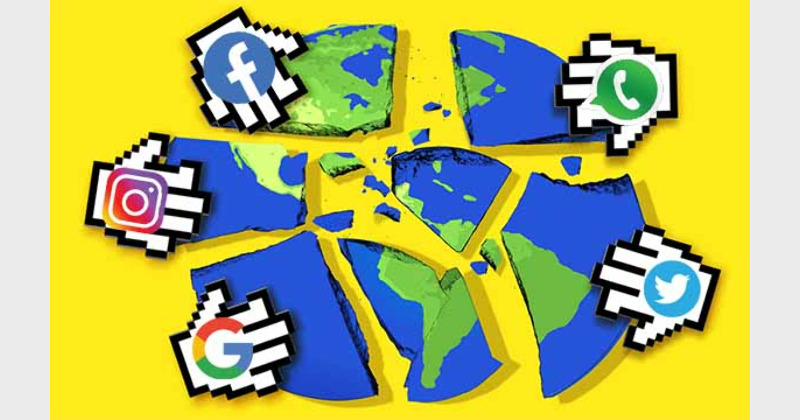
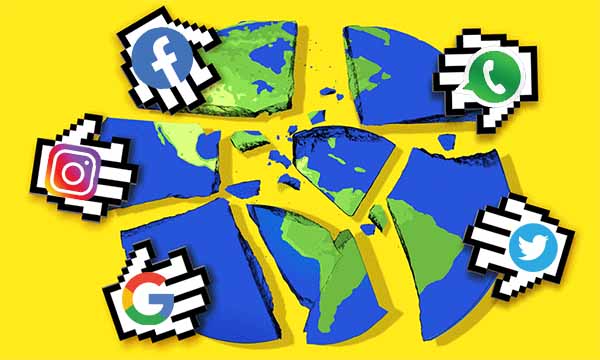
Technological innovations are not going to stop. But those responsible for those innovations must remember that it was democratic freedoms and human rights that have helped their innovations flourish. They should ensure that those values survive and flourish
As Benjamin Franklin, one of the founding fathers of the American Constitution, walked out of the famed Independence Hall, where he and another 54 delegates from all over USA had gathered from May 25 to September 17, 1787 to prepare the American Constitution, he was asked what type of government the delegates had decided to create. “A republic, if you can keep it,” he had famously replied. It was a profound statement suggesting that they didn’t just create another form of government – the republic, where people rule themselves through their elected representatives—but a precious one, which requires eternal vigilance and timely action to keep.
The democratic republics have faced many challenges in the last couple of centuries. They witnessed elections throwing up demagogues and dictators. They saw democracies turning into mobocracies. The republics weathered those challenges and not only survived but flourished. By the end of the last century, the world became more democratic than before, with more than a hundred countries worldwide embracing the democratic republican model for governance. Democracies were touted as the panacea for the mankind. The American leadership has built a strategic doctrine around making world more democratic. India opted for it after Independence and emerged as a successful democracy some seven decades ago. America, as the oldest and India as the largest democracy, stood as beacons of hope for the freedom-loving humanity.

The Arab Spring began on December 17, 2010 in Tunisia as street vendor Mohammed Bouazizi set himself on fire to protest seizing of his vegetable stand by police
A study conducted by the Dubai School of Government titled the Arab Social Media Report analysed social media’s impact in the Arab Spring. It concluded that “the growth of social media in the region and the shift in usage trends have played a critical role in mobilisation, empowerment, shaping opinions, and influencing change”
However, signs of a new tumult are increasingly becoming discernible in the last couple of decades. Technological innovations in areas like Information Technology have started to transform political landscapes also. Initially, the information technology revolution had helped in empowering democracies. When people of the erstwhile Soviet republics wanted to unshackle themselves from Communist dictatorship, they found fax machines as a useful weapon. Audio and video cassettes became handy for political mobilisation, subsequently. By the end of the century, the World Wide Web has completely revolutionised the political communication landscape. The gang-rape of a teenaged Oksana Makar in Ukraine, had led to a major popular revolt against the powerful ruling lobby led by President Yanukovich simply because the victim’s mother chose to upload the gory video of her daughter in coma after the rape and burning on to the web.
Then came the Arab Spring in 2010, which continued for three years and engulfed 17-18 Arab countries like a wildfire. It all began in Tunisia when a petty merchant named Mohammed Bouazizi refused to bribe police officers and instead committed self immolation in broad public view. Bouazizi’s bold defiance of Tunisia’s authoritarian and corrupt leadership was captured live and transmitted through social media tools like Twitter and Facebook. Soon began what some analysts described as the Twitter Revolution in more than a dozen Arab countries, including Libya, Egypt and Syria. A study conducted by the Dubai School of Government titled the Arab Social Media Report analysed social media’s impact in the Arab Spring. It concluded that “the growth of social media in the region and the shift in usage trends have played a critical role in mobilisation, empowerment, shaping opinions, and influencing change.” The report had also stated that almost 85 per cent of Egyptians and 86 per cent of Tunisians admitted to using social media to “spread awareness, spread information, or organise actions”. India too experienced its own versions of social media-driven revolution like the one led by Anna Hazare.
Suddenly, it dawned on the political elite that the new technological revolution of the new century has not only given certain powerful social media tools to empower citizens but transform them into formidable weapons. They are posing a new challenge to humanity about which Albert Einstein had warned decades ago. Technological advances “could have made human life carefree and happy if the development of the organising power of man had been able to keep step with his technical advances”, he warned suggesting that failure to ‘keep step’ would be “as dangerous as a razor in the hands of a three-year-old child”.
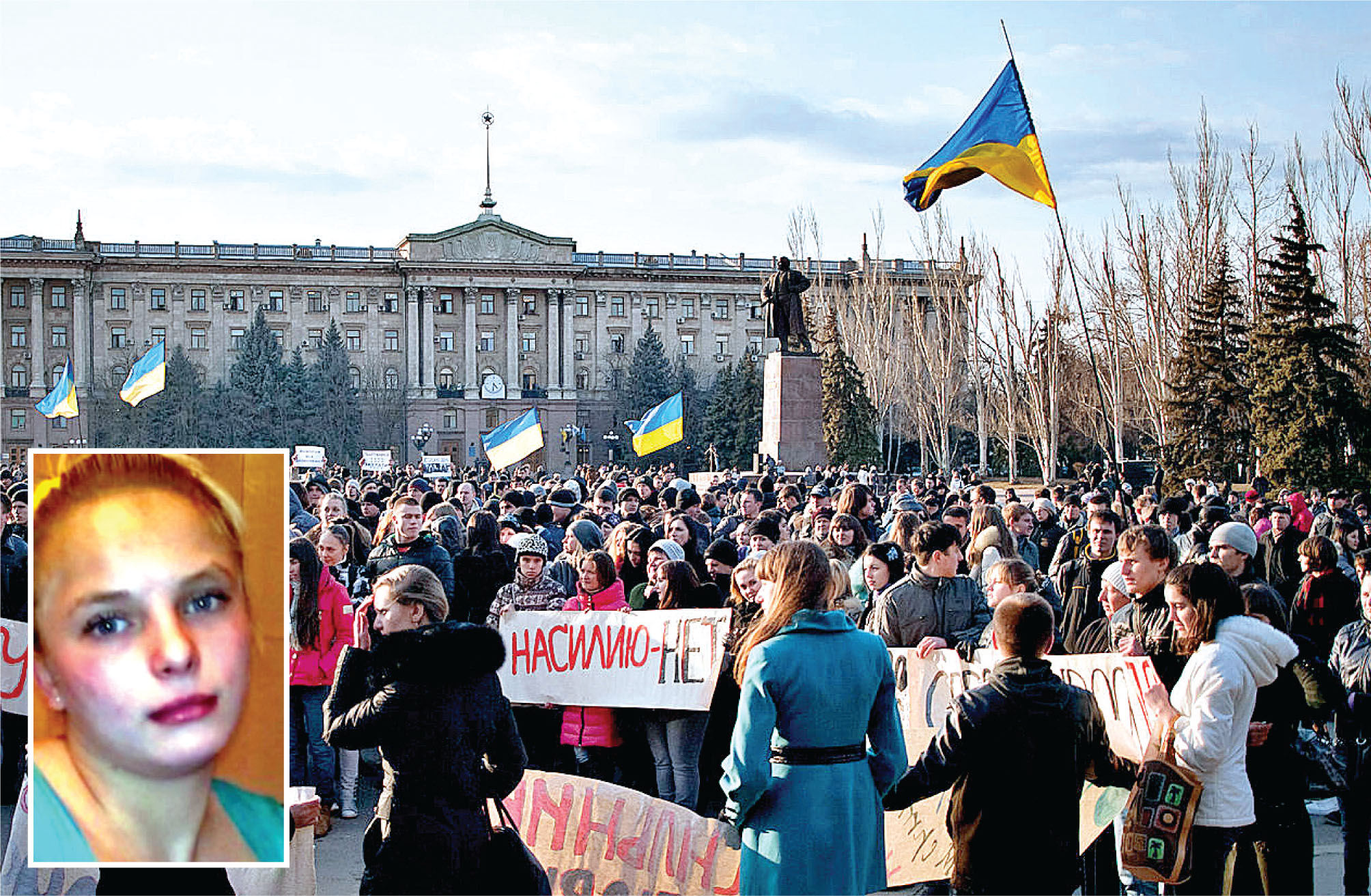
Mobilising against gory incident: A video of a Ukrainian gang-rape victim Oksana Makar (inset) triggered massive outrage and protests that led to revolt against President Yanukovich
Technological advances “could have made human life carefree and happy if the development of the organising power of man had been able to keep step with his technical advances”, Einstein warned, suggesting that failure to ‘keep step’ would be “as dangerous as a razor in the hands of a three-year-old child”
Technology, along with globalisation and economic trends, has made “power easier to get, but harder to use or keep”, wrote Venezuelan Journalist Moisés Naím in his book, “The End of Power,” highlighting the present dilemma. The new media has taught people how to disrupt, while a clear formula to bridge the gap between disruption and legitimacy still eludes. The digital era that unfolded as a great promise stands out today as the greatest challenge for democracies. A tussle is breaking out between the authoritarian regimes that want to control and eavesdrop on the digital data to surveillance their own populations and equally belligerent and anarchist user groups that want to weaponise it for creating large scale disruption and disharmony in the system. The victim, either way, is the traditional democratic value system that we so fondly cherished in all these decades.
Who is accountable? The authoritarians or the anarchists or the digital platforms like Facebook and Twitter? Leaders, from Jacinda Ardern, the Prime Minister of New Zealand, to K Shanmugam, the Law Minister of Singapore, to Emmanuel Macron, the French President, to many more, are struggling to find answers to these questions. Ardern wanted social media platforms like Facebook to be made accountable, insisting that “it cannot be the case of all profits and no responsibility”. While proposing measures against fake news in his country, Macron argued that in order for the internet to be truly “free, open and secure”, some sort of a regulation “is the sine qua non condition”.
But the platforms do not seem willing to accept accountability to democratic societies. The 17 million Australian users of Facebook have tasted its fury recently when it blocked out entire news, including some emergency services on its platform, as a retaliation to the Australian Parliament’s bid to bind the global technology giant to a certain geography and the law of the land. Scott Morrison, the Australian Prime Minister has secured the support of the opposition Labour Party in the Parliament. He also reached out to a number of world leaders, including Prime Minister Narendra Modi, to bolster support for his bold move. “They may be changing the world, but that doesn’t mean they should run it,” Morrison argued, perhaps rightly.
After its repeated efforts to encourage social media giants to self-regulate failed, the Singapore Government has come out with a stringent ‘Protection from Online Falsehoods and Manipulation Act (POFMA)’ in 2019. The Law Minister Shanmugam dismissed protestations from the platforms and said that the law was necessary because the platforms that often host fake news have business models that depend on “attracting eyeballs”. “The tendency has been on the side of the internet platforms to say: hey, it’s free speech, there shouldn’t be any regulation of it. Let’s be frank when social media platforms argue against it (regulation), it’s really putting profit above principle”, Shanmugam, who is also Singapore’s Home Minister, said bluntly.
The Government of India, too, appears to be bracing for a collision with these digital titans by trying to regulate them. Like several other democracies, it too lacked a proper legal framework to tackle the new digital challenge posed by these titans that refuse to recognise geographical boundaries and national laws.
Denmark has attempted something unique a couple of years ago. It appointed one of its senior and respected diplomats, Casper Klynge as the first-ever ambassador to Silicon Valley, with a mandate to engage with technology giants like Amazon, Facebook and Google. Klynge has been trying to popularise the term ‘techplomacy’. Denmark’s goal was to place ambassadors at “epicentres of transformation around the world” to better understand the impact of technology on Danish society and how to prepare for an increasingly digital world, Klynge explains.
Jacinda Ardern, the Prime Minister of New Zealand wanted social media platforms like Facebook to be made accountable, insisting that “it cannot be the case of all profits and no responsibility”. While proposing measures against fake news in his country, Macron argued that in order for the internet to be truly “free, open and secure”, some sort of a regulation “is the sine qua non condition”
Seven decades ago, in August 1949, a significantly improved Geneva Convention was adopted to secure the fundamental rights of the soldiers and civilians during times of war. Dominic Carr of Microsoft proposed that it is time “for a Digital Geneva Convention”, which would help protect citizens on the internet during the time of peace. Techplomacy and Digital Geneva Convention are the best way forward to ensure judicious regulation of the new technologies of communication.
Technological innovations are not going to stop. But those responsible for those innovations must remember that it was democratic freedoms and human rights that have helped their innovations flourish. They should ensure that those values survive and flourish. As Einstein pointed out, technological innovations call for speeding up of the work to manage them too.
(The writer is a senior BJP leader and Member, Board of Governors, India Foundation)








Comments