





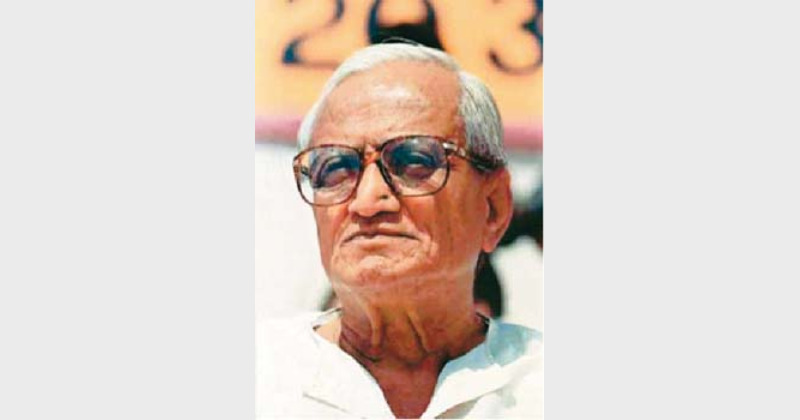
“Communism has collapsed, and capitalism is on the decline, but its demise is being delayed. The search for a third alternative has begun”—Dattopant Thengadi
-Sujay Iyer
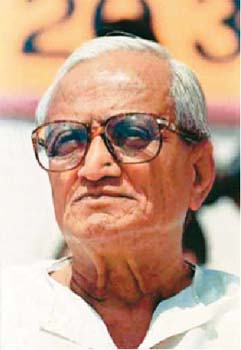
Dattopant Thengadi
Since the global financial crisis of 2008, a right-wing populist movement has simmered, gathered steam and exploded all over the world. Capitalism has been on the brink ever since bankers decided to gamble with the future of millions (a loss of 4.05 trillion dollars: IMF), while their respective governments bailed them out, jailed exactly one and received fines and settlements through their shareholders. These naked acts of greed, venality and injustice infuriated and exasperated the silent majority. This has been the decade of the working class. Whether it’s Viktor Orban in Hungary, Matteo Salvini in Italy, Marine Le Pen in France, Jorg Muthen in Germany, Boris Johnson in the UK, Jair Bolsonaro in Brazil, Donald Trump in the US or Narendra Modi in India; the rise of populist leaders has been the one constant of this decade. The deplorable, growing tired, frustrated and resentful over financial transgressions, deindustrialisation, unemployment, immigration, outsourcing, stagnation and inflation have been the driving force behind these movements. Detesting rising inequality, a rapacious China and the incompetence of the Left, the silent majority have spurred change all over the world and are finally speaking out and being heard.
The other constant in this decade has been the rise of ‘Economic Nationalism’. Economists unanimously will tell you; it is an ignorant and flawed philosophy that will lead to the collapse of the world economic order. Except, they fail to mention China that has practiced economic nationalism since the 1970s and have slowly risen to the top of the pyramid. China’s ascent is both undeniable and remarkable; a country that could not feed or clothe itself in the ‘60s, now has 14.14 trillion dollars as their GDP, second only to the USA. Today, India’s upsurge rests on ‘Atmanirbhar Bharat’, a programme based on economic nationalism.
I’ve been meaning to understand the economic policy of the government of the Bharatiya Janata Party (BJP) ever since its colossal rise in 2014. What is it based on? Who are they getting their advice from? How is it different from the Congress’? Why is it different from the Congress’? What is ambition? What do they want to accomplish?
India Circa 2014
The Indian economy isn’t moving. It is paralysed and falling under its own weight. This is confounding and incomprehensible. Half a decade earlier, the economist Prime Minister won a huge mandate for his Party based on the welfare state (MGNREGA), financial inclusion (Swabhiman/Swavlamban), inclusive growth (social security schemes) and a juggernaut economy that wasn’t relenting even during a global meltdown. The development model of Amartya Sen and Joseph Stiglitz was running wild and free; it looked like India was on track to be an economic giant. Except, this bliss did not last. Like any Keynesian model (the State invests money in the economy), the welfare state of India started collapsing. People began to reel under the pressure of inflation and unemployment, while the multiple scams (2G, CWG, Augusta Westland) perpetrated right under Prime Minister Manmohan Singh’s nose did not help.
In ‘Third Way’, Thengadi postulated an alternative from Capitalism and Communism, theorising that Western economics would not work in India, simply because it was socio-culturally distinct from the rest of the world. He formulated ‘Hindu Economics’ as a paradigm, rejecting existing theories and borrowing from ancient Indian traditions. ‘Third Way’ called for promotion of ‘Swadeshi’, while also advocating for a patron state, encouraging the MSME sector (Micro, Small & Medium enterprises), protecting the traditional informal sector (93% of India’s workforce), imploring radical labour industry reforms and supporting ecologically conscientious growth and technologically responsible growth
India was on the verge of going to elections again. This time, the challenge was not from an experienced warhorse, but a dynamic leader who had transformed his state of Gujarat and projected it as a symbol of efficiency and competence; everything India wasn’t.
The Gujarat Engine
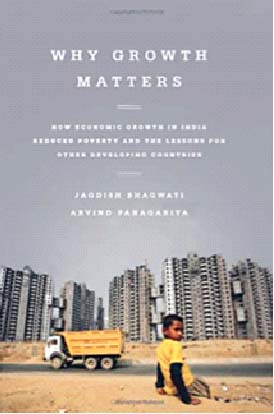
In 2013, Columbia professor, Jagdish Bhagwati released a book titled ‘Why Growth Matters’. Not only, did Bhagwati criticise Sen & Stiglitz of being intellectually lazy but also questioned them for not learning from the mistakes of the Nehruvian past. He advocated trusting market forces, liberalising the economy, trade and labour reforms and restructuring redistributive programs. Bhagwati’s thesis couldn’t have come at a worse time for a Prime Minister whose legacy as a reformer was beginning to corrode. ‘Why Growth Matters’ wasn’t just a seething condemnation of the UPA II’s economic policies, it was also a vindication for the Gujarat model. For the last 13 years, the chief minister of Gujarat, through policies specified by the Columbia economist, mutated Gujarat into a state with a growth rate consistently above India’s. This growth alleviated most of the state from poverty, bettered human development indicators by an impressive margin and led to overall prosperity. The book and the state were blueprints and execution plans respectively; India was immensely excited and looking forward to their ‘Achhe Din’.
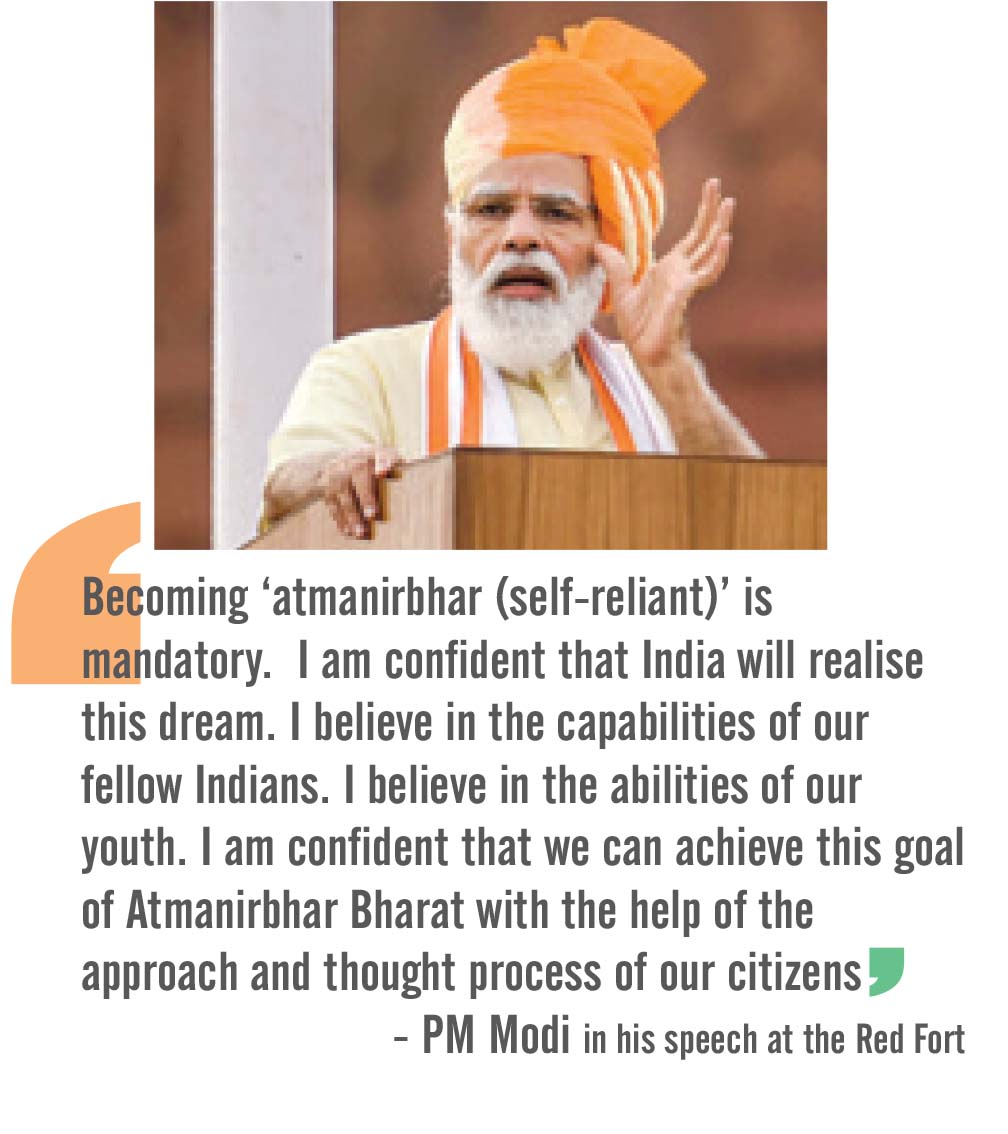
When Narendra Modi came to power in 2014, the Prime Minister began to implement the Gujarat model nationally. He liberalised all the major sectors to foreign direct investment. FDI grew from 28 billion dollars in 2013 to 1 trillion dollars in 2019. The Finance Ministry under his directions also moved away from red-tapism and made it easier for businesses to prosper, which is reflected in the World Bank’s ‘Ease of Doing Business Report’ (India was ranked 134 in 2013 and is ranked 63 today). Modi recognised the welfare state of the Congress for the faltering and inefficient giant it was, and called to get rid of it. Acknowledging the need for decisiveness and reforms, Modi went ahead with the radical reforms of demonetisation & the Goods & Service Tax.
Soon, though Modi recognised that the ‘free trade model’ that worked sublimely in Gujarat wouldn’t propel India, income inequality & unemployment were increasing despite his liberal policies. India wasn’t Gujarat. India was an amalgamation of diverse states, disparate cultures, dissimilar regions, divergent economics, different societies and discrete people. He needed to find another paradigm that would suit India. And so, the Prime Minister looked at his parent organisation’s intellectual milieu.
The economic policy of the Bharatiya Janta Party today is a compatible accord that gives equal parity to two contradictory philosophies. ‘Atmanirbhar Bharat’, ‘Make in India’, ‘Skill India’, the Mudra loans, the promotion of the MSME sector and the informal economy, decentralisation of village economics and even ‘Swachh Bharat’ have all been prescribed in ‘Third way’. On the other hand, reforms in labour & bankruptcy laws, boosting FDI through local partnership (an amalgamation of the two paradigms), disinvestment, the GST and reformed welfare-ism are strategies proposed in ‘Why Growth Matters’
The Prophet
The name Dattopant Thengadi might not mean much to the average Indian, but in Rashtriya Swayamsevak Sangh (RSS) circles, it assumes a messianic form. A lawyer, a sociologist, a political philosopher, an ideologue, an organiser and an economist, Thengadi is credited to be one of the primary orchestrators of the Hindu nationalist movement. In a luminous career spanning half a century, he founded India’s largest trade union organisation (the Bharatiya Mazdoor Sangh), India’s largest farmer organisation (Bharatiya Kisan Sangh), the economic think tank, the Swadeshi Jagaran Manch and also helped birth the student organisation, the Akhil Bharatiya Vidyarthi Parishad. As an ideal Swayamsevak, he was famous for being uncompromising over ideology as well as being a boisterous supporter of internal dissent (he organised a workers rally in 2001 criticising the Vajpayee Government’s disinvestment policy which led to the resignation of Yashwant Sinha as Finance Minister). As a prescient political economist, he predicted the dissolution of the Soviet Union and foresaw a crisis in capitalism. As a prolific writer, he authored an impressive array of 50 books on diverse subjects in various languages; the most popular of which is ‘Third Way’, written in 1995.
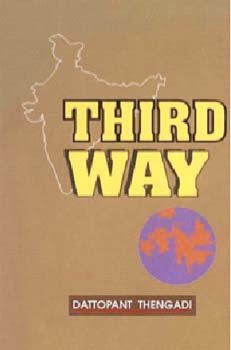
In ‘Third Way’, Thengadi postulated an alternative from Capitalism and Communism, theorising that Western economics would not work in India, simply because it was socio-culturally distinct from the rest of the world. He formulated ‘Hindu Economics’ as a paradigm, rejecting existing theories and borrowing from ancient Indian traditions. ‘Third Way’ called for promotion of ‘Swadeshi’, while also advocating for a patron state, encouraging the MSME sector (Micro, Small & Medium enterprises), protecting the traditional informal sector (93% of India’s workforce), imploring radical labour industry reforms and supporting ecologically conscientious growth and technologically responsible growth.
Dattopant Thengadi passed away in 2004, but his legacy lives on through the Prime Minister’s economic program.
Collision
Prime Minister Narendra Modi’s economic policy of India rests on two discordant philosophies that are constantly on a collision course with each other. This intellectual discourse has two champions, Professor Jagdish Bhagwati, an economist whose satirical wit and academic brilliance have earned him universal acclaim and Subramaniam Gurumurthy, the premier apprentice of Thengadi, whose cerebral prowess and moral crusade (the character of R Madhavan in the film ‘Guru’ was based on him) have placed him in the higher echelons of India’s economic circles. The two haven’t always gotten along and sometimes their scholastic duels have become personal; regardless, they have unambiguously supported the government’s economic policies.
Contending with this confrontation of styles, doctrines, ideologies and methodologies; the BJP government has carried out a program that has harmonised them. The social security programs are a fine example of this affiliation. The Prime Minister hasn’t done away with them like he initially suggested; instead; he has made them more efficient by freeing them of leakage and corruption. The middle man has disappeared; the poor are now benefitted directly, whether it is building a toilet or securing an LPG cylinder. You can see shades of the patron state (and Reaganomics) in the Prime Minister’s “Government is not the solution to the problem, it is the problem” speech as well as the redistributive reforms prescribed in ‘Why Growth Matters’. The FDI policy has also witnessed a change, while earlier investment was emphatically encouraged; today, it is supported through partnerships with domestic firms.
The Balancing Act
The economic policy of the BJP today is a compatible accord that gives equal parity to two contradictory philosophies. ‘Atmanirbhar Bharat’, ‘Make in India’, ‘Skill India’, the Mudra loans, the promotion of the MSME sector and the informal economy, decentralisation of village economics and even ‘Swachh Bharat’ have all been prescribed in ‘Third way’. On the other hand, reforms in labour & bankruptcy laws, boosting FDI through local partnership (an amalgamation of the two paradigms), disinvestment, the GST and reformed welfare-ism are strategies proposed in ‘Why Growth Matters’.
The recent pivot to ‘Atmanirbhar Bharat’ has been recommended not just by Thengadi but by the RSS since the ‘70s. Sceptics castigate it as protectionism and belittle it by calling it uninformed and uneconomic; I’m not sure if they are right or wrong. However, I am sure that ‘economic nationalism’ is the absolute moral thing to do. How do you justify security blankets to immigrants when our rural hinterland suffers in abject poverty and hunger? How do you defend jobs and income to other nationalities when our youth is rotting in unemployment? How do you favour the free flow of imported goods when our artisans and craftsmen are dying slow deaths? How do you explain unsupervised foreign investment when our entrepreneurs are struggling? How do you condone a globalised economic order when it leads to economic imperialism? ‘Atmanirbhar Bharat’ is not just about self-reliance and self-sufficiency; it is going to be the lasting legacy of the Modi Government.
(The writer is a medical professional and columnist)










Comments