






Balanced and holistic development of Jammu & Kashmir is the panacea of all ills facing the ordinary people. For that the advocates of new narrative have to choose between the butter and the gun and stop supporting militancy/terrorism
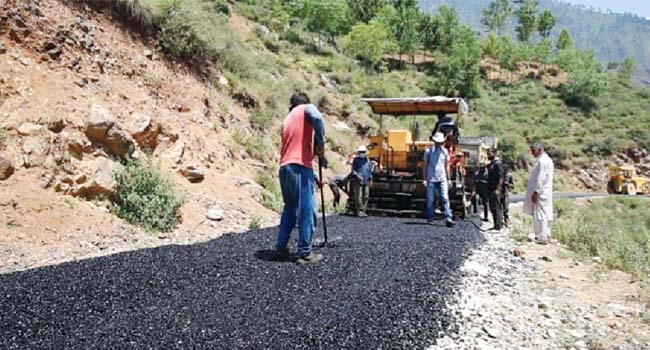
Development projects across J&K is one of the big thing happened after removal of Article 370
Ever since the historical day of August 5, 2019, when two J&K specific articles of the Constitution of India were abrogated/made dysfunctional, the hardliner lobby in Kashmir led by the Gupkar Gang has begun to spin a new narrative of Kashmir being the victim of the agenda of Hindutva aimed at “decimation of Kashmiri Muslims.” A blatant lie is being spread that the decision of the government of India was aimed at changing the demography of Muslim majority Kashmir. The other part of the narrative includes that it is an attack on Kashmiri identity; the foundation of trust has been broken. Some have gone to the extent of terming it as “robbing Kashmiri Muslims of economic and political rights.” An anti-India hype on communal lines is being created. What irks the Gang is that its members have been dethroned.
Why blame the Government of India when their doings of the past are haunting them. Common masses hate them. Their expectation of riots and violent protests in the streets in Kashmir when they were put under detention by the government were dashed to the ground. They consoled themselves, thinking it was due to the curfew. But they got a shocker when they were released and there was no rejoicing or celebrations instead none turned up to welcome them. Here is what a Kashmiri youth has written on the Facebook, “I am ready to raise Indian flag at my home if they can hang you Omar ‘d—-‘ and Farooq ‘d—-‘ at Ghanta Ghar.”
Before puncturing the new Kashmiri narrative, there is a need to understand the circumstances that forced the government to take the decision of August 5, 2019.
Having suffered the ignominy of being jailed for plotting secession, in 1975 Sheikh Abdullah was rehabilitated from the wilderness and made the State’s Chief Minister by the then Prime Minister Indira Gandhi. Sheikh was too obsessed with his ideology of exclusivity and returned with a vengeance to pursue his idea of Greater Muslim Kashmir. According to Selig Harrison, an expert on South Asia, Greater Muslim Kashmir not only envisaged secession of Kashmir from India but also included destabilisation in the country through ethnic and communal conflicts and subversion. Creation of Doda district in 1948 in Jammu region was the first step towards consolidating Muslims. Sheikh Abdullah is also known to have supported the notorious Dixon Plan, which was rejected by Nehru. Sheikh bargained to fulfil his unfinished agenda and regained power with the support of the Nehru family.
1953-75 was the golden period of peace and development in J&K. It had become the favourite destination of local and foreign tourists as well as the Bollywood. With the return of Sheikh in 1975 the tide turned for the worse. Saudi influence started increasing in the Valley, the process of Islamisation began, Muslim majority district of Kargil was created by bifurcating Ladakh in 1979, names of about 2500 villages was changed to Islamic names, a vicious campaign against the Army began, local Hindus were labelled as “Mukhbirs” (informers). The separatist literature was made freely available in the shops and newsstands. The Wahhabis commenced making inroads in Kashmir. The first-ever International Muslim Conference, duly backed and financed by Saudi Arabia, was held in Srinagar in 1979.
Sheikh died in harness in September 1982 and was replaced by his son Dr Farooq Abdullah, a political novice. In the 1983 Assembly elections Farooq and his party sought support of all anti-national and secessionist organisations operating in the Valley on the plea that the ensuing elections were to be treated as a fight between all Kashmiris on the one hand and India as a sovereign country on the other represented by Congress (I). The result of the election for the first time resulted in the political polarisation of votes on communal lines. Thus began the process of alienation.
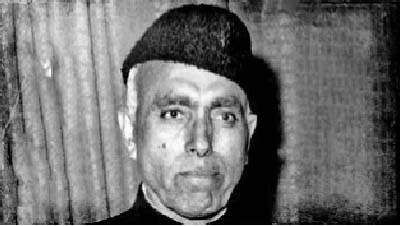
With the return of Sheikh Abdullah in 1975 the tide turned for the worse. Saudi influence started increasing in the Valley, the process of Islamisation began, Muslim majority district of Kargil was created by bifurcating Ladakh in 1979, names of about 2500 villages was changed to Islamic names, a vicious campaign against the Army began, local Hindus were labelled as “Mukhbirs” (informers). The separatist literature was made freely available in the shops and newsstands. The Wahhabis commenced making inroads in Kashmir. The first-ever International Muslim Conference, duly backed and financed by Saudi Arabia, was held in Srinagar in 1979
Against the wishes of the people and for the lust of power Farooq joined hand with Congress (I) in 1987 elections and forged an alliance with the later. The coalition won 66 seats but amongst the allegation of mass-scale rigging. The election is termed as a watershed in Kashmir politics. Farooq was again elected as the Chief Minister, but the accusations of manipulations and massive rigging changed the entire political narrative in the Valley. Thousands youth crossed over to Pakistan for arms training, thus heralding the era of trouble and turmoil in the state. At the time when his leadership would have been tested, he continued to succumb under the pressure of secessionists and pro-Pak elements leading to his surprise resignation in 1990. The period also witnessed demographic change due to religious cleansing with the mass exodus of the Kashmiri Pundits from the Valley under the threat of Islamic forces. Till 1996, with the active connivance of Pakistan state witnessed the worst form of terror. Farooq returned to power in 1996 and turned a blind eye to the extinction of Valley’s identity “Sufism” and rise of Wahabbi-Salafi Islam. The process of radicalisation in Valley had begun. After the exodus of minorities, Kashmir became monolith. The effort began to consolidate Muslim areas of the state by dividing the Jammu region based on religion by grouping the Muslim majority districts into unnatural separate identities as “Chenab Valley” and Pir Panjal” regions. The aim was to get them closer to Muslim Kashmir and divide a wedge between the Hindus and Muslims. Hurriyat spread its tentacles here, and the arc of terrorism was extended south of Pir Panjal ranges.
The subsequent State Governments hastened up the process of Islamisation with the terrorists openly declaring their intention of turning the state into an Islamic state. Terrorism was encouraged and the cadre of Jamat-e-Islami was inducted into the organs of the government. The entire focus was on Islamisation without caring for the sentiments of Hindus, Buddhists and Sikhs. Post killing of Burhan Wani, a local poster boy terrorist state once again came under the grip of the separatists duly funded by Pakistan. Hartal Calendars were issued to bring the life in Valley to a virtual standstill. School and College buildings were burnt. Students were deliberately kept away from formal education and forced to study in Madarsas, the nurseries of jihadi terrorism. Targeted killings became the norm. Social media was exploited to brainwash the local youth and encourage them to join militancy. The security forces were stone pelted as per the strategy of “Intifada.” The authority of the Central Government was being challenged under cover of 370. Minority Hindus is known as West Pakistan refugees, and some other communities were denied citizenship, government jobs, right to property and right to vote for 70 years.
A stage was being set for another division of the country just as in 1947 based on two-nation theory. Hurriyat leader Syed Ali Shah Gilani had earlier given the call of “Azadi Barae Islam” (Freedom for Islam) Terrorism and Islamisation became a synonym in Kashmir. Zakir Musa, a terrorist leader, proclaimed “the struggle is not for Azadi but for the establishment of Shariat and Islam”. The focus was shifting towards an Islamic State. “Islamism and Wahhabism are the only ideologies that promise paradise towards killing and butchering other people in the name of Islam,” says Imam Twahidi, a progressive and modern Muslim cleric. It is this ideology that drove educated Kashmiri youth towards terrorism which was being used as an instrument for Islamisation. While all this was happening in Kashmir, the people of Jammu & Ladakh suffered the worst form of discrimination.
After the exodus of Kashmiri Hindus, Kashmir became monolith. The effort began to consolidate Muslim areas of the state by dividing the Jammu region based on religion by grouping the Muslim majority districts into unnatural separate identities as “Chenab Valley” and Pir Panjal” regions. The aim was to get them closer to Muslim Kashmir and divide a wedge between the Hindus and Muslims. Hurriyat spread its tentacles here, and the arc of terrorism was extended south of Pir Panjal ranges
This state of affairs prompted the Modi Government to take the epoch-making decision of August 5, 2019. The new Kashmiri narrative ignores all these facts. Can the decision to end secessionism and counter-radicalisation be termed as Hindutva agenda? Yes, it is an easy way out considering the amount of communal hatred spread by the same very people. The new narrative is meant to gain sympathy by playing the victim card. Those who were the actual victim of Kashmiri hegemony are happy and rejoicing. A section of the Kashmiri Muslim population which was so used to be in power and many of them took pride in calling themselves kingmakers and power brokers are feeling the pinch now. They considered their right to rule as divine. No doubt J&K is Muslim—majority, but it is not a Muslim state. They need to accept the fact that Jammu is not Kashmir and neither Kashmir is Jammu & Kashmir. There is no separate Kashmiri identity. Everybody is an Indian first and then follow the regional, religious or cultural identities. There is no place for exclusivity. They have to learn to live with others as equal citizens with mutual co-existence as the norm. The various appointments in government, police and other organs is to be merit-based and not religion/region based. The mindset needs to change rather than resorting to the meaningless blame game. Balanced and holistic development of both regions is the panacea of all ills facing the ordinary people. For that the advocates of new narrative have to choose between the butter and the gun and stop supporting militancy/terrorism.
(The writer is a Jammu based veteran political commentator, columnist, security and strategic analyst. The views expressed are entirely personal based on research)









Comments