





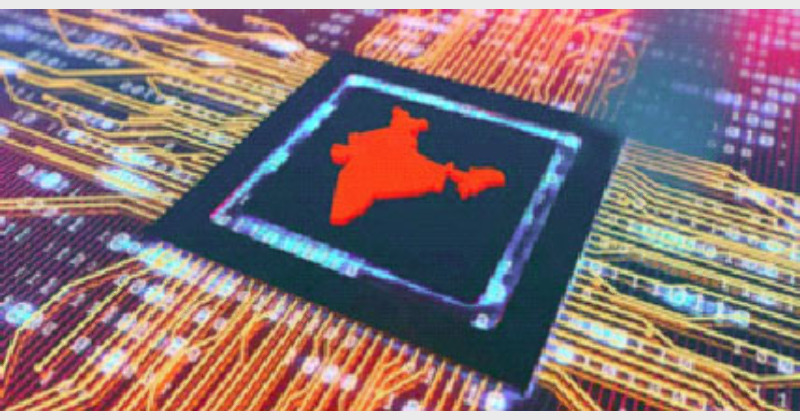
It is time for us to take up initiatives to evolve a comprehensive and suitable Bharatiya model, based on the principles of Swadeshi to lead us to self-reliance

A self-reliant Bharat will be based on 5 pillars of Economy,
Infrastructure, System, Demography and Demand
The world has been fighting the coronavirus for the last four months, with three lakh lives being lost already and the economies facing serious crisis. This period is considered as the worst economic downturn since the Great Depression of the 1930s. Hence IMF predicts that the global economic growth in 2020 would fall down to -3 percent.
The United States is witnessing the highest number of deaths. The ‘richer’ countries of Europe have already lost thousands of lives. The economic impact on many of these countries are severe, with the Government dependency being the only resort. The invisible virus has severely shaken their confidence.
But Bharat presents a completely different scenario, appreciated by all across the World in its fight against COVID -19. The death rates are very low compared to other countries, because the steps taken are bold and timely. Hence the World Health Organisation and other global bodies are showering encomiums.
Initially when the virus set in, we were not prepared like all other countries, as it was unexpected. We did not have the Personal Protective Equipment and had to depend on imports. But within a short time, our people started making it. As a result, we now make three lakh units daily and have emerged as the second largest manufacturer in the World.
This is the Swadeshi approach leading to self-reliance. Field studies in different parts of our country over more than two decades indicate that it is this approach that has taken us thus far during the last seven decades, in spite of many difficulties.
At the time of Independence, we were a poor and underdeveloped nation. But after seventy years now, we are among the top two fastest growing economies. London Business School had estimated that there were 85 million entrepreneurs in our country, perhaps the highest in the World. Our performance in different fields over the years has been noteworthy.
This is in spite of the confusions and contradictions at the policy making levels. After independence, the Nehru Government opted for the socialistic approach without wider discussions, in spite of Gandhi ji suggesting for it earlier. As a result, more than three precious decades were wasted with the ‘neta-babu raj’ curtailing the initiatives of our society. Hence we were not able to solve even our basic problems.
During the early 1990s, the ruling establishment opted for the other Western approach namely globalisation, again without discussions and necessary preparations. Our critical sectors such as agriculture and the SMEs were severely hit. ‘Consumer culture’ came to dominate the minds of the affluent sections. But in spite of the wrong prescriptions at the macro level, Bharat has been moving ahead steadily but silently over the decades.
Bharat is an ancient nation with an economic history of 5000 years and more. Even when we take the last two millennia, studies by Angus Maddisson show how we were the topmost economy with one third of global output during 0 CE. Moreover, we remained at the top for several centuries continuously, proving thereby that we have had the most sustainable economic system anywhere in the World. Subsequently the Europeans systematically destroyed much of our systems, though we largely withstood the attacks of the invaders earlier for several centuries.
Subsequently the Europeans systematically destroyed much of our systems, though we largely withstood the attacks of the invaders earlier for several centuries. But the aliens could not the kill the spirit in us. As soon as we got the political freedom, people started venturing into different activities without bothering about the state.
Ground level studies show that the entrepreneurial initiatives started immediately during the following periods and in a few places even during the British times. Many of the traditional vocations continued and expanded wherever possible. Lack of water and regular income from agriculture forced sections of people to enter into new fields. Hence the enterprises increased over the decades, due to the initiatives at the local levels.
The economic development of Bharat during the past seventy years is amazing. It is largely led by the local societies with the local systems that they create with their native genius. Decades ago, when people in southern Tamil Nadu wanted to enter business, they did not have funds. So they created a system of mobilizing funds called Mahamai by taking a pledge in front of their ‘kula devata’ (The Family God/Godess). Now they are one of the most successful business communities dominating the businesses of firecrackers and match boxes at the national level and establishing one of the most successful banks, namely Tamil Nadu Mercantile Bank.
A Swadeshi model should be based on the higher ideals of our civilisation
leading to the welfare of all with Antodaya as enunciated by Pandit Deendayal Upadhyay at its core
leading to the welfare of all with Antodaya as enunciated by Pandit Deendayal Upadhyay at its core
The entrepreneurial abilities of our ordinary sections are exemplary. Rajkot is the well-known engineering centre at the global level. They make different kinds of engineering items, including the mother machines. It was the initiative of few locals with diesel engines during the 1960s that enabled the town to emerge as a global engineering centre. Thiruchengode in Tamil Nadu, known for its rig industry, was almost controlling the business throughout the country till recently. In the recent years, they have moved to foreign countries.
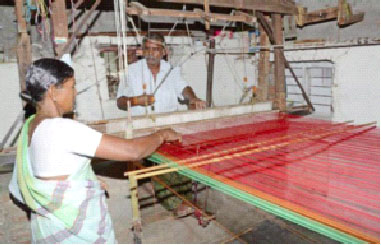
Studies have established that the family system encourages
entrepreneurial capabilities which helps in being self-dependent which is our strengths
entrepreneurial capabilities which helps in being self-dependent which is our strengths
Our societies are by nature creative and have the tendency to make whatever they require using the limited resources available locally. That is how Juggad became popular and is now part of the international management dictionary. There are thousands of innovations and improvisations going on at the local levels. We have extraordinary skill sets and multiple talents.
The Western approaches have completely failed. After the 2008 crisis, they themselves openly admit it. All the international bodies such as the United Nations and G – 20 have all accepted that there are no more ‘universal models.’ Bharat with her superior economic history and functioning systems, has her own functioning models.
By nature, our societies are creative and have the tendency to make whatever they require using the limited resources available locally. There are thousands of innovations and improvisations going on at the local levels
But for a very long time our policy making circles refused to look at the Bharathiya systems and learn from them. Fortunately during the last few years, the top leadership of our country has been advocating policies based on our fundamentals. The Cabinet Resolution dated Jan 1, 2015 for constituting NITI Aayog notes: “We need to find our own strategy for growth. … It will be a Bharatiya approach to development.” But this one idea should percolate down to different levels without delay.
The main reason for our development over the years has been our native systems. Even in 2020, IMF predicts that Bharat will have the highest rate of growth with 1.9 per cent ahead of China, while the advanced economies are expected to have a negative growth of -6.1 per cent. Different studies establish that the family system, saving practices, social capital, entrepreneurial capabilities, larger non-corporate sector and the self-dependent tendency in the society are our strengths, with culture remaining as the foundation of our economy.
The Western academics acknowledge ‘a distinct Indian model’, in our corporate sector after studying the contemporary modern practices. A US team led by Peter Cappelli took up a study of the top corporates and concluded that the Indian leadership approaches are different from that of the West due to the unique nature of our economy and society.
It is time for us to take up initiatives to evolve a comprehensive and suitable Indian model, based on the principles of Swadeshi to lead us to self-reliance. Such a model should be based on the higher ideals of our civilisation leading to the welfare of all with Antodaya as enunciated by Pandit Deendayal Upadhyay, as the core. We also have to understand, appreciate and recognise our contemporary functioning systems which have been evolved by our societies based on their ingenuity and instincts.
Hence a massive initiative – involving different sections of the society – is required to create an awareness and mobilise support for Swadeshi and Self- Reliance. This is very important for our national reconstruction and hence it is our immediate duty to act upon it. The Sangh leadership has given a call for this at the appropriate time. The Prime Minister has himself articulated this idea, emphasising its necessity. Now this is the time for all of us to work on this, as Bharth is embarking on her onward journey to the next stage.
(Author is a Professor of Management involved in studying the Indian economy, business and management systems from native perspectives)







Comments