Communism: The avoidable Road
August 14, 2026
  • Read Ecopy
  • Circulation
  • Advertise
  • Careers
  • About Us
  • Contact Us
Android AppiPhone AppArattai
Organiser
  • ‌
  • Bharat
    • Assam
    • Bihar
    • Chhattisgarh
    • Jharkhand
    • Maharashtra
    • View All States
  • World
    • Asia
    • Europe
    • North America
    • South America
    • Africa
    • Australia
  • Editorial
  • International
  • Opinion
  • RSS @ 100
  • More
    • Op Sindoor
    • Analysis
    • Sports
    • Defence
    • Politics
    • Business
    • Economy
    • Culture
    • Special Report
    • Sci & Tech
    • Entertainment
    • G20
    • Azadi Ka Amrit Mahotsav
    • Vocal4Local
    • Web Stories
    • Education
    • Employment
    • Books
    • Interviews
    • Travel
    • Law
    • Health
    • Obituary
  • Subscribe
    • Subscribe Print Edition
    • Subscribe Ecopy
    • Read Ecopy
  • ‌
  • Bharat
    • Assam
    • Bihar
    • Chhattisgarh
    • Jharkhand
    • Maharashtra
    • View All States
  • World
    • Asia
    • Europe
    • North America
    • South America
    • Africa
    • Australia
  • Editorial
  • International
  • Opinion
  • RSS @ 100
  • More
    • Op Sindoor
    • Analysis
    • Sports
    • Defence
    • Politics
    • Business
    • Economy
    • Culture
    • Special Report
    • Sci & Tech
    • Entertainment
    • G20
    • Azadi Ka Amrit Mahotsav
    • Vocal4Local
    • Web Stories
    • Education
    • Employment
    • Books
    • Interviews
    • Travel
    • Law
    • Health
    • Obituary
  • Subscribe
    • Subscribe Print Edition
    • Subscribe Ecopy
    • Read Ecopy
Organiser
  • Home
  • Bharat
  • World
  • Operation Sindoor
  • Editorial
  • Analysis
  • Opinion
  • Culture
  • Defence
  • International Edition
  • RSS @ 100
  • Magazine
  • Read Ecopy
Home Bharat

Communism: The avoidable Road

Denying National Roots tells its readers how Communism failed to establish itself in India, continues to remain futile and why it does not resonate among the people. The book also talks about how prominent leaders in the country dealt with communism in the early days of the freedom struggleDenying National Roots - Early Communism and India by Dr. Rahul A. Shastri, Published by Centre for Integral Research, Samvit Kendra, Hyderabad Pages: 200, Price: Rs 250.00 Sundeep Raikhelkar Dr. Rahul A. Shast

Archive ManagerArchive Manager
Apr 25, 2019, 12:37 pm IST
inBharat
Follow on Google News
Facebook
Twitter
WhatsAppTelegramEmail
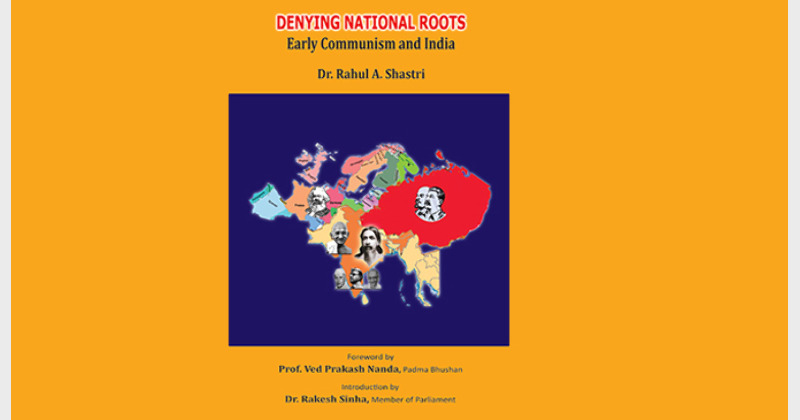
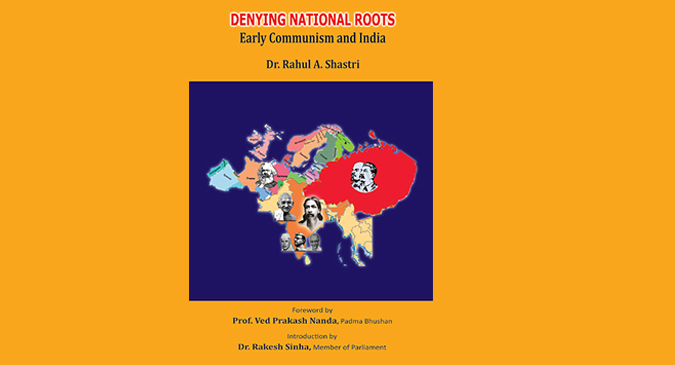
Denying National Roots tells its readers how Communism failed to establish itself in India, continues to remain futile and why it does not resonate among the people. The book also talks about how prominent leaders in the country dealt with communism in the early days of the freedom struggle
Denying National Roots – Early Communism and India by Dr. Rahul A. Shastri, Published by Centre for Integral Research, Samvit Kendra, Hyderabad Pages: 200, Price: Rs 250.00
 
Sundeep Raikhelkar
 
Dr. Rahul A. Shastri’s book “Denying National Roots” is meticulasly factual and impeccable with referencible citations. The book begins with debunking the communism in India, but when finished the reader is left with a feeling of witnessing a total annihilation of communism in India and elsewhere.


The title of the book is aptly justified, although the book presents numerous other invaluable ideas. We Indians may be diverse in outlook, but are deeply connected by our deeply rooted culture. The book explains why and how the communism in India tried and continues in its attempt to obliterate our culture. The evidence to this fact is presented in the book as even the politicos whom certain people fondly refer to as Bapu and Chacha, were never convinced that such methods of denying national roots would ever work here.
 
The book presents a clear perspective on how Indian spiritual leaders like Swami Vivekananda and Sri Aurobindo were not impressed with communism. Clearly, for a superior civilisation like ours which has offered to the world with great concepts like Janapadas and the Artha Sastra, communism has very little to offer in itself. The spiritual leaders expressed the same in their composed tone as communism to be mischievous and motivated.
 
The book presents a good answer to why the present communists in India have multiple political parties. Is there any ideological difference between CPI and CPI(M)? The blame clearly is not on the so called ideology, but the leash that each party would inflict upon itself. CPI continued to court favour with the Russian group of Comintern (communism international), while the CPI(M) moved on to courting favours with their Chinese counterparts.
 
The book describes the whimsical and vindictive nature of Comintern. Some of the Indian communist leaders who were officially invited, were humiliated, jailed, tortured and even executed in erstwhile USSR for not towing the official line of communism as per the Comintern. For the Comintern the whole aim was international communism (with Russia as epicenter) while opportunistically using nationalism or regionalism to achieve the revolutionary (read as anarchy) means. The effects of this is seen even today in India as Communists or their Sympathizers like Arundhati Roy encourage militancy in Kashmir.
 
The effect of Comintern on Indian communist leaders was such that even the Indian Communist Party (ICP) formed out of ideological inspiration from Marxists was forcefully usurped and renamed to Communist Party of India to meet the international naming standards inline with CPSU, CPGB and CPUSA
 
The author also explains the genesis of socialist thoughts in our first prime minister which in itself became the ideology for next prime ministers to come. The author goes further to explain how Gandhi played along with Communists in congress and kept them at bay from taking over the congress.
 
The Author, Dr, Rahul presents a good insight on the role played by SC Bose in Indian congress and outside and how he kept himself away from any ideological shift towards communism while keeping nationalism as paramount.
The author leaves the reader with further thought provoking questions – how did so many young impressionable minds fall prey to such brainwash? Was it because of prevalent conditions and ongoing reforms in Hindu society? Was it the effect of Macaulay system of education? 

Share
Tweet
SendShareSend
✮ Subscribe Organiser YouTube Channel. ✮
✮ Join Organiser's WhatsApp channel for Nationalist views beyond the news. ✮
Previous News

Defence Scan by Air Mshl PK Roy (Retd)

Next News

Readers? Forum

Related News

From Guns to Handlooms: Former Naxal Women Walk the Ramp in Raipur

From Bastar’s forests to ramp: Surrendered women Maoists steal show at fashion event in Raipur

1947 Partition and Remembrance Day: When Congress preached unity but fueled the Islamist bloodbath

Remembrance Day and Partition’s Other Architect: The CPI’s role in dividing India

Dr Hedgewar participating in the 1930 satyagraha against the British

Remembrance Day: RSS’ silent shield in India’s twilight hour of Partition in 1947

Fujisawa residents raise concerns over religious practices and the growing presence of non-native culture in their community

Protest against Japan’s Fujisawa Mosque Deepens: Locals oppose Islamic burials and sermons, cite water & air pollution

Partition Remembrance Day

Partition Horrors Remembrance Day: Sindhis committed to nation-building, despite losing the homeland of Sindh

Load More

Latest News

From Guns to Handlooms: Former Naxal Women Walk the Ramp in Raipur

From Bastar’s forests to ramp: Surrendered women Maoists steal show at fashion event in Raipur

1947 Partition and Remembrance Day: When Congress preached unity but fueled the Islamist bloodbath

Remembrance Day and Partition’s Other Architect: The CPI’s role in dividing India

Dr Hedgewar participating in the 1930 satyagraha against the British

Remembrance Day: RSS’ silent shield in India’s twilight hour of Partition in 1947

Fujisawa residents raise concerns over religious practices and the growing presence of non-native culture in their community

Protest against Japan’s Fujisawa Mosque Deepens: Locals oppose Islamic burials and sermons, cite water & air pollution

Partition Remembrance Day

Partition Horrors Remembrance Day: Sindhis committed to nation-building, despite losing the homeland of Sindh

Partition Horrors Remembrance Day

Partition Horrors Remembrance Day: Know why it is important to remember those who became victims of mindless violence

Ram Temple CEO Candidates Faced No Questions on Religion or Personal Lifestyle

Ram Mandir Trust’s CEO Interview: Professional governance takes precedence over personal life in selection process

Representative Image

Why Bharat needs to pursue independence from big tech

India corner opens at Kenya school library; Echoes nation’s freedom struggle, civilisational heritage & growth story

Load More
  • Privacy
  • Terms
  • Cookie Policy
  • Refund and Cancellation
  • Delivery and Shipping

© Bharat Prakashan (Delhi) Limited.
Tech-enabled by Ananthapuri Technologies

  • Home
  • Search Organiser
  • Bharat
    • Assam
    • Bihar
    • Chhattisgarh
    • Jharkhand
    • Maharashtra
    • View All States
  • World
    • Asia
    • Africa
    • North America
    • South America
    • Europe
    • Australia
  • Editorial
  • Operation Sindoor
  • Opinion
  • Analysis
  • Defence
  • Culture
  • Sports
  • Business
  • RSS @ 100
  • Entertainment
  • More ..
    • Sci & Tech
    • Vocal4Local
    • Special Report
    • Education
    • Employment
    • Books
    • Interviews
    • Travel
    • Health
    • Politics
    • Law
    • Economy
    • Obituary
  • Subscribe Magazine
  • Read Ecopy
  • Advertise
  • Circulation
  • Careers
  • About Us
  • Contact Us
  • Policies & Terms
    • Privacy Policy
    • Cookie Policy
    • Refund and Cancellation
    • Terms of Use

© Bharat Prakashan (Delhi) Limited.
Tech-enabled by Ananthapuri Technologies