





The legacy and riches of Bhartiya economy has been documented widely. But Marxist domination in the Economic History has always ridiculed the fact as ultra-nationalist
The main objective of the book under review is to give us an overall picture of the world economic history in the last two thousand years, a very ambitious aim indeed. Angus Deaton has done so with his usual skill combining clear syntheses of historical and economic facts and quantitative estimates.
Maddison Angus, Contours Of The World Economy, 1-2030 AD, Oxford University Press, 2007, p. 432, Rs 3, 623
This work was possible only because of Maddison’s patient and tenacious gradual accumulation of knowledge, data and personal experiences throughout more than half a century. As his fascinating autobiography (Maddison, 1994) reveals, the wealth of his personal experiences in several developing and industrialized countries (Pakistan, Ghana, Brazil, India, Guinea, Mongolia, USSR, Japan, US, France, Netherlands, United Kingdom, and others.) as well as his extensive research work, carried on mainly in international organizations (OEEC and OECD) and at the University of Groningen, greatly contributed to give him the background to attempt such a “mission impossible”.
The attainment of his objective was also facilitated by the cumulative nature of several of his numerous books and articles, usually based on an ever-expanding data-set of macroeconomic indicators of growth, inequality, education, employment, productivity, etc. A part of these indicators are freely provided on-line by his website “www.ggdc.net/ Maddison” and are frequently used and quoted by a great number of economists and historians.
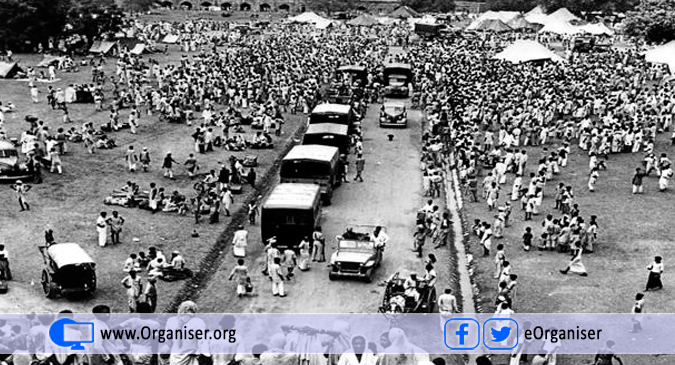
Maddison is the creator of that oft-quoted table that shows how India’s share in the world economy declined from a massive 24.4% in 1500 to a measly 4.2% in 1950
The book opens with the Roman Empire and its economy. The most innovative part of the chapter, quantitative estimates of the Roman empire’s population and its GDP, is preceded by a concise and beautifully written history of its rise and decay. The second chapter deals with the period between 1000 and 2003 and is centred on “the resurrection of western Europe and the transformation of the Americas”. Maddison tries to explain “why and when the West got rich”.
One might wonder that if deindustrialisation is dubbed as a loss to the Indian craftsmen, businesses and trade vis-a-vis Colonialism, why Mughal Empire must be analysed as a homogenous whole? Chapter 3 deals with “the interaction between Asia and the West” in the 1500- 2003 period. While “at the beginning of the Fifteenth Century Chinese naval technology was superior to that in Europe.”(Maddison, 2007, p. 113) The withdrawal from international trade of China and the isolationist policy of Japan encouraged Western powers (at first Portugal, then the Netherlands and later Great Britain, and France) to penetrate the Asian oceans and gradually come to dominate Asian-European trade. Chapter 4 is devoted to the “impact of Islam and Europe on African development in the period 1-2003 AD” (Maddison, 2007, p. 183). The impact of the Roman Empire on North Africa was very strong, but the Islamic conquest since 639 was swift, sweeping and left long-standing effects. The Arab occupation of North Africa was accompanied by the conquest of Palestine, Syria, Iraq and Iran and then of a large part of Spain (711-713) and led to significant and sometimes irreversible consequences on the social and economic structure of North Africa
The remainder of the volume is devoted to a painstaking and highly interesting survey of “advances in macro-measurement since 1665” and to a bold forecast of the “world economy in 2030”, which tries to give an idea of demographic, economic and environmental changes foreseen in the coming decades. It is where a broad history of the Indian economy plays-out through data!
Contextualising the Indian Economy
We are told that the Maurya Empire was followed by classical and early medieval kingdoms, including the Cholas, Guptas, Western Gangas, Harsha, Palas, Rashtrakutas and Hoysalas. During this period, Between 1 CE and 1000 CE, the Indian subcontinent is estimated to have accounted for one-third, to one-fourth of the world’s population, and product, though GDP per capita was stagnant. India experienced per capita GDP growth in the high medieval era after 1000, during the Delhi Sultanate, but was not as productive as 15th century Ming China.
After most of the subcontinent was reunited under the Mughal Empire, the Empire became the largest economy by 1700, producing about a quarter of global GDP, before fragmenting and being conquered over the century. According to the Balance of Economic Power, India had the largest and most advanced economy for most of the interval between the 1st century and 18th century, the most of any region for a large part of the last two millennia.
During the Mughal Empire, India was the world leader in manufacturing, producing 25% of the world’s industrial output up until the mid-18th century, before British rule. Due to its ancient history as a trading zone and later its colonial status, colonial India remained economically integrated with the world, with high levels of trade, investment and migration. India experienced deindustrialization under British rule, which along with fast economic and population growth in the Western World resulted in India’s share of the world economy declining from 24.4 per cent in 1700 to 4.2 per cent in 1950, and its share of global industrial output declining from 25 per cent in 1750 to 2 per cent in 1900.
Maddison is primarily an economist. He fails to corroborate his data with the nuances of spatial dimensions of history. One might wonder that if deindustrialisation is dubbed as a loss to the Indian craftsmen, businesses and trade vis-a-vis Colonialism, why Mughal Empire must be analysed as a homogenous whole? Did Mughal Empire’s business interest represented the interest of the Indian as a whole? And what was the constituting group in the Mughal Empire which can be termed to have been affiliated with the financial interests of the Empire?
In India, the Maddison table is generally used to make two claims. The lesser one is to show how much China has left India behind in the last 70 years. But the far, far more common appearance of the table and its statistics is to show the debilitating effect of colonialism on the Indian economy.
Maddison dwells on India at great length, and his analysis reaffirms certain popular notions of the colonial impact on the Indian economy but also disturbs certain other notions. For instance, the British may have reduced inequality between the village economy and the non-village economy compared to the Mughals, but increased inequality within the village economy itself. There are many, many more such interesting ideas in the book.










Comments