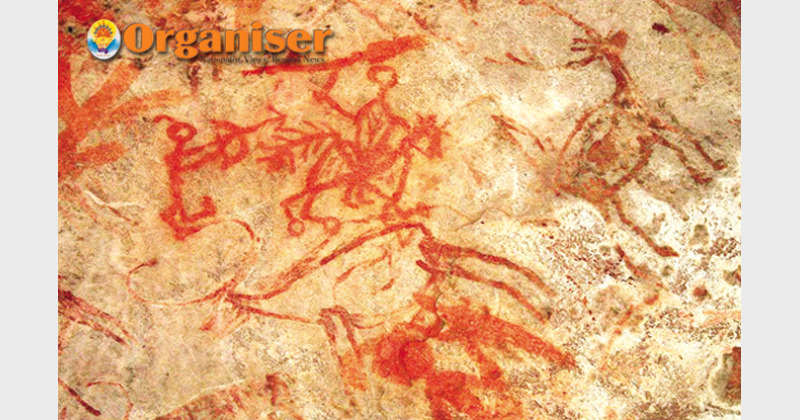
Bharatiya Sculpture at its Peak
December 11, 2025
  • Read Ecopy
  • Circulation
  • Advertise
  • Careers
  • About Us
  • Contact Us
Android AppiPhone AppArattai
Organiser
  • ‌
  • Bharat
    • Assam
    • Bihar
    • Chhattisgarh
    • Jharkhand
    • Maharashtra
    • View All States
  • World
    • Asia
    • Europe
    • North America
    • South America
    • Africa
    • Australia
  • Editorial
  • International
  • Opinion
  • RSS @ 100
  • More
    • Op Sindoor
    • Analysis
    • Sports
    • Defence
    • Politics
    • Business
    • Economy
    • Culture
    • Special Report
    • Sci & Tech
    • Entertainment
    • G20
    • Azadi Ka Amrit Mahotsav
    • Vocal4Local
    • Web Stories
    • Education
    • Employment
    • Books
    • Interviews
    • Travel
    • Law
    • Health
    • Obituary
  • Subscribe
    • Subscribe Print Edition
    • Subscribe Ecopy
    • Read Ecopy
  • ‌
  • Bharat
    • Assam
    • Bihar
    • Chhattisgarh
    • Jharkhand
    • Maharashtra
    • View All States
  • World
    • Asia
    • Europe
    • North America
    • South America
    • Africa
    • Australia
  • Editorial
  • International
  • Opinion
  • RSS @ 100
  • More
    • Op Sindoor
    • Analysis
    • Sports
    • Defence
    • Politics
    • Business
    • Economy
    • Culture
    • Special Report
    • Sci & Tech
    • Entertainment
    • G20
    • Azadi Ka Amrit Mahotsav
    • Vocal4Local
    • Web Stories
    • Education
    • Employment
    • Books
    • Interviews
    • Travel
    • Law
    • Health
    • Obituary
  • Subscribe
    • Subscribe Print Edition
    • Subscribe Ecopy
    • Read Ecopy
Organiser
  • Home
  • Bharat
  • World
  • Operation Sindoor
  • Editorial
  • Analysis
  • Opinion
  • Culture
  • Defence
  • International Edition
  • RSS @ 100
  • Magazine
  • Read Ecopy
Home Bharat

Bharatiya Sculpture at its Peak

Bharat has a long sculpting tradition. The earliest remains of the same were found in the caves of Bhimbetka, and since then, art historians and archaeologists have unearthed treasure beyond measureIt happened in the year 1957. Dr Shridhar Vishnu Wakankar, a resident of Ujjain, an archaeologist was travelling to Itarsi from Delhi by train. After the train passed Bhopal, he saw some formations in the mountains. Those formations appeared familiar to Dr Wakankar because he had seen similar formations in Spai

Archive ManagerArchive Manager
Oct 9, 2018, 12:44 pm IST
in Bharat
Follow on Google News
FacebookTwitterWhatsAppTelegramEmail
Bharat has a long sculpting tradition. The earliest remains of the same were found in the caves of Bhimbetka, and since then, art historians and archaeologists have unearthed treasure beyond measure
It happened in the year 1957. Dr Shridhar Vishnu Wakankar, a resident of Ujjain, an archaeologist was travelling to Itarsi from Delhi by train. After the train passed Bhopal, he saw some formations in the mountains. Those formations appeared familiar to Dr Wakankar because he had seen similar formations in Spain and France. His curiosity was aroused, and he went to the mountains with a team from the archaeological department.
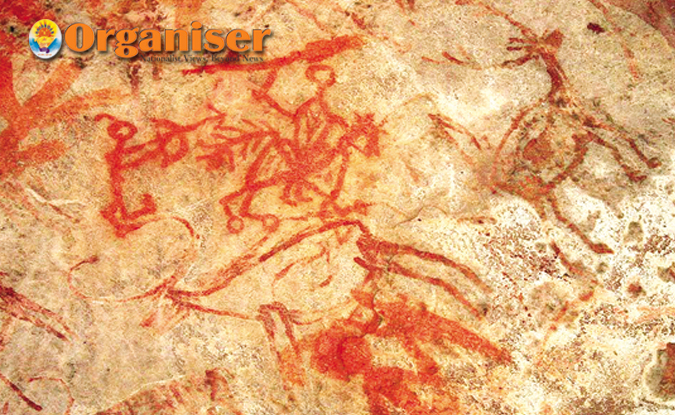


A window to the Indian history, art and science of sculpture was slightly opened because of Dr Wakankar’s efforts. The place was Bhimbetka. Pictures drawn on walls about 40,000 years ago were found there. It is the first available sample of ancient Indian art!!
 
Today, Bhimbetka is enlisted in the UNESCO’s protected monuments. There are shailashray, or shailgruh (mountain-homes, ‘caves’ in common parlance) there. Of these, pictures can be seen on 500 mountain-homes. They include tigers, deers, elephants, bulls, peacocks and so on. Most importantly, the horse is also there. It has proved that the horse existed in India since ancient times. Otherwise, some historian said than Arabs had brought horses to India.
 
History of Sculpture Making
Images of wax obtained from beehives are found in India. The small idol of danseuse at Mohenjo-Daro’ is a representative example of ancient Indian metal art. This idol is of Panchtatu (five metals), and it is very special. The idols found in Mohenjo-Daro and Harappa and the idols found in Mesopotamia show many similarities. Most preserved of these idols is that of a man. It seems this ‘bust’ with seven-inch-high head and shoulders was of a priest. It has a small beard, and the body is covered by a school.
 
Many seals were also found in the same excavation. They are quadrangular with bulls and similar things engraved on them. These bulls or animal figures are carved in an artistic fashion. The number of these seals, carrying more than 400 shapes, is over 2000.


In India, the practice was to make an original image in wax and make its mould. This technique is called ‘Madhuchchishtavidhan’ in ancient literature. Instead of the soil, the delicate wax from a beehive is used to make an image first. It is covered with pulp prepared by mixing water with soil, cow dung and rice bran. A thick tube is already provided with the image and care has to be taken that the other end of that should fall on the surface of the mould. As the die is dried and put in the kiln, all the wax in it is melted away, and a void in the shape of the image is created inside the mould. The replica of the original wax image can be obtained by pouring melted metal (bronze, brass or copper, sometimes even gold and silver). The tradition of decorating the image drawn from the mould with ornamental metal foil or creating idol by hitting stone itself is that of ancient times.
 
The tradition of bronze idols or metal idols is old in our country. Yajurveda mentions metals such as silver, lead and kathil along with other metals like iron. Of course, the people of that time knew how to use these metals. The idols found in the excavation at Dayamabad near Aurangabad a few years back are of panchdhatu and their period has been determined to be 3000 BCE through carbon dating. The solid animals found in this excavation are wheels on the line of toys. A two-wheeled bullock cart was also found in it.
VS Wakankar

Vishnu Shridhar Wakankar (4 May 1919 – 3 April 1988) was an Indian archeologist. In 1957 Wakankar discovered the Bhimbetka rock caves. In 1970 UNESCO inscribed the Bhimbetka rock caves as a World Heritage Site. The Bhimbetka rock caves exhibit the earliest traces of human life in India. He established the Wakankar Indological/Cultural Research Trust in Ujjain, India. In 1975, he was awarded the Padmashree award, one of India’s civilian honors.


However, India’s skills in sculpture were growing at the same time. Later on, the Indian sculpture experts displayed wonderful craft in sculpting all over South-East Asia by this skill. Indian sculpture was developed through two streams—Gandhara style and Mathura style.
 
However, we have not found idols belonging between 2000 years period from Harappan culture to the reign of Mauryas. Greek historian Megasthenes, who came to India during Alexander’s time, has written a lot about the sculptures in the Maurya Empire, the magnificence and shapeliness of the sculptures. Much is written about different sculptures in Pataliputra and the grandeur of the city in his book Indica.
 
The period of Ashoka is 304-232 BCE which is around 2250 years ago from today. We can still see many images and many sculptures of his era. Ashoka accepted Buddhism, and the medium he chose for the spread of Buddhism was sculpture. He erected many pillars, many stupas, several inscriptions, many artefacts and many idols. Ashoka Chinha, the symbol of four lions made during his time, is our national emblem today. The Ashoka Chinha was found at Sarnath. The sculpture was intact even after about 2250 years. Exactly same symbol of four lions has been found in Thailand also.
 
The zenith of Indian sculpture we get to see is in the much later period, during the 7th/8th century. Kailas Cave at Verul (Ellora) is an amazing marvel. This sculpture carved in a single rock piece is a unique and incredible example of human sculpture. It is estimated that these caves were carved between 600 and 750 AD. However, some archaeologists believe that this could be a long ago. According to the available evidence, the period of creation of these sculptures is during the reign of Rashtrakutas. It is believed that King Krishna I started the creation of these caves in the early 8th century.
 
However, whatever was created during the time was amazing. It is too astonishing for human intelligence. No such magnificent sculpture on the surface of the earth has been carved from top to bottom in a single rock! 

ShareTweetSendShareSend
✮ Subscribe Organiser YouTube Channel. ✮
✮ Join Organiser's WhatsApp channel for Nationalist views beyond the news. ✮
Previous News

?It was a fusion of culture, literature, art and academic discussions?

Next News

The Imitable Mahamana

Related News

Ambassador Harish Parvathaneni, India's Permanent Representative to the UN

India calls for “pragmatic engagement” with Taliban at UNSC meeting on Afghanistan

Hindu–Sikh Unity: The foundation of Punjab’s strength and stability

Muhammad Yunus, Chief Advisor of the Interim administration of Bangladesh

Unmasking Muhammad Yunus: Series of lies etched with corruption, plagiarism, shadow deals & ultimate thirst for power

Bhattacharya, IAS (Retd.),

Telangana: Retired IAS officer turns economics lecture into anti-Hindu tirade; FIR filed at IPE Hyderabad

The Tamil Community in Moreh

Tamil footprints on the Indo-Myanmar frontier: A civilisational saga from Rangoon to Moreh

Duff performance in front of Chennakeshava temple, Mangaluru cancelled after opposition from Hindu organisations

Karnataka: Performance of Duff in front of Chennakeshava temple cancelled due to opposition from Hindu organisations

Load More

Comments

The comments posted here/below/in the given space are not on behalf of Organiser. The person posting the comment will be in sole ownership of its responsibility. According to the central government's IT rules, obscene or offensive statement made against a person, religion, community or nation is a punishable offense, and legal action would be taken against people who indulge in such activities.

Latest News

Ambassador Harish Parvathaneni, India's Permanent Representative to the UN

India calls for “pragmatic engagement” with Taliban at UNSC meeting on Afghanistan

Hindu–Sikh Unity: The foundation of Punjab’s strength and stability

Muhammad Yunus, Chief Advisor of the Interim administration of Bangladesh

Unmasking Muhammad Yunus: Series of lies etched with corruption, plagiarism, shadow deals & ultimate thirst for power

Bhattacharya, IAS (Retd.),

Telangana: Retired IAS officer turns economics lecture into anti-Hindu tirade; FIR filed at IPE Hyderabad

The Tamil Community in Moreh

Tamil footprints on the Indo-Myanmar frontier: A civilisational saga from Rangoon to Moreh

Duff performance in front of Chennakeshava temple, Mangaluru cancelled after opposition from Hindu organisations

Karnataka: Performance of Duff in front of Chennakeshava temple cancelled due to opposition from Hindu organisations

Modi–Putin diplomacy triumphs as Congress drowns in its own confusion

Bangladesh national elections scheduled for February 12

Bangladesh elections on Feb 12; First since the topple of Hasina regime, Set to decide political course of the country

Thirupurakundram Hill (L) - Dr Moahn Bhagwat, Sarsanghchalak- RSS (R)

Hindu Unity in Tamil Nadu Enough to Secure Favourable Resolution on Thiruparankundram: Dr Mohan Bhagwat

Hussain brothers from Rotherham running a network of sexual terrorism

Grooming gangs of Pakistan wreak havoc in UK; Transcript expose chilling fact on trafficking & rape by Hussain brothers

Load More
  • Privacy
  • Terms
  • Cookie Policy
  • Refund and Cancellation
  • Delivery and Shipping

© Bharat Prakashan (Delhi) Limited.
Tech-enabled by Ananthapuri Technologies

  • Home
  • Search Organiser
  • Bharat
    • Assam
    • Bihar
    • Chhattisgarh
    • Jharkhand
    • Maharashtra
    • View All States
  • World
    • Asia
    • Africa
    • North America
    • South America
    • Europe
    • Australia
  • Editorial
  • Operation Sindoor
  • Opinion
  • Analysis
  • Defence
  • Culture
  • Sports
  • Business
  • RSS @ 100
  • Entertainment
  • More ..
    • Sci & Tech
    • Vocal4Local
    • Special Report
    • Education
    • Employment
    • Books
    • Interviews
    • Travel
    • Health
    • Politics
    • Law
    • Economy
    • Obituary
  • Subscribe Magazine
  • Read Ecopy
  • Advertise
  • Circulation
  • Careers
  • About Us
  • Contact Us
  • Policies & Terms
    • Privacy Policy
    • Cookie Policy
    • Refund and Cancellation
    • Terms of Use

© Bharat Prakashan (Delhi) Limited.
Tech-enabled by Ananthapuri Technologies