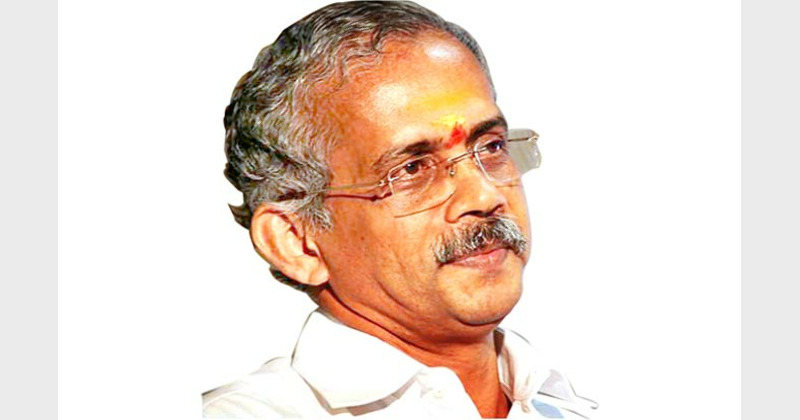
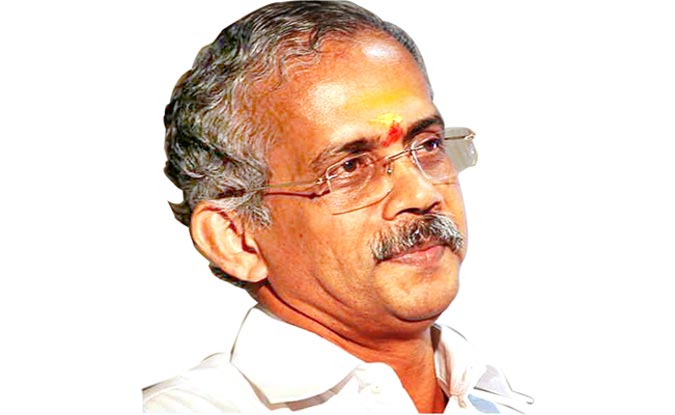
The Prajna Pravah, a platform for intellectuals and activists, is organising the second edition of Lokmanthan, a biennial brainstorming for nationalist thinkers and practitioners, in Ranchi, Jharkhand. The central theme of the colloquium is “the idea of Bharat”, with a view of reviving Indianness and Indic perspective on various issues. While speaking to Prafulla Ketkar, Editor Organiser and Hitesh Shankar, Sampadak, Panchjanya, the National Convenor of Prajna Pravah, Shri J Nandakumar unravelled the idea behind the event and need to rejuvenate the Indic thought:
What is Lokmanthan? How is it different from the conventional seminars and conferences?
The very concept of Lokmanthan is the ‘colloquium of Nation First Thinkers and Practitioners’. In our tradition, not just intellectuals but everyone, like painter, sculptor etc. in their own work, has been manifesting the central idea of Rashtra (nationhood). We thought that all such thinkers and practitioners should come and think together on the national issues. Generally, the seminars and symposiums are the domain of professional intellectuals, most of them are uprooted from the ground realities of Bharat. Lokmanthan is an attempt to re-establish that connect between intellectuals and practitioners.
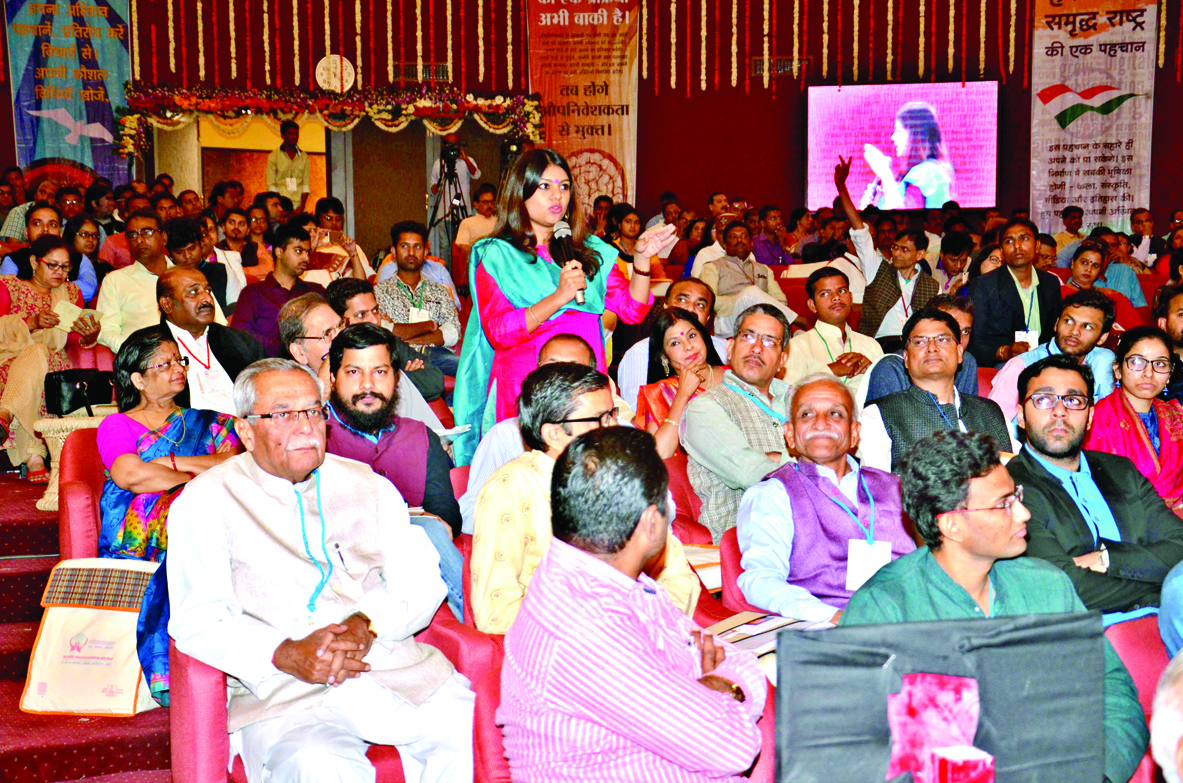
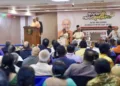
An Interactive session
Mahatma Gandhi Ji used to say that the true Bharat lives in villages. Now, we need to understand that the village is not just a geographical concept for us; it is also a cultural, civilisational and spiritual concept. The true Bharat has to be understood with this Bharatiya prism. In this sense, Lokmanthan is entirely different from the routine conference culture.
How do you see the outcome of the first edition on the theme of “Decolonising Indian Minds” held in Bhopal? How
Before our effort through Lokmanthan in Bhopal, many efforts were made in and outside Bharat to explore and analyse this concept of decolonising national mind. What made Lokmanthan-2016 a great success was, it took the discourse on Decolonising Minds to the larger circle of academics, intelligentsia and practitioners. This was taken to the common people also. Decolonisation process also includes reinventing our Bharatiyata, in that sense also it initiated a churning not only among thinkers but also among artists. Many programmes were organised at various levels after that, not just by us but many others are thinking for the betterment of this nation.
Is there any plan to take this discourse to the common people?
This is not just an intellectual discourse; I would call this a ‘Boudhik Mela’. Melas have a different social and cultural significance in our national life for ages. Before organising the Lokmanthan itself, we had decided that mere one programme at the national level would not be sufficient, so various initiatives have been taken at the State levels.
The Bharatiya tradition of Samvada is to be re-established and revitalised. Our entire concept of Samavda is not mere communication but a positive and constructive communication. Besides communication/ discussion between Guru and Shishya, we had three types of Samvada: Vada, Jalpa and Vitanda. Vaada – is the discussion between two equals – the purpose is to settle what the truth is. Jalpa is where each discusser comes to the table with a preconceived notion that he is right and the other fellow is wrong. The other fellow also comes with the same notion. The purpose of the discussion is only to convert the other fellow to his camp. We cannot reach to any conclusion in this type of discussion. While Vitanda is the peculiar type of discussion where one argues against the other fellow just to prove that he is wrong, without any conviction in his/her own argument. We see quite often this type of debates on Television channels.
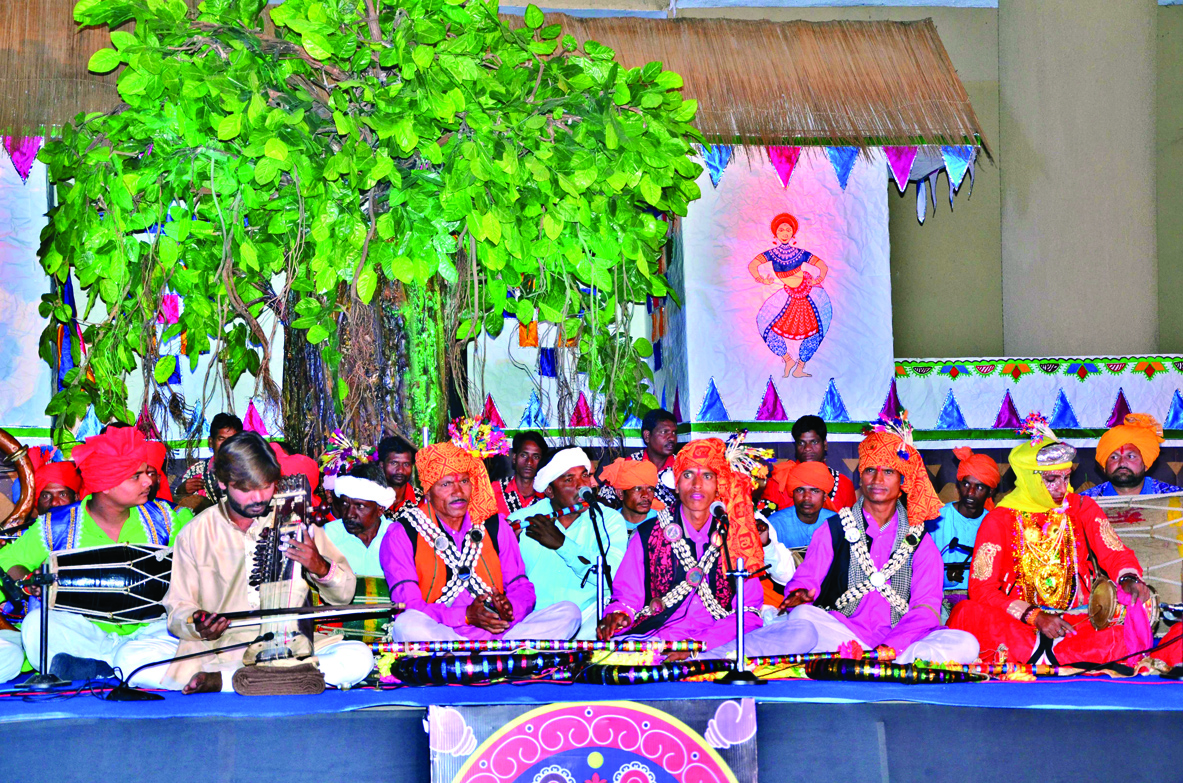
Tribal artists performing at the event
There can be multilayered discussions, but the ultimate goal should be to bring out some positive outcome for all the discussants. Our national construction itself is based on such purposeful Samvada. That is why Adi Shankaracharya defined it as ‘Vade Vade Jayate Tatva Bodhah’. This Rashtra itself is considered as a Teerth Sthali (pilgrimage). Lokmanthan is an attempt to rejuvenate that tradition of Samvada. Therefore, in two years time, we have already taken efforts to inculcate this practice at various levels of society. I am sure, slowly but surely we will be able to take this Samvada to the common people. I would say, in many parts of villages and family systems this practice is still intact, we are just trying to give it some recognition in the intellectual circles.
What is the theme of this year”s event?
This time the core theme is Bharat-Bodh: Jan- Gan- Man. What is the Idea of Bharat, what is our idea of nation and society, what is the mind of Bharat, what was it, what is it and in which direction should it go, all these issues will be addressed in the deliberations. In our tradition what has been the idea of Rashtra, how our society did construct various self-dependent systems. Today, everything is State and politics centric because of the Western colonial thinking. Our systems were never like this. Society used to create its systems and manage them with own ethical standards and self-correction mechanisms. How far such systems are relevant to the present condition and what necessary modifications are required to make them effective will be the prime focus of the discussion. Simultaneously, economic, local governance models will be discussed. And in the present context, an attempt to do objective self-assessment (Atmavalokan) will also be made.
Do you think that such national level events will also shape the political discourse in the coming days?
This is not meant to give any direction to political discourse. This is an attempt to decide the direction of our national reconstruction through collective deliberations. Of course, politics and governance will also get some nectar out of this churning, but the aim is not to give any direction to a particular walk of life. Arts, literature, education, economy etc. all that constitutes the living society will be discussed from Bharatiya point of view in these three days of deliberations.
What is Prajna Pravah? Besides Lokmanthan, what are the other programmes organised by Prajna Pravah?
Prajna Pravah is a platform to re-establish Bharat centric, what is called as Indic thinking in Bharat. We have had a unique tradition of rejuvenating, reinventing, re-reading, re-finding ourselves. In this new additions are made, unwanted elements are removed. Unfortunately, that has been halted, blocked or slowed down in the last few centuries may be because of incessant external aggressions. After independence, there was an opportunity to rekindle this national vigour but because of colonial influence, we could not do that with full spirit. There is a need to rekindle that national thinking process in a comprehensive manner. Prajna Pravah is a platform to coordinate all such efforts, institutions, organisations and movements.
- Mahatma Gandhi Ji used to say that the true Bharat lives in villages. Now, we need to understand that the village is not just a geographical concept for us; it is also a cultural, civilisational and spiritual concept
- WHAT made Lokmanthan-2016 a great success was, it took the discourse on Decolonising Minds to the larger circle of intelligentsia
- This time the core theme is Bharat-Bodh: Jan- Gan- Man. What is the Idea of Bharat, what is our idea of nation and society, what is the mind of Bharat, what was it, what is it and in which direction should it go
- In the last few years, Prajna Pravah has been organising Jnana Sangam for various academic disciplines. Besides a national level interdisciplinary Jnana Sangam of academicians, five zonal level programmes were organised
In the last few years, Prajna Pravah has been organising Jnana Sangam for various academic disciplines. Besides a national level interdisciplinary Jnana Sangam of academicians, five zonal level programmes were organised in the last two years. The professionals in this forum discuss not just academic issues but also policy and content generation related issues. Now the process of discipline wise Jnana Sangam has started. Recently, in the campus of Indira Gandhi National Open University (IGNOU), a two day Jnana Sangam was organised on the issue of ‘Social Inclusion’ in Bharat. Now in many universities, they are studying exclusion, but it is not in tune with the original spirit of Bharat. So the idea of social inclusion was discussed. Similarly, the disciplinary Janana Sangams of economics, philosophy, history and linguistic will be held in Kochi, Delhi, Hyderabad and Anand respectively in the coming months.
Bharatiya Knowledge Tradition has been ancient and all-pervasive but how far is it relevant in the present context?
Bharat has been known as a nation of knowledge seekers, along with them there was a tradition of preserving and transmitting that knowledge. There was also a socially supported maintenance system in this knowledge tradition. World over this has been studied and recognised. Unfortunately, we are not enough conscious of this treasure. Dr S Radhakrishnan while submitting the first education commission report of independent Bharat clearly stated that the biggest problem in the so-called modern education is the absence of Bharatiya knowledge tradition. Later, the Dr Kothari Commission report also specifically pointed out that the centre of gravity of education system has been slipped away from Bharat towards Europe. To give proper direction to Bharat, we have to take insights from the Bharatiya Knowledge System. It does not mean throwing away everything that exists or going back to the bullock-cart age. We just need to bring back the knowledge seeking tradition of Bharat in place of the blind imitating system.
How would you differentiate the Indic thought process from the Western one?
See, Bharatiya system is always inclusive and integral. The relationship among individuals or with nature is complimentary. In the Western Knowledge system, this relationship is essentially conflicting and exclusive. For the West, Knowledge is power, while for the Indic thought it is a means of purification. There who controls the knowledge will suppress others, while in Bharat who controls the knowledge will help others. All types of works can be purified through knowledge is the basic understanding for us. Developing yourself through knowledge not just for yourself but for your family, society, nature, universe and ultimately to attain the highest spiritual goal is the core objective of knowledge. This is integral, not exclusive of each other. Even nature is there for human exploitation and we are facing all the environmental issues because of that. The concepts like the struggle for existence and survival of the fittest stem from this basic thinking. In our tradition, nature is divine and part of our life. This basic difference is there.
How can exercise like Lokmanthan bridge the gap between Bharatiya Knowledge Tradition and the existing structures, through processes in the field of education?
There is a huge disconnect between the academic –intellectual activity and the roots of Bharat. Our education system was governed by the local considerations, with local resources and planning with the support of the society in a decentralised way and not by the Government in a centralised way. Gurukuls had freedom even to decide their own curriculum as per the needs. Still, they used to think about the entire universe. We may not be able to create the system, but at least, people should come together and deliberate over the basic nature of society and strive for shaping the education accordingly. Lokmanthan is connecting the intellectuals and Lok (common people, what is popularly called as folk) for this transformation. We are sure that this churning will certainly bring out some good for this ancient nation.