Euthanasia : ?Death with Dignity? isa Right Now
December 14, 2025
  • Read Ecopy
  • Circulation
  • Advertise
  • Careers
  • About Us
  • Contact Us
Android AppiPhone AppArattai
Organiser
  • ‌
  • Bharat
    • Assam
    • Bihar
    • Chhattisgarh
    • Jharkhand
    • Maharashtra
    • View All States
  • World
    • Asia
    • Europe
    • North America
    • South America
    • Africa
    • Australia
  • Editorial
  • International
  • Opinion
  • RSS @ 100
  • More
    • Op Sindoor
    • Analysis
    • Sports
    • Defence
    • Politics
    • Business
    • Economy
    • Culture
    • Special Report
    • Sci & Tech
    • Entertainment
    • G20
    • Azadi Ka Amrit Mahotsav
    • Vocal4Local
    • Web Stories
    • Education
    • Employment
    • Books
    • Interviews
    • Travel
    • Law
    • Health
    • Obituary
  • Subscribe
    • Subscribe Print Edition
    • Subscribe Ecopy
    • Read Ecopy
  • ‌
  • Bharat
    • Assam
    • Bihar
    • Chhattisgarh
    • Jharkhand
    • Maharashtra
    • View All States
  • World
    • Asia
    • Europe
    • North America
    • South America
    • Africa
    • Australia
  • Editorial
  • International
  • Opinion
  • RSS @ 100
  • More
    • Op Sindoor
    • Analysis
    • Sports
    • Defence
    • Politics
    • Business
    • Economy
    • Culture
    • Special Report
    • Sci & Tech
    • Entertainment
    • G20
    • Azadi Ka Amrit Mahotsav
    • Vocal4Local
    • Web Stories
    • Education
    • Employment
    • Books
    • Interviews
    • Travel
    • Law
    • Health
    • Obituary
  • Subscribe
    • Subscribe Print Edition
    • Subscribe Ecopy
    • Read Ecopy
Organiser
  • Home
  • Bharat
  • World
  • Operation Sindoor
  • Editorial
  • Analysis
  • Opinion
  • Culture
  • Defence
  • International Edition
  • RSS @ 100
  • Magazine
  • Read Ecopy
Home Bharat

Euthanasia : ?Death with Dignity? isa Right Now

Passive euthanasia refers to speeding up the process of dying by withholding life-prolonging measures and resources. This could be either at the expression or implied request of the person (voluntary euthanasia) or in the absence of such approval/consent (non-voluntary euthanasia).

Archive ManagerArchive Manager
Mar 19, 2018, 02:04 pm IST
in Bharat
Follow on Google News
FacebookTwitterWhatsAppTelegramEmail


India now joins a club of few elite countries where passive euthanasia has been made legal and this will inspire certainly many other countries also to follow suit!

Sanjeev Sirohi

Passive euthanasia refers to speeding up the process of dying by withholding life-prolonging measures and resources. This could be either at the expression or implied request of the person (voluntary euthanasia) or in the absence of such approval/consent (non-voluntary euthanasia).
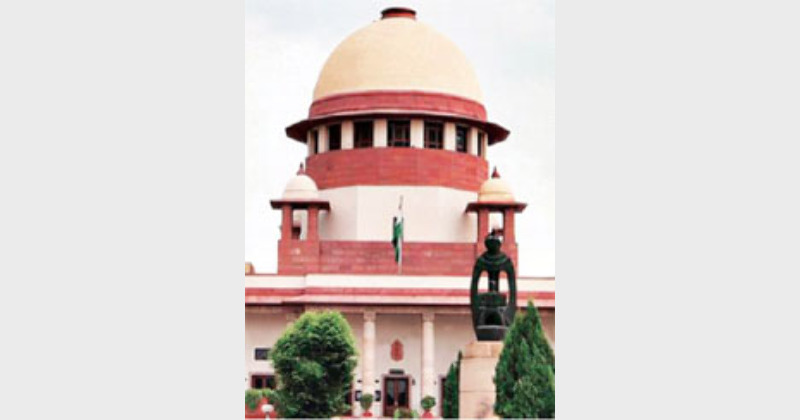
A five-Judge Constitution Bench of the Supreme Court led by Chief Justice of India Dipak Misra along with Justices AK Sikri, AM Khanwilkar, DY Chandrachud and Ashok Bhushan in four separate and concurring opinions ruled explicitly on March 9, 2018 that the fundamental right to life and dignity under Article 21 of the Constitution includes the “right to die with dignity”. It ruled that “smoothening” the process of death for terminally ill patients with no chance of recovery was integral to life with dignity. The ruling came on a petition filed by a Non-Governmental Organisation named Common Cause.                                            
The Apex Court has also upheld the right to give advanced medical directives or “Living Wills” spelling out views and wishes pertaining to medical treatment in terminally ill conditions or those in ‘Persistent and Incurable Vegetative State’ (PVS) to smoothen the dying process as part of the fundamental right to live with dignity. It also allows the families of those in incurable coma to withdraw such measures to reduce the period of suffering and provide a dignified exit by refusing medical treatment or life support.   

Countries that allow Passive Euthanasia

  • Netherlands—Euthanasia in the Netherlands is regulated by the Termination of Life on Request and Assisted Suicide (Review Procedures) Act, 2002. It legalises euthanasia and physician assisted suicide in very specific cases and under very specific circumstances including the patient’s will and suffering a second opinion and the absence of alternatives.
  • Belgium—Euthanasia was legalised in September 2002.The Belgian law sets out conditions under which the suicide can be practiced without giving doctors a licence to kill. Patients wishing to end their lives must be conscious when they make the demand and repeat their request for euthanasia. They have to be under “constant and unbearable physical or psychological pain” resulting from an accident of incurable illness.
  • Italy—Italian lawmakers passed a law in 2017 allowing thereby adults to decide, in consultation with their doctors, their end-of-life medical care, including the terms under which they can refuse treatment. We thus see that the law permits Italians to write living wills and refuse medical treatment, artificial nutrition and hydration.
  • USA—Active euthanasia is illegal in all US states but physician-assisted dying is legal in Oregon, Washington, and Montana. Most states allow passive euthanasia. It is a must for doctors to respect patients’ wishes as per advance directives.
  • Switzerland—Assisted suicide is allowed in Switzerland as long as the motive isn’t profit. Active euthanasia is illegal.

                                
The Living Will                                           
To be sure, the Bench of the Apex Court while rendering this landmark judgment made it amply clear that, “The ‘living will’ must be an informed consent by an adult while in a sound state of mind before a Judicial Magistrate of First Class and in the presence of two independent witnesses who will attest. The said instructions will unambiguously indicate when medical treatment is to be withdrawn and even name a guardian or close relative who will execute the said “will” in the event the patient slips into coma or persistent vegetative state (PVS).
A copy of the will shall be restored in the office of the Judicial Magistrate and the local municipality or panchayat.”      
The Judges also stated that, “The right to live with dignity (a component of right to life and liberty under Article 21) also includes the smoothening of the process of dying in case of a terminally-ill patient or a person in PVS with no hope of recovery. A failure to recognise advance medical directives (or living will) may amount to non-facilitation of the right to smoothen the dying process and the right to live with dignity.”
It would be pertinent to underline that when the living will or medical directive is produced by the family to the treating doctor, the hospital shall constitute a Medical Board of three doctors of minimum 20 years standing to examine the patient and the feasibility of executing the “living will”. Their preliminary opinion will be forwarded to the District Collector who will constitute another Medical Board headed by Chief Medical Officer of the district and three other doctors. The Board will visit the patient and give its view on the opinion of the first medical board.   

Other Prominent Cases

It may be recalled here that in 2011, the Supreme Court had recognised passive euthanasia in the Aruna Shanbaug case by which it had permitted withdrawal of life-sustaining treatment including withdrawal of life-sustaining treatment from patients not in a position to make an informed decision. It was in this landmark case that Supreme Court for the first time laid down guidelines for euthanasia and also made a distinction between active and passive euthanasia.
Aruna who was a nurse was brutally raped and beaten by a sweeper. This made her as good as dead and she remained bed ridden for 42 long years and was in a permanent vegetative state! Her condition for such a long period was most gut-wrenching and this was what compelled even the Supreme Court to sit up and take notice and recognise the passive euthanasia!
Gian Kaur v State of Punjab (1996), the Supreme Court said that Article 21 guaranteeing right to life did not include right to die or right to be killed. It said that an unnatural termination of life was incompatible with basic idea of right to life.
N Mukundan Pillai of Kollam, Kerala had petitioned for the right to die in 1999. The retired Headmaster said he was sound in body and mind and having fulfilled his duties, obligations, was a contended person and had no further motivation to live. He contended that his only desire was to have an ‘honourable exit’ from life while he was mentally/physically fit. His petition was rejected. Very rightly so!

Right to Die & Right to Health

In his separate 112-page concurring judgment approving passive euthanasia and living will, Justice Sikri remarked that, “Right to health is a part of Article 21 of the Constitution. At the same time, it is also a harsh reality that everybody is not able to enjoy that right because of poverty etc. The state is not in a position to translate into reality this right to health for all citizens. Thus, when citizens are not guaranteed the right to health, can they be denied right to die in dignity?”
He further said that, “It is undisputed that doctors’ primary duty is to provide treatment and save life but not in the case when a person has already expressed his desire of not being subjected to any kind of treatment. It is a common law right of people, of any civilised country, to refuse unwanted medical treatment and no person can force him/her to take any medical treatment which the person does not desire to continue with.”


Needless to say, if both the boards concur, the Collector will communicate the decision to the Judicial Magistrate, who will issue orders to execute the living will. However, in case of difference of opinion or rejection by the Medical Board on account of ambiguity in the advanced directive, the family or the hospital can approach the High Court that will expeditiously hear and decide the case. It will be open to the High Court too to constitute a Medical Board of its own.
 The Condition of “No Cure”                                       
 It must be brought out here that the Chief Justice’s judgment detailed what the court meant by “no cure”. It read as follows: “The words ‘no cure’ have to be understood to convey that the patient remains in the same state of pain and suffering or the dying process is delayed by means of taking recourse to modern medical technology. It is a state where the treating physicians and the family members know full well that the treatment is administered only to procrastinate the continuum of breath of the individual and the patient is not even aware that he is breathing. Life as measured by artificial heartbeats and the patient has to go through this undignified state which is imposed on him.”
It also said that, “The dignity of life is denied to such a person as there is no other choice but to suffer an avoidable protracted treatment thereby thus indubitably casting a cloud and creating a dent in his right to live with dignity and face death with dignity, which is a preserved concept of bodily autonomy and right to privacy”.
Concurring with the CJI’s verdict, Justice Sikri said that, “A dreadful, painful death on a rational but incapacitated terminally ill patient is an affront to human dignity”. Making an interesting analysis of how passive euthanasia is opposed in the country both morally and religiously, the Judge voted in its favour citing human dignity and the cost benefit involved in opting for the same.
A Landmark Judgement
It is a landmark judgment with far reaching consequences. It ensures that those, whose recovery is not possible and who are medically unfit and want an end to their life, can avail of the benefit of passive euthanasia. It has also been stipulated in this landmark judgment that it should be ensured that relatives do not misuse this provision to get rid of those who are not fit!
For ensuring this, certain safeguards have been inserted and very rightly so! No doubt, India now joins a club of few elite countries where passive euthanasia has been made legal and this will inspire certainly many other countries also to follow suit! It is really a giant step in the right direction for which the Supreme Court certainly deserves full accolades!        (The Writer is a lawyer)                                                                    
ShareTweetSendShareSend
✮ Subscribe Organiser YouTube Channel. ✮
✮ Join Organiser's WhatsApp channel for Nationalist views beyond the news. ✮
Previous News

Interview/Dr Richard Benkin : Hindu population dwindling in Bangladesh

Next News

Maharashtra/ Report : Truth of the Long March

Related News

Maharashtra DCM pays tribute at Smriti Mandir, Nagpur

Maharashtra: Visiting Smriti Mandir evokes patriotism & service urge, says DCM Eknath Shinde on tribute to Hedgewar

The role of Gen AI in election campaign

How Generative AI is redefining the election campaigns

Representative Image

Manipur: Security forces recover cache of arms, ammunition in Kakching district; Strive for heightened public safety

Winning the narrative war

The need for strong narratives in Bharat

R. Ashoka, Leader of Opposition

Karnataka: Opposition condemns diversion & misuse of exclusive SCSP, TSP funds for guarantee schemes

Deceit and manipulation became symbolic of Congress governance

Special Intensive Revision: A red rag to the opposition

Load More

Comments

The comments posted here/below/in the given space are not on behalf of Organiser. The person posting the comment will be in sole ownership of its responsibility. According to the central government's IT rules, obscene or offensive statement made against a person, religion, community or nation is a punishable offense, and legal action would be taken against people who indulge in such activities.

Latest News

Maharashtra DCM pays tribute at Smriti Mandir, Nagpur

Maharashtra: Visiting Smriti Mandir evokes patriotism & service urge, says DCM Eknath Shinde on tribute to Hedgewar

The role of Gen AI in election campaign

How Generative AI is redefining the election campaigns

Representative Image

Manipur: Security forces recover cache of arms, ammunition in Kakching district; Strive for heightened public safety

Winning the narrative war

The need for strong narratives in Bharat

R. Ashoka, Leader of Opposition

Karnataka: Opposition condemns diversion & misuse of exclusive SCSP, TSP funds for guarantee schemes

Deceit and manipulation became symbolic of Congress governance

Special Intensive Revision: A red rag to the opposition

R Sreelekha, Kerala’s first woman IPS officer and former DGP, wins from the Sasthamangalam ward in the Trivandrum Corporation elections

Kerala Local Body Polls: BJP fields first woman IPS officer and ex-DGP R Sreelekha, wins big in Trivandrum Corporation

Representative Image

Indian New Gene Editing Protein: Future of healthcare, agriculture and biotechnology reforms

The rise of right-wing in the contemporary world

The resurgence of nationalist ideologies in contemporary world politics

J&K LG Manoj Sinha

J&K: LG Sinha lauds SKIMS staff in providing top medicare to people, improvement in medical infrastructure post-2019

Load More
  • Privacy
  • Terms
  • Cookie Policy
  • Refund and Cancellation
  • Delivery and Shipping

© Bharat Prakashan (Delhi) Limited.
Tech-enabled by Ananthapuri Technologies

  • Home
  • Search Organiser
  • Bharat
    • Assam
    • Bihar
    • Chhattisgarh
    • Jharkhand
    • Maharashtra
    • View All States
  • World
    • Asia
    • Africa
    • North America
    • South America
    • Europe
    • Australia
  • Editorial
  • Operation Sindoor
  • Opinion
  • Analysis
  • Defence
  • Culture
  • Sports
  • Business
  • RSS @ 100
  • Entertainment
  • More ..
    • Sci & Tech
    • Vocal4Local
    • Special Report
    • Education
    • Employment
    • Books
    • Interviews
    • Travel
    • Health
    • Politics
    • Law
    • Economy
    • Obituary
  • Subscribe Magazine
  • Read Ecopy
  • Advertise
  • Circulation
  • Careers
  • About Us
  • Contact Us
  • Policies & Terms
    • Privacy Policy
    • Cookie Policy
    • Refund and Cancellation
    • Terms of Use

© Bharat Prakashan (Delhi) Limited.
Tech-enabled by Ananthapuri Technologies