





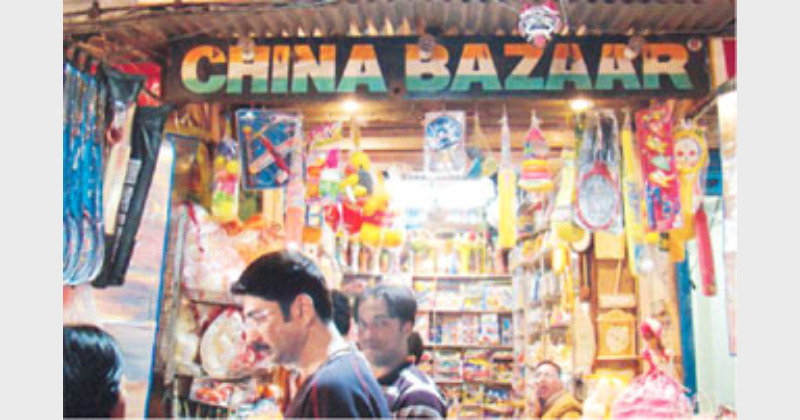
 Over the years China has rapidly captured Bharatiya festival economy giving a severe jolt to the locals
Dr S Lingamurthy
India has the great cultural diversity and is called the land of festivals, temples, holistic congregations and teerth-yatras (holistic voyage). As per the Parliament data, India celebrates 51 festivals throughout in a year, of which 17 are nationally recognized and remaining 34 are celebrated at regional level and local level. As the prime minister said, our festivals are directly connected with the upliftment of the poor and it drives their entrepreneurship and economic activity. In addition to these festivals, as per 2011 census, we have 2.1 million temples across the country (M.D. Srinivas) which attract enormous offerings and donations in cash and kind.
Temples and festivals together boost-up the economy and keep Indian economy vibrant. Festivals integrate the economy and society into oneness where happiness and sustainable expenditure live together and give stimulus to market forces which keep the Indian economy afloat.
The people in the country have rejected the western growth theories and development models particularly J.M. Keynes, who encouraged consumerism in the western societies as well as partially in India owing to the adaptation of mixed economic model and demonstration effects. The Western development theories discourage the saving system and pattern while, in India people save money for family functions, social relations, cultural festivals, temple donations, pilgrimages along with precautionary expenditure.
Festival economy has been rapidly increasing with sizeable growth rate. The ASSOCHAM estimates that Lord Ganesh Festival generates about Rs. 20,000-cr business across the
country with 20 per cent compound annual growth rate (CAGR), particularly in Maharashtra and Telangana. The State capital of Telangana, Hyderabad alone generates about Rs. 5,000-cr business during the nine- day Ganesh Chaturthi Festival (Lingamurthy) and provides employment to more than 20,000 families throughout the year and during the peak season of Ganesh festival (July-September). Around 60,000 people get employment opportunities in unorganized sector such as idol manufacturing sector, transportation sector, event management, flags and apparel manufacturing activities, etc.
Like Ganesh Chaturthi, Goddess Durga Puja festival generates about Rs. 40,000 Crore business in India with 35 per cent CAGR, particularly in West Bengal. The size of Durga Puja economy almost equals to one-third of the West Bengal state annual budget. Thousands of families are traditionally involved in idol making activity over the decades across the nation. Many branded electronic companies are involved in sponsoring the Goddess Durga puja pandals in Kolkata and artists from different countries, even from Pakistan comes to Kolkata during the festival to give the decorative finishing touches to Maa Durga. Event management
companies from France and U.S. are engaging in Kolkata in easing the entire activities of advertisements and cultural event programmes at Durga Puja pandals. All these artists and event management companies from different countries are capturing the festival economy and profiteering out of these festivals in a significant manner. During nine day Maa Durga Puja festival food and beverages alone generates the volume of Rs. 50-60 crore business in the country.
All the festivals in India encourage the unorganized economy in a large scale and provide massive
employment opportunities for the low skilled traditional household manufacturing sector and small micro entrepreneurs. Raksha Bandhan festival generates about Rs.400/- crore business and provides employment to more than 4,000 families in Gujarat.
During Diwali electronics, automobiles and apparels dominate the lion’ share of the business. 52 percent of the apparel products sales take place during this auspicious festival and every individual spends 20 percent additional expenditure for various reasons. According to Tamil Nadu Fireworks and Amorces Manufacturers Association (TNFAMA), crackers industry plays a dominant role with Rs. 10,000 crore business and provides employment to thousands of families in Sivakasi of Tamil Nadu.
India celebrates Kite festival during Uttarayanam period and this festival generates about Rs.500 crore business in the country particularly in Gujarat, Uttar Pradesh and Delhi. Kite industry is traditionally based on household occupation which provides employment to more than 6000
families of Gujarat. By considering the due potential of Kite industry in terms of business and employment, the then Chief Minister of Gujarat
promoted this festival as an International Kite Festival through Vibrant Gujarat Programme.
China’s Onslaught
India is the largest trade partner for Chinese products (nearly $72 billion) and over the years import of toys, furniture, building hardware, crackers, lighting and electric fittings, furnishing fabric,office stationery, electronic appliances, consumer electronics, kitchen equipment & appliances, gift items, watches etc from China has increased to a great extent. ASSOCHAM surveyed on 1,000 families of Holi colour manufacturers in different parts of the country i.e., Allahabad, Agra, Hathras, Mathura, Brindavan, Delhi, Kanpur, Lucknow and Patna. It is revealed that 8-10 lakh job losses were happening through Chinese invasion on auspicious Holi festival colours and reported that 75 percent of the colours of China have been used during last year Holi in India. China is also capturing the accessories, plastic products and colour sprinkler guns of Holi festival worth Rs. 18,000 Crore.
China overrun illuminous lightings and fireworks during the festival of Diwali. According to the TNFAMA and Industry executives, out of Rs 10,000 crore business of fireworks, 40
percent of the market is captured by Chinese firework products which adversely affecting about 2.5 lakh Indian artisans who earn a chunk of their total income during Diwali days.
Apart from crackers, Chinese toys are also impacting the Indian toy industry. According to the ASSOCHAM, the Indian market is full of Chinese toys, so the Indian toy industry is struggling hard to survive. Nearly 40 per cent of Indian toy
companies have been closed in the last five years, and rest 20 per cent are struggling to break even. Cheap Chinese products have become the reason for the shutdown of nearly 60 per cent of the industrial units in Bhiwandi and Thane.
China is illegally dumping its products during the festival season into India. As per the Indian pink media, ports in Maharashtra and Gujarat were the primary entry points for illegal Chinese crackers which have affected the livelihood of over 500,000 households in Sivakasi and 4,00,000 small factories in West Bengal. There are many instances when China dumped Vinayaka Idols in a large scale at cheap prices to close down the Indian idol manufacturing units and artisan activities.
China has $46.56 billion trade surplus with India which is causing the close down of Indian small scale manufacturing Industry and threatening large scale employment. China is supporting Pakistan with CPEC project and investing about $438 million in Pakistan out of the trade surplus with India. China is not only looting Indian economy and is also supporting Pakistan’s terror activities against India.
Therefore, we need to promote Indian manufacturing sector at a large scale and it is high time to consume Indian products to counter China. The people in India must promote Indian manufacturing products during festive seasons and should celebrate Swadeshi Festival with Swadeshi Products. As our beloved PM said, “Let us pledge that by 2022, when we mark 75 years of Independence, we would take the nation to greater heights of progress. Let us commit ourselves as an individual, as a citizen, as a society and organisation that we would contribute for the betterment of the country” through encouraging Swadeshi philosophy and economy.
(The writer is a JNU professor)









Comments