





 Modern science indicates that babies learn a few things even when they are in womb. Pre-natal learning has been experimented and meticulously
illustrated by our forefathers since the times of Mahabharata
Dr Karanam Nagaraja Rao
Ours is a culture which always thinks of imparting values to children and making them great personalities in life. We have naturally given lot of prominence to education. But at what age do children learn? At what age should we teach them? These are the questions that revolve in minds of all the parents. Current research studies indicate that children learn a few things even when they are in the womb of their mother. They call it pre-natal learning. This has been experienced and experimented by our forefathers even from the times of Mahabharata. We have a plethora of stories from our culture as to how the children grasp things at prenatal stage.
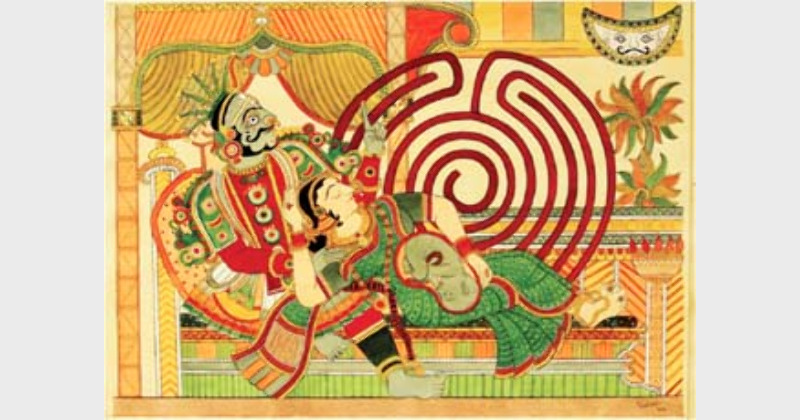
The story of Abhimanyu is well known to us. It is said that he had heard the conversation of his parents when he was in his mother’s womb. Arjun had discussed the art of positioning of soldiers in ‘padmavyuha’ (a type of systematic positioning of the armed forces which look like a lotus) with his wife Subhadra. For some reason he stopped further conversation and Abhimanyu could know only how to enter padmavyuha and could not know the art of returning from it. From Mahabharata, we also come across one more story from Vana Parva which relates to Astavakra (Adhyaya 132.34). Ashtavakra is very famous for his Vedantic magnum opus, Ashtavakra Gita. Ashtavakra’s father was Kahula. Ashtavakra had listened to his father and grandfather reciting Vedas with lot of concentration. It is said that on one occasion he highlighted a lapse committed by his father in the recitation of Vedas. As Kahula was surrounded by his disciples also, he felt insulted and cursed his son. We know from the story that the boy was born with eight vakras (angles) and so he was known as Ashtavakra. In due course of time, he became a great scholar and with the blessings of his father he became normal human being, and thus goes the elongated story.
The other Puranic story which is familiar to us is that of Prahlada. When Hiranyakashipu, the father of Prahlada was doing tapas (penance) in a forest, the king of Gods, Indra attacked the demons. After successfully defeating the demons, he learnt that the wife of Hiranyakasipu was pregnant. Apprehending that the son that is going to be born would also be a demon, he got possession of the lady as a prisoner. But he released her when Narada told him that the son would become a great disciple of Vishnu (Vishnu Bhakta) and he would be instrumental in the demise of Hiranyakasipu. Then Narada took her to his abode (ashram) and taught Vishnu Bhakti (devotion to God Vishnu). We read in Bhagavatam that the child in the womb heard the song of Vishnu Bhakti from Narada and eventually became a great bhakta of Vishnu.
We have one more story of Kapila who became a Jnani (realised soul) remembering the samskara of his previous birth. Bhagavata describes Kapila as the direct incarnation of Vishnu. Devahuti is the mother of Kapila. Immediately after his birth, Kapila teaches the intricate topics and doctrines of Vedanta to his mother.
We have one more story which describes that the children would be shaped as the parents strongly desired with conviction. This story is from Markandeya Purana (Adhyaya 21-22). Ritudhwaja was a King with a dharmic bent of mind. His wife was Madalasa, daughter of a Gandharva King. Ritudhwaja’s intention was that his two sons, Vikrantha and Shatru Mardhana would also become great warriors with dharmic bent of mind. Madalasa, on the other hand, intended them to be great Vedantins and used to sing lullabies that denote Vedantic thought process. While putting them to sleep she used to tell them that the names given to them were of general mundane nature; and the fact that they were no different from the Nirakara Brahma. She used to tell them that the body-mind complex is only a limitation and the Atma (Self) is beyond this
limitation. The children grew sanyasins (renounced from the grihasta dharma) and left for forests for meditation. The king felt unhappy and so, after the birth of one more child he restricted Madalasa from relating Vedanta from childhood. Madalasa also respected the words of the king and began singing that the child would become a great warrior etc while swinging the cradle. As they wished, the child, in due course of time became a Great Emperor.
From the above stories, we could see that the children could comprehend things from early childhood. Apart from the stories above, there is a deep discussion about this aspect in many other places also in our scriptures. In the same Bhagavata, when Kapila taught Vedanta to his mother (Skanda 3, Adhyaya 31), he also described as to how the embryo grows in different stages in the womb of the mother. This portion of Bhagavata describes different stages of development and formation of the limbs of the body very vividly. The same subject matter is also found in Garbhopanishad wherein we come across the description of the growth phases of the embryo into human form. In the chapters of Garbha Samskara and Garbhini Vyakarana from the age old Ayurvedic texts, there is a vivid description of what food a pregnant lady should take, what type of things she should see, how she should keep her mind agile and lively, what good books she should read and what type of classical music she should hear and the like.
Till recently, perhaps a generation back also, parents used to make their children learn famous slokas of Bhartrihari, the
motivational verses and the verses that appeal to the intellect of the children. The concept of Shataka (One hundred slokas) is unique to our culture and no other place it is prominently found. For example, when the child learns the line,
“¸f³fÀUe IYf¹ffʱfeÊ ³f ¦f¯f¹fd°f Qb:JÔ ³f ¨f ÀfbJ¸fÐ ”, he assimilates the meaning that ‘a
person with a determination to achieve something will not count adversities at any point of time in life’ Similarly, when he learns in the childhood, “³f d³fd›°ff±ffÊdõSX¸fd³°f ²feSXf: ”, he understands that a person with a resolute mind does not abandon the set goal ever. For
comprehending and crossing many
hurdles in the pace of human life, these verses are highly useful. As the children grow into mature human beings they can easily acclimatise and assimilate the essence of these verses into their lives. The suicidal tendencies due to paternal deprivation, alienation and the
materialistic culture that perpetuates individualism could be obviated if only our generation of people look back to our culture and start imparting children the morals of life from early childhood. Alas! The advent of ‘mummy daddy culture’ with
meaningless nursery rhymes has deprived the current and future generation of kids from understanding the depths of our
cultural thoughts and
perspectives that could instil confidence in them in all walks of life.
Then what is to be done? It is essential that parents should set an example for the children. Children, in their younger days, look upon their parents as if they are the heroes and heroines on the face of the earth. They try to emulate their parents and set them as role models. It is the role of the
parents to read the scriptures like Mahabharata, Ramayana etc and tell those stories to children instead of telling film stories. Motivational shlokas should replace the nursery rhymes. Each and every child born in Bharat should be groomed as an ambassador for the country capable enough to transmit the cultural values that the country possesses. When the entire world is looking deep into our ancient education process for proper adoption, it is ordained on us to protect our culture and preserve it for moulding the future
generations of people into strong and
sustainable human beings.
(The writer is a professor in Alliance University, Bengaluru)










Comments