Kid’s Org : Kid’s Org : Bharat Under the Grip of Mughals
December 14, 2025
  • Read Ecopy
  • Circulation
  • Advertise
  • Careers
  • About Us
  • Contact Us
Android AppiPhone AppArattai
Organiser
  • ‌
  • Bharat
    • Assam
    • Bihar
    • Chhattisgarh
    • Jharkhand
    • Maharashtra
    • View All States
  • World
    • Asia
    • Europe
    • North America
    • South America
    • Africa
    • Australia
  • Editorial
  • International
  • Opinion
  • RSS @ 100
  • More
    • Op Sindoor
    • Analysis
    • Sports
    • Defence
    • Politics
    • Business
    • Economy
    • Culture
    • Special Report
    • Sci & Tech
    • Entertainment
    • G20
    • Azadi Ka Amrit Mahotsav
    • Vocal4Local
    • Web Stories
    • Education
    • Employment
    • Books
    • Interviews
    • Travel
    • Law
    • Health
    • Obituary
  • Subscribe
    • Subscribe Print Edition
    • Subscribe Ecopy
    • Read Ecopy
  • ‌
  • Bharat
    • Assam
    • Bihar
    • Chhattisgarh
    • Jharkhand
    • Maharashtra
    • View All States
  • World
    • Asia
    • Europe
    • North America
    • South America
    • Africa
    • Australia
  • Editorial
  • International
  • Opinion
  • RSS @ 100
  • More
    • Op Sindoor
    • Analysis
    • Sports
    • Defence
    • Politics
    • Business
    • Economy
    • Culture
    • Special Report
    • Sci & Tech
    • Entertainment
    • G20
    • Azadi Ka Amrit Mahotsav
    • Vocal4Local
    • Web Stories
    • Education
    • Employment
    • Books
    • Interviews
    • Travel
    • Law
    • Health
    • Obituary
  • Subscribe
    • Subscribe Print Edition
    • Subscribe Ecopy
    • Read Ecopy
Organiser
  • Home
  • Bharat
  • World
  • Operation Sindoor
  • Editorial
  • Analysis
  • Opinion
  • Culture
  • Defence
  • International Edition
  • RSS @ 100
  • Magazine
  • Read Ecopy
Home General

Kid’s Org : Kid’s Org : Bharat Under the Grip of Mughals

Archive ManagerArchive Manager
Dec 14, 2015, 12:00 am IST
in General
Follow on Google News
FacebookTwitterWhatsAppTelegramEmail


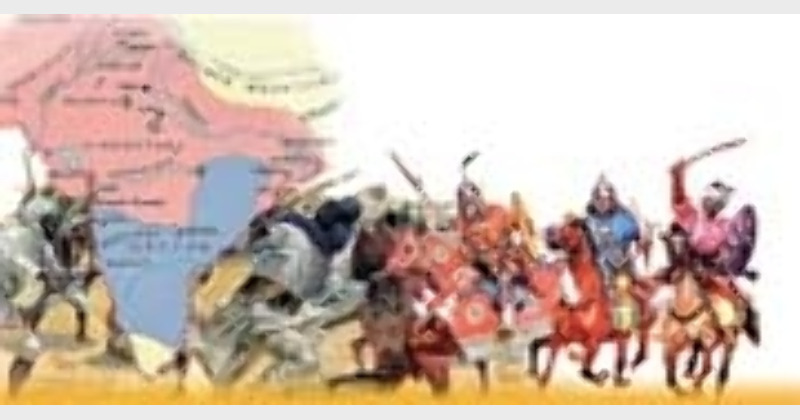
Mughals ruled in Bharat primarily from 1526-1707 AD. Nevertheless this somehow got prolonged till 1857 in some way or the other. During this period, foreign rulers like Nadirshah (1738-39) and Ahmadshah Abdali (1748-67) attacked and plundered Bharat. The Mughal rule was characterised by bloodshed, loot, destruction of cultural heritage and religious conversions. To term this era as the Golden Era of Bharateeya history will be ignorance. None of the rulers during this period were attached to the country or its people. Hindus were treated as the second or third class citizens in their own country.

The Third Dynasty was the Tughlak Dynasty. They ruled from 1320 to 1414. The most famous rulers of this dynasty were Mohammad Tughlak and Feroz Tughlak. Mohammad Tughlak became the king after killing his father. He was a cruel, blood-thirsty and ambitious ruler. His policies were rather strange and bizarre. Some instances were substantial increase in taxes for the people of Doab, change of capital, bringing copper coins in use, plans to attack Karaajal and Khuraasan etc. None of his policies were directed towards the betterment of the nation or its people. Feroz Tughlak, on the other hand was a man blinded by religion. He had plundered the sacred temple of Jagannath Puri, compelled a number of Hindus to change their religion and convert into Islam. The influence of the Ulemas increased manifold during his times.
Similarly, the Fourth Dynasty, the Syed Dynasty (1414-1451 AD) and the Fifth Dynasty, the Lodi Dynasty lasted from 1451-1526.  It wouldn't be wrong to say that the rulers in Delhi were so engrossed in their own struggles and revolts that no one really paid attention to Southern part of Bharat  before Allauddin Khilji. He too didn’t include Southern part of Bharat  in his empire. It was during Mohammad Tughlak, that Southern India became the centre of revolts. The famous Vijaynagar kingdom was established during Mohammad Tughlak and Maharaja Krishnadeva Raya was its greatest ruler. It is hardly seen in the history of any country that a ruler has been praised equally by a native scholar so much as a foreign traveller without mentioning any flaws or weaknesses. He ruled from 1509-1530. Bharat had an all-round development during his reign. This empire was based on Hinduism and its culture. There was religious freedom for all and women were held in very high respect. There was a tremendous development in art, literature, administration and service to mankind. Mughals ruled in Bharat primarily from 1526-1707 AD. Nevertheless this somehow got prolonged till 1857 in some way or the other. During this period, foreign rulers like Nadirshah (1738-39) and Ahmadshah Abdali (1748-67) attacked and plundered Bharat. The Mughal rule was characterised by bloodshed, loot, destruction of cultural heritage and religious conversions. To term this era as the Golden Era of Bharateeya history will be ignorance. None of the rulers during this period were attached to the country or its people. Hindus were treated as the second or third class citizens in their own country.
The conflict with the Mughals was not only political but also cultural and social to a certain extent. From the political point of view, the first ruler of the Mughals was Babur who was a plunderer and a religious fanatic. He was the ruler of a small estate called Fergana in Samarkand region of Central Asia. From his father he inherited alcoholism and a right to call himself the descendent of the Taimur Dynasty. He never respected his teachers and also failed at expanding his estate. He conquered Kabul in 1504 by guile. Babur attacked Bharat because of its immense wealth and with an objective of spreading Islam. He first attacked the forest inhabitants of Bajaur in which 3,000 people died. He was ruthless enough to construct a pillar with the skulls of the dead people. His second attack was on Bhera. Guru Nanak has described the accounts of Babur’s third, fourth and fifth attacks and his tortures. He has described Babur as a murderer, plunderer and someone who disrespects women openly. Babur fought four major battles in Bharat out of which two were with Hindu and two with Muslim rulers. His first battle was with the Afghan ruler, Ibrahim Lodhi which is also known as the First Battle of Panipat in 1526. Lodhi died in this battle and Babur acquired the throne of Delhi. But his conquest over Delhi and Agra was not free from difficulties.
His army had to face tremendous difficulties with food in Agra. Local Muslims hated him. His biggest struggle was with Rana Sangram Singh I of Mewar (Rana Sanga 1509-1528) and third one was with Medini Ray of Chanderi Fort. Babur termed these as crusades. However, Babur himself has recognised Rana Sanga as a powerful ruler of Northern Bharat. The latter was amongst the brave heritage of King Kaalbhoj (Bappa Rawal 734-753) and King Maharaja Kumbha (Kumbhkaran 1420-1433). Babur’s battle with Rana Sanga took place on  May 16th, 1527 in Khanuwah. In this battle which lasted for 10 hours, Topekhana’s role was crucial. After this battle Babur conquered the Fort of Chanderi in 1528. At the same time he destroyed several temples which were a symbol of Bharateeya heritage. In Sambhal, he brought down a temple and constructed a mosque in its place. One of his officials, Sheikh Jaina destroyed many temples. He made another official of his to build a mosque in the birth place of Sri Ram. In the same manner he destroyed several Jain statues in Urva near Gwalior. His last Battle of Ghagra was in 1529.
 Dr Satish Chandra Mittal (The writer is Professor ( Retd.), History Department, Kurukshetra University,Kurukshetra) ( To be concluded )


ShareTweetSendShareSend
✮ Subscribe Organiser YouTube Channel. ✮
✮ Join Organiser's WhatsApp channel for Nationalist views beyond the news. ✮
Previous News

Vacancies

Next News

Kid’s Org : An Era of Loot, Bloodshed and Fanaticism

Related News

Winning the narrative war

The need for strong narratives in Bharat

R. Ashoka, Leader of Opposition

Karnataka: Opposition condemns diversion & misuse of exclusive SCSP, TSP funds for guarantee schemes

Deceit and manipulation became symbolic of Congress governance

Special Intensive Revision: A red rag to the opposition

R Sreelekha, Kerala’s first woman IPS officer and former DGP, wins from the Sasthamangalam ward in the Trivandrum Corporation elections

Kerala Local Body Polls: BJP fields first woman IPS officer and ex-DGP R Sreelekha, wins big in Trivandrum Corporation

Representative Image

Indian New Gene Editing Protein: Future of healthcare, agriculture and biotechnology reforms

The rise of right-wing in the contemporary world

The resurgence of nationalist ideologies in contemporary world politics

Load More

Comments

The comments posted here/below/in the given space are not on behalf of Organiser. The person posting the comment will be in sole ownership of its responsibility. According to the central government's IT rules, obscene or offensive statement made against a person, religion, community or nation is a punishable offense, and legal action would be taken against people who indulge in such activities.

Latest News

Winning the narrative war

The need for strong narratives in Bharat

R. Ashoka, Leader of Opposition

Karnataka: Opposition condemns diversion & misuse of exclusive SCSP, TSP funds for guarantee schemes

Deceit and manipulation became symbolic of Congress governance

Special Intensive Revision: A red rag to the opposition

R Sreelekha, Kerala’s first woman IPS officer and former DGP, wins from the Sasthamangalam ward in the Trivandrum Corporation elections

Kerala Local Body Polls: BJP fields first woman IPS officer and ex-DGP R Sreelekha, wins big in Trivandrum Corporation

Representative Image

Indian New Gene Editing Protein: Future of healthcare, agriculture and biotechnology reforms

The rise of right-wing in the contemporary world

The resurgence of nationalist ideologies in contemporary world politics

J&K LG Manoj Sinha

J&K: LG Sinha lauds SKIMS staff in providing top medicare to people, improvement in medical infrastructure post-2019

More than 5 lakh people came together to chant Bhagwad Gita

Kolkata’s Chorus of the Gita: Five lakh voices, one eternal message

Representative Image

MUDA Scam in Karnataka: ED probe reveals former commissioner took Rs 22.47 crore bribe for illegal plot allotments

NCERT introduces Vasudhaiva Kutumbakam chapter in Class 7

NCERT introduces Vasudhaiva Kutumbakam chapter in Class 7 social science curriculum

Load More
  • Privacy
  • Terms
  • Cookie Policy
  • Refund and Cancellation
  • Delivery and Shipping

© Bharat Prakashan (Delhi) Limited.
Tech-enabled by Ananthapuri Technologies

  • Home
  • Search Organiser
  • Bharat
    • Assam
    • Bihar
    • Chhattisgarh
    • Jharkhand
    • Maharashtra
    • View All States
  • World
    • Asia
    • Africa
    • North America
    • South America
    • Europe
    • Australia
  • Editorial
  • Operation Sindoor
  • Opinion
  • Analysis
  • Defence
  • Culture
  • Sports
  • Business
  • RSS @ 100
  • Entertainment
  • More ..
    • Sci & Tech
    • Vocal4Local
    • Special Report
    • Education
    • Employment
    • Books
    • Interviews
    • Travel
    • Health
    • Politics
    • Law
    • Economy
    • Obituary
  • Subscribe Magazine
  • Read Ecopy
  • Advertise
  • Circulation
  • Careers
  • About Us
  • Contact Us
  • Policies & Terms
    • Privacy Policy
    • Cookie Policy
    • Refund and Cancellation
    • Terms of Use

© Bharat Prakashan (Delhi) Limited.
Tech-enabled by Ananthapuri Technologies