Opinion : Decisions that Will Matter
December 14, 2025
  • Read Ecopy
  • Circulation
  • Advertise
  • Careers
  • About Us
  • Contact Us
Android AppiPhone AppArattai
Organiser
  • ‌
  • Bharat
    • Assam
    • Bihar
    • Chhattisgarh
    • Jharkhand
    • Maharashtra
    • View All States
  • World
    • Asia
    • Europe
    • North America
    • South America
    • Africa
    • Australia
  • Editorial
  • International
  • Opinion
  • RSS @ 100
  • More
    • Op Sindoor
    • Analysis
    • Sports
    • Defence
    • Politics
    • Business
    • Economy
    • Culture
    • Special Report
    • Sci & Tech
    • Entertainment
    • G20
    • Azadi Ka Amrit Mahotsav
    • Vocal4Local
    • Web Stories
    • Education
    • Employment
    • Books
    • Interviews
    • Travel
    • Law
    • Health
    • Obituary
  • Subscribe
    • Subscribe Print Edition
    • Subscribe Ecopy
    • Read Ecopy
  • ‌
  • Bharat
    • Assam
    • Bihar
    • Chhattisgarh
    • Jharkhand
    • Maharashtra
    • View All States
  • World
    • Asia
    • Europe
    • North America
    • South America
    • Africa
    • Australia
  • Editorial
  • International
  • Opinion
  • RSS @ 100
  • More
    • Op Sindoor
    • Analysis
    • Sports
    • Defence
    • Politics
    • Business
    • Economy
    • Culture
    • Special Report
    • Sci & Tech
    • Entertainment
    • G20
    • Azadi Ka Amrit Mahotsav
    • Vocal4Local
    • Web Stories
    • Education
    • Employment
    • Books
    • Interviews
    • Travel
    • Law
    • Health
    • Obituary
  • Subscribe
    • Subscribe Print Edition
    • Subscribe Ecopy
    • Read Ecopy
Organiser
  • Home
  • Bharat
  • World
  • Operation Sindoor
  • Editorial
  • Analysis
  • Opinion
  • Culture
  • Defence
  • International Edition
  • RSS @ 100
  • Magazine
  • Read Ecopy
Home General

Opinion : Decisions that Will Matter

Archive ManagerArchive Manager
Apr 11, 2015, 12:00 am IST
in General
Follow on Google News
FacebookTwitterWhatsAppTelegramEmail


Intro:
The new rules floated by United States under Trans-Pacific Partnership (TTP) are being perceived as an effort to scuttle Regional Comprehensive Economic partnership (RCEP), and can create market access barriers for India’s exports of
merchandise and services.

In today’s multipolar world several key actors are engaged in defining their spheres of influences. The two main pillars in this game of evolving geo-politics are trade and security. While geo-politics is the driving force, geo-economics is being designed to be its base. A number of mega Regional Trade Arrangements (RTAs) are being attempted to be floated by main actors. Such attempts are likely to squeeze India’s space for developing its own security and trade architecture and hence it needs to step up its diplomatic engagements with prospective partners for its security interests and align itself with combinations or trade blocs that may prove conducive to its interests.
The global slowdown that resulted from the collapse of Lehman Brothers in the latter half of 2008 in US caused much redrawing of trade engagements in the world. The European Union, which is struggling to deal with the hangover of its Sovereign Debt Crisis, is unable to come out of recession as the situation has further aggravated due to its involvement in the Ukraine crisis. Comparatively, President Obama has been successful in pulling out US from the recession and the country is growing at 3.1 per cent per annum. In comparison, the EU-15 countries are growing slowly at 1.2 per cent.
The EU has become more protectionists in trade, particularly with the developing world, and as the negotiations in the WTO is in a deadlock, it has chosen to align itself with US in Trans-Atlantic Trade and Investment Partnership (TTIP).
The US floated the concept of Trans-Pacific Partnership (TPP) and considers TTIP a companion agreement to TPP. It needs no mention that Washington’s interests in Asia-Pacific are not new. The Obama administration’s “rebalancing in Asia-Pacific” and “pivot” to the region is a hangover of South-East Asia Treaty Organisation (SEATO). With the global economic pole gradually shifting to Asia-Pacific, the western powers have become more interested in the region.
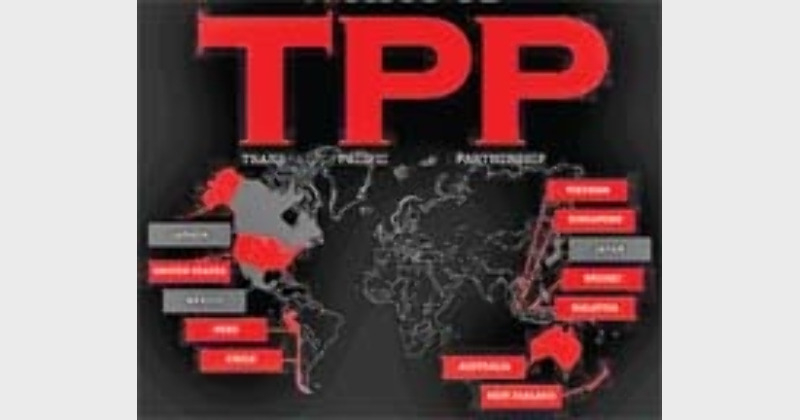
Apparently, the TPP led by US has 12 participating countries like Canada, Mexico, Peru, Chile, Malaysia, Singapore, Brunei, Vietnam, Japan, Australia and New Zealand. TPP seems to be at the most advanced stage of development and is likely to erode existing preferences for Indian products in these markets and will put a greater burden on compliance by Indian industry and service sector. The TPP is likely to have stringent environmental, labour intellectual property norms that may be impractical for compliance by India. It is infact designed to scuttle the earlier proposed Regional Comprehensive Economic Partnership (RCEP) with the centrality of ASEAN. Apart from 10 ASEAN members the ASEAN FTA partner countries like China, India, Japan, South Korea, Australia and New Zealand are associated with it. The overlapping membership of TPP and RCEP shows that the move for TPP is an effort to scuttle RCEP.
The ASEAN is slated to move towards a common economic community by January 1, 2016 and subsequently towards a political security community and socio-cultural community. For India, the RCEP arrangement will be most conducive to its interests and it should therefore push for its early conclusion and always continue to stress upon the centrality of ASEAN.

The Way Forward

Apart from addressing infrastructure problems, India should step up efforts to be part of the global value chain in a big way. Direct import of rough diamonds from Russia for processing in the country for re-exports, import of crude oil and processing it in refineries for re-export of petro-products are successful examples of participation in global value chain. In bilateral and regional trade arrangements rules of origin should be eased and simplified to locate India effectively in global and regional value chains. Imports should be facilitated for specific raw materials, intermediates and capital goods for stimulating value added domestic manufacturing. Careful market strategy should be in place to promote exports of products in which India has competitive advantage like services, pharmaceuticals, gems and jewelry, agriculture, plantation and marine products, leather products and textiles, handicrafts, auto parts and small cars. India should infact increase exports of high value agri products like processed food and organic food. Care should be taken not to approve GM food crops for commercial cultivation in the country as this would affect India’s exports to EU. Exports of high value engineering products, electronics, medical devices and equipment, defence products can be viable when ‘Make in India’ programme become a reality. Importantly, project exports to developing and least developed countries should be promoted in a big way.
Diplomatic efforts should be in place to deal with major players. IPR issues, immigration and skilled related policies of US, demanding market access for services in Canada, bypassing The North American Free Trade Agreement rules for trade with Canada and Mexico, EU’s SPS quota regime and data exclusivity norms, IT and ITES and agro exports, sorting out delays, infrastructure problems, non-tariff barriers, and sanitary and phyto-sanitary (SPS) measures with Russia are some of the issues thst India needs to take up with relevant countries to boost trade relations.
As the developed nations, particularly EU are in recession, India needs to diversify its products for exports and expand its bases in new markets in Latin America and Caribbean, Africa, non-EU countries in Europe, Eurasia including Russia, Pacific countries including Australia and New Zealand, West Asia, South-East Asia, South Asia and East Asia. These efforts can help India to raise its exports from $465.9 billion to a considerably higher level, if not at $900 billion by 2019-20 as envisaged in the new Foreign Trade Policy. Bilaterally dealing with countries in the proposed mega regional trade arrangements, in which India may not be a part, can also help in maintaining its position in global trade dynamics.

Apprehending exclusion from the mega trade arrangements, China floated another concept of Asia-Pacific Free Trade Area in the last APEC Summit. To add to its economic muscle, China has also launched Asia Infrastructure Investment Bank in which India is also a member- Beijing’s interests in the region are well known with its extension of “String of Pearls” in the Indian Ocean, concept of One Belt One Road, Maritime Silk Route, and BCIM Corridor. Also China’s aggressive postures in South China Sea like Nine Dash Lines, Air Defence Identification Zone, and creation of artificial islands also pose problems for Indian oil asset off the coast of Vietnam. Russia which has recently floated the Eurasian Economic Union too has plans to play an effective role in the region.
Comparatively, India’s plans for connectivity in the region like India-Myanmar-Thailand Trilateral Highway, Kaladan Multi-modal transit project, opening up more trading points at India-Myanmar border are moving at a very slow pace. Considering that China is an emerging power and it is natural for it to have its own ambition in the region, it is time India wake up from its deep slumber and engage with the countries in the region for collective security and trade.
Ashok B Sharma  (The writer is a senior columnist)

ShareTweetSendShareSend
✮ Subscribe Organiser YouTube Channel. ✮
✮ Join Organiser's WhatsApp channel for Nationalist views beyond the news. ✮
Previous News

Book Review : Adapt Morals

Next News

Baseless Allegation

Related News

Winning the narrative war

The need for strong narratives in Bharat

R. Ashoka, Leader of Opposition

Karnataka: Opposition condemns diversion & misuse of exclusive SCSP, TSP funds for guarantee schemes

Deceit and manipulation became symbolic of Congress governance

Special Intensive Revision: A red rag to the opposition

R Sreelekha, Kerala’s first woman IPS officer and former DGP, wins from the Sasthamangalam ward in the Trivandrum Corporation elections

Kerala Local Body Polls: BJP fields first woman IPS officer and ex-DGP R Sreelekha, wins big in Trivandrum Corporation

Representative Image

Indian New Gene Editing Protein: Future of healthcare, agriculture and biotechnology reforms

The rise of right-wing in the contemporary world

The resurgence of nationalist ideologies in contemporary world politics

Load More

Comments

The comments posted here/below/in the given space are not on behalf of Organiser. The person posting the comment will be in sole ownership of its responsibility. According to the central government's IT rules, obscene or offensive statement made against a person, religion, community or nation is a punishable offense, and legal action would be taken against people who indulge in such activities.

Latest News

Winning the narrative war

The need for strong narratives in Bharat

R. Ashoka, Leader of Opposition

Karnataka: Opposition condemns diversion & misuse of exclusive SCSP, TSP funds for guarantee schemes

Deceit and manipulation became symbolic of Congress governance

Special Intensive Revision: A red rag to the opposition

R Sreelekha, Kerala’s first woman IPS officer and former DGP, wins from the Sasthamangalam ward in the Trivandrum Corporation elections

Kerala Local Body Polls: BJP fields first woman IPS officer and ex-DGP R Sreelekha, wins big in Trivandrum Corporation

Representative Image

Indian New Gene Editing Protein: Future of healthcare, agriculture and biotechnology reforms

The rise of right-wing in the contemporary world

The resurgence of nationalist ideologies in contemporary world politics

J&K LG Manoj Sinha

J&K: LG Sinha lauds SKIMS staff in providing top medicare to people, improvement in medical infrastructure post-2019

More than 5 lakh people came together to chant Bhagwad Gita

Kolkata’s Chorus of the Gita: Five lakh voices, one eternal message

Representative Image

MUDA Scam in Karnataka: ED probe reveals former commissioner took Rs 22.47 crore bribe for illegal plot allotments

NCERT introduces Vasudhaiva Kutumbakam chapter in Class 7

NCERT introduces Vasudhaiva Kutumbakam chapter in Class 7 social science curriculum

Load More
  • Privacy
  • Terms
  • Cookie Policy
  • Refund and Cancellation
  • Delivery and Shipping

© Bharat Prakashan (Delhi) Limited.
Tech-enabled by Ananthapuri Technologies

  • Home
  • Search Organiser
  • Bharat
    • Assam
    • Bihar
    • Chhattisgarh
    • Jharkhand
    • Maharashtra
    • View All States
  • World
    • Asia
    • Africa
    • North America
    • South America
    • Europe
    • Australia
  • Editorial
  • Operation Sindoor
  • Opinion
  • Analysis
  • Defence
  • Culture
  • Sports
  • Business
  • RSS @ 100
  • Entertainment
  • More ..
    • Sci & Tech
    • Vocal4Local
    • Special Report
    • Education
    • Employment
    • Books
    • Interviews
    • Travel
    • Health
    • Politics
    • Law
    • Economy
    • Obituary
  • Subscribe Magazine
  • Read Ecopy
  • Advertise
  • Circulation
  • Careers
  • About Us
  • Contact Us
  • Policies & Terms
    • Privacy Policy
    • Cookie Policy
    • Refund and Cancellation
    • Terms of Use

© Bharat Prakashan (Delhi) Limited.
Tech-enabled by Ananthapuri Technologies