





 Intro: While the success of agreements signed during Putin”s visit remain still futuristic almost no cooperation on cultural, educational, youth and religious area marks a decadent trend in bilateral relation.?
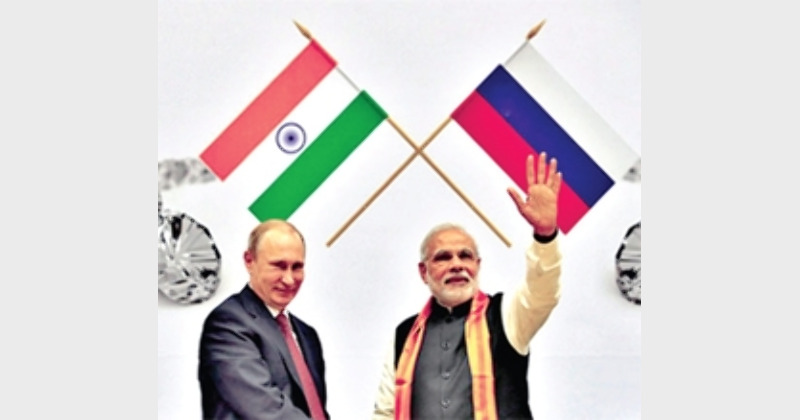
The recent visit by Russian President Vladimir Putin to India has given a required push to the bilateral relation that became little more static due to changing Geo-political realities, India”s diversifying military imports and low level of mutual trade. The growing trend of inertia between both the states has much to do with India”s increased military imports from France, US and Israel particularly of helicopter and aircraft purchases and Russian decision to finalise first-ever Russia-Pakistan defense framework agreement. Putin”s visit comes as Russia is grappling with increased political isolation led by West, sliding oil prices and an economy that has been undermined by Western sanctions. India on the other hand has been riding high under the new leadership of Prime Minister Modi led by much infused foreign policy dynamism and recognition by global powers. Also as US conveyed its displeasure over India doing “business as usual” with Russia, Modi was quick to rebuff the view with a tweet that “Times have changed, our friendship has not…”
The visit was crucial in a sense that growing stand-off between Russia and west has placed India in a difficult situation. Even though being a non-aligned power, India was much inclined politically and ideologically to the Russia during cold war years. However, with the ushering of liberal economic reforms in India and end of Soviet era, the bilateral relationship has lost the necessary warmth, also with India leaning towards west based on strategic entente. The two leaders have met earlier on the sidelines of BRICS Summit in July and later during the informal BRICS meeting in Brisbane, Australia, on the sidelines of the G20 last month. However, the recent marked crucial opportunity to push forward older ties.
The one day visit to India by Russian president did result in some major agreements in the fields of nuclear power, oil, defense and newly found diamond sector. However, considering the earlier breakthroughs achieved in past like Kudankulam nuclear reactor cooperation, the Su-30 MKI multi-purpose fighter, joint production of Brahmos missile, aircraft Vikramaditya and the Arihant-class nuclear submarine, the success of the pacts signed during visit were based on their applicability. The two way trade has hovered around $10 billion for many years, and the visit envisaged putting an ambitious plan for $30 billion by 2025. Much of its success depends on addressing the problems hindering bilateral trade that include language barrier, connectivity issues, uneasy travel regulations, low level civic interactions and lack of information about mutual trading areas.
The latest visit showed that Moscow and Delhi’s attention is focused in several areas which include military-technical cooperation, peaceful atomic projects, hydrocarbons, space, and now diamonds. After the talks, the two countries signed as many as 20 agreements — seven inter-governmental and 13 commercial—including a strategic vision for cooperation in peaceful uses of atomic energy. Another agreement was signed for partnership in oil and natural gas. More than half i.e. – 13 of all the documents signed were memorandum of understanding. Despite their collective significance, they merely indicate consensus on certain issues. The important was Russian interest to retain its position in the Indian defense sector, with an initiative to come on board with India’s military aerospace industrial goals under the “Make in India” program to produce and even export Russian origin helicopters from Indian soil. The only contract signed pertaining to the training of Indian soldiers in colleges and institutions under the Russian Ministry of Defense reflected assumed importance of civilian engagements.
The documents signed between Nuclear Power Corporation of India Limited (NPCIL) and Russia’s Joint Engineering Company will enable construction to get underway of the third and fourth generating units at the Kudankulam nuclear power plant. After India’s adoption in 2010 of the Civil Liability for Nuclear Damage Act, Russia offer to build 12 nuclear reactors is a welcome sign that Russia does not share the concerns about India’s liability laws. Considering the low level bilateral hydrocarbon cooperation, a joint statement titled “Druzhba-Dosti” said the two countries will study the possibilities of building a hydrocarbon pipeline system, connecting the Russian Federation with India. The agreement on the cooperation on supply and production of diamond is a new trade avenue. Russia’s ALROSA (group of diamond mining companies) signed 12 long-term agreements with Indian companies intending to significantly increase direct supplies of rough diamonds to India, the majority of which were supplied to India via third-party countries. This will also pave an increase in two way trade between both the countries.
The pacts and agreements signed above reflect a mutual aspiration from both the sides to boast the bilateral economic ties. However, there are still some areas that remain largely out of scope during the visit. Firstly, the visit was mostly driven by an effort to widen cooperation in the areas that have been on priority from both the sides. The agreements were mostly on cooperation in nuclear sector, oil and petroleum, hydrocarbon and now diamond. Secondly, the package of signed documents bypasses military-technical cooperation. Putin was accompanied by Deputy Prime Minister Dmitry Rogozin, who oversees the military-industrial complex but no intergovernmental agreements or contracts were signed between the two states. The reason possibly could be that both the states have drawn orders till 2020 worth $ 20 billion. However, it also relates to ongoing issues over projects of new fifth-generation multipurpose fighter, multi-role transport aircraft and delayed delivery from Russia also makes reasonable justification for this. India is already upset with Russia for not giving its experts “full technological access” to the FGFA project despite being an equal funding partner.
Lastly, the visit witnessed no agreements or pacts on any humanitarian issues, and no documents were signed or meetings held on cultural, scientific, educational, youth or religious cooperation. In an age of rising global civilian engagements, it does not look promising that both the states are primarily focused on cementing cooperation on conventional areas. The growing trend for inertia in mutual relations and the breakdown in communication between government and society could be overcome if these and other relevant issues are given close attention during visits.
Abhishek Pratap Singh ?(The writer is doctoral candidate, School of International Studies (Chinese), JNU)
?
?



Comments