Himalayan Misadventure: III
December 9, 2025
  • Read Ecopy
  • Circulation
  • Advertise
  • Careers
  • About Us
  • Contact Us
Android AppiPhone AppArattai
Organiser
  • ‌
  • Bharat
    • Assam
    • Bihar
    • Chhattisgarh
    • Jharkhand
    • Maharashtra
    • View All States
  • World
    • Asia
    • Europe
    • North America
    • South America
    • Africa
    • Australia
  • Editorial
  • International
  • Opinion
  • RSS @ 100
  • More
    • Op Sindoor
    • Analysis
    • Sports
    • Defence
    • Politics
    • Business
    • Economy
    • Culture
    • Special Report
    • Sci & Tech
    • Entertainment
    • G20
    • Azadi Ka Amrit Mahotsav
    • Vocal4Local
    • Web Stories
    • Education
    • Employment
    • Books
    • Interviews
    • Travel
    • Law
    • Health
    • Obituary
  • Subscribe
    • Subscribe Print Edition
    • Subscribe Ecopy
    • Read Ecopy
  • ‌
  • Bharat
    • Assam
    • Bihar
    • Chhattisgarh
    • Jharkhand
    • Maharashtra
    • View All States
  • World
    • Asia
    • Europe
    • North America
    • South America
    • Africa
    • Australia
  • Editorial
  • International
  • Opinion
  • RSS @ 100
  • More
    • Op Sindoor
    • Analysis
    • Sports
    • Defence
    • Politics
    • Business
    • Economy
    • Culture
    • Special Report
    • Sci & Tech
    • Entertainment
    • G20
    • Azadi Ka Amrit Mahotsav
    • Vocal4Local
    • Web Stories
    • Education
    • Employment
    • Books
    • Interviews
    • Travel
    • Law
    • Health
    • Obituary
  • Subscribe
    • Subscribe Print Edition
    • Subscribe Ecopy
    • Read Ecopy
Organiser
  • Home
  • Bharat
  • World
  • Operation Sindoor
  • Editorial
  • Analysis
  • Opinion
  • Culture
  • Defence
  • International Edition
  • RSS @ 100
  • Magazine
  • Read Ecopy
Home Bharat

Himalayan Misadventure: III

An Australian journalist, Neville Maxwell, created turbulence by targeting Nehru?s China Policy and its impact on the India-China war in 1962. But most of the shocking revelations reported by the Hendersm Brooks

Archive ManagerArchive Manager
Apr 19, 2014, 05:52 pm IST
in Bharat
Follow on Google News
FacebookTwitterWhatsAppTelegramEmail

Rajnikant Puranik

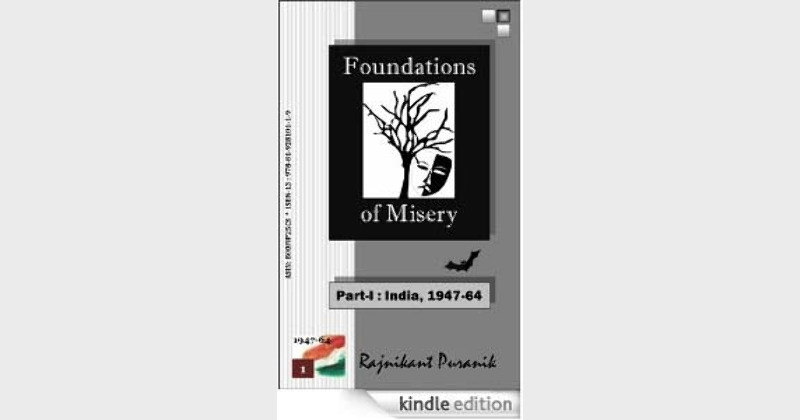
$img_titleAn Australian journalist, Neville Maxwell, created turbulence by targeting Nehru’s China Policy and its impact on the India-China war in 1962. But most of the shocking revelations reported by the Hendersm Brooks – Bhagat Report are already in the Book Fondations of Misery in the chapter “Himalayan Blunder” published months back by Rajnikant Puranaik. We are giving stunning facts about the war given by the author in his book as a series:

Soon after independence, when the Indian government wrote to the Tibetan government informing them that as the successor government to the British, the British rights and obligations under their treaties with Tibet would rest with the independent Indian government, Tibetan government responded by asking for return of the territories on its boundary acquired by the British, including Ladakh, Bhutan, Sikkim, Darjeeling and so on!

Mid-Segment

The borders of Himachal Pradesh and Uttarakhand with Tibet (referred as Mid-segment) are though not as controversial as Aksai Chin and the McMahon Line, many incidences of infiltration have been reported from there.

The Himachal-Tibet border is about 260 kilometres long, while Uttarakhand-Tibet border is about 350 kilometres.

Sikkim-Tibet Border

The Sikkim segment is sandwiched between Nepal to its west and Bhutan to its east.

The salient points of the Convention between Great Britain and China relating to Sikkim and Tibet signed at Calcutta on 17 March 1890 and ratified at London on 27 August 1890, were: “The boundary of Sikkim and Tibet shall be the crest of the mountain ¬range separating the waters flowing into the Sikkim Teesta and its effluents… It is admitted that the British Government, whose Protectorate over the Sikkim State is hereby recognized, has direct and exclusive control over the internal administration and foreign relations of that State…”

The “Regulations Regarding Trade, Communications and Pasturage Appended to…[the above] signed at Darjeeling, India, 5 December 1893” stipulated: “A trade mart shall be established at Yatung on the Tibetan side of the frontier, and shall be open to all British subjects for purposes of trade from the first day of May, 1894. The Government of India shall be free to send officers to reside at Yatung to watch the conditions of British trade at that mart…”

Interestingly, the British did not involve the Tibetans in the above agreements as they would have opposed them—they therefore entered into an arrangement with China. Tibetan authorities refused to recognise the legitimacy of these treaties; and, in protest, tore out the border-markers between Sikkim and Tibet put up under the agreement.

In August 1904, the British expeditionary force under Colonel Younghusband invaded Tibet and entered Lhasa to force a trading agreement and to prevent Tibetans from establishing a relationship with the Russians who were trying to do so to save them from the British-China designs. And then the 1904 Anglo-Tibetan Treaty was forced upon the Tibetans by the British which required Tibet to respect Anglo-Chinese Convention of 1890, recognise Sikkim-Tibet border, allow British and Indian traders to travel freely, not to impose customs duties on trade with India, to pay 2.5 million rupees as indemnity to the British and not to enter in a relations with any foreign power without British approval.

Incidentally, China has since recognised Sikkim, which was annexed by India in 1975, as a state of India. There is no dispute on Sikkim and nor its border with Tibet-China.

What should have been done post-Independence?

Looking at the dispute on the Ladakh-Tibet border and the questions on the McMahon line in the northeast, the following steps should have been taken in the fifties:

Step-1: Both India and China should have taken stock of the fact of unsettled borders, and let the public in both the countries know of the same.

Step-2: A team comprising experts from both the countries should have done ground survey and should have tried to define the boundaries.

Step-3: Those areas that the expert-team failed to resolve could be left for further discussions at a higher level, where they could have been resolved in a spirit of give and take.

But, were these sensible steps taken? Unfortunately, no! Contrary to expectations, one is shocked to learn that while China agreed for these sensible steps, India did not!

Nehru had other ideas on these issues!! What? Why? We would take up, as we proceed further.

(The writer is author of Foundations of Misery, Part-1, 1947-64)

ShareTweetSendShareSend
✮ Subscribe Organiser YouTube Channel. ✮
✮ Join Organiser's WhatsApp channel for Nationalist views beyond the news. ✮
Previous News

Legal notice to Orient Black Swan for spreading canard against RSS

Next News

Women’s nationality in dubiety

Related News

Bharat issues stern warning to China over Arunachal Pradesh

Arunachal Pradesh will remain an integral part of India: MEA warns China after detaining Indian in Shanghai

Chhattisgarh CM Vishnu Deo Sai with security personnel

Chhattisgarh: CM Vishnu Deo Sai hails surrender of top Maoist Ramdher, lauds valour of security forces

Representative Image

Indian Quantum Mission builds a strong environment for innovation, security & advanced research

Japan issues tsunami warning after back-to-back earthquakes over 6 magnitude hit off Aomori prefecture

Union Health Minister JP Nadda with Norway's Health and Care Services Minister Jan Christian Vestre

“The World has much to learn from India”: Norway eyes closer digital health partnership

The bronze statues at the Saraighat War Memorial Park in Agyathuri, Assam, commemorating the Battle of Saraighat

Decoding North East: The forgotten frontiers

Load More

Comments

The comments posted here/below/in the given space are not on behalf of Organiser. The person posting the comment will be in sole ownership of its responsibility. According to the central government's IT rules, obscene or offensive statement made against a person, religion, community or nation is a punishable offense, and legal action would be taken against people who indulge in such activities.

Latest News

Bharat issues stern warning to China over Arunachal Pradesh

Arunachal Pradesh will remain an integral part of India: MEA warns China after detaining Indian in Shanghai

Chhattisgarh CM Vishnu Deo Sai with security personnel

Chhattisgarh: CM Vishnu Deo Sai hails surrender of top Maoist Ramdher, lauds valour of security forces

Representative Image

Indian Quantum Mission builds a strong environment for innovation, security & advanced research

Japan issues tsunami warning after back-to-back earthquakes over 6 magnitude hit off Aomori prefecture

Union Health Minister JP Nadda with Norway's Health and Care Services Minister Jan Christian Vestre

“The World has much to learn from India”: Norway eyes closer digital health partnership

The bronze statues at the Saraighat War Memorial Park in Agyathuri, Assam, commemorating the Battle of Saraighat

Decoding North East: The forgotten frontiers

HECI: Transformation through integration

The indigenous cocabulary of RSS reflects the spirit of nationalism and selfless service

Rashtriya Swayamsevak Sangh: Fostering inclusivity, collectivity & nationality with ingenious vocabulary of belonging

The bomb blast site near Red fort, Delhi
(Inset: Suicide bomber Dr Umar Un Nabi)

Anti-Terror Operations: Dismantling the terror web

Representative Image

In what manner did Macaulay demonstrate a toxic mentality and an anti-humanitarian attitude?

Load More
  • Privacy
  • Terms
  • Cookie Policy
  • Refund and Cancellation
  • Delivery and Shipping

© Bharat Prakashan (Delhi) Limited.
Tech-enabled by Ananthapuri Technologies

  • Home
  • Search Organiser
  • Bharat
    • Assam
    • Bihar
    • Chhattisgarh
    • Jharkhand
    • Maharashtra
    • View All States
  • World
    • Asia
    • Africa
    • North America
    • South America
    • Europe
    • Australia
  • Editorial
  • Operation Sindoor
  • Opinion
  • Analysis
  • Defence
  • Culture
  • Sports
  • Business
  • RSS @ 100
  • Entertainment
  • More ..
    • Sci & Tech
    • Vocal4Local
    • Special Report
    • Education
    • Employment
    • Books
    • Interviews
    • Travel
    • Health
    • Politics
    • Law
    • Economy
    • Obituary
  • Subscribe Magazine
  • Read Ecopy
  • Advertise
  • Circulation
  • Careers
  • About Us
  • Contact Us
  • Policies & Terms
    • Privacy Policy
    • Cookie Policy
    • Refund and Cancellation
    • Terms of Use

© Bharat Prakashan (Delhi) Limited.
Tech-enabled by Ananthapuri Technologies