





Shakti Sinha
Globalisation, economic development and the introduction of new technologies has posed considerable challenges to law enforcing authorities since the criminal has far more weapons in his armoury than before. What distinguishes economic offences from other, traditional criminal activities is the far greater potential to cause larger societal loss, far beyond the individual victims. In fact, many economic offenses have larger, national security implications and need far more attention from the Government and society than what we have seen till now.
Till the opening up of the economy and the progressive reduction in tariffs and tax rates, smuggling and evasion of income tax were the key economic offences plaguing society. These have became minor or have got subsumed in other, more serious crimes like money laundering. Contrary to popular perception, holdings of Indian nationals in Swiss banks are not very large; this is not to discount its criminality but rather to draw attention to the far more pernicious effects of round tripping. Black money leaves India and is then sent back as FDI, routed through tax havens where shell companies operate. Often a single room is shown as the address of hundreds of such shell companies. So while we are quick to celebrate FDI flows, we are not that quick to detect the unlikely origin of such moneys! Successive Governments have tried to renegotiate bilateral avoidance of double taxation treaties with certain key countries but have been unable to make much headway. Fortunately we have a Prevention of Money Laundering Act with very serious penalties including minimum imprisonment, separate prosecution for the original crime and for the assets generated from such crime, fines and forfeiture, in actual practise it is still early days. Fortunately, the Act has been amended recently to broaden its scope. The level of information collection and procession by the Financial Intelligence Unit of the Ministry of Finance has been stepped up, both across agencies and with similar agencies in other countries. These need greater support and focus.
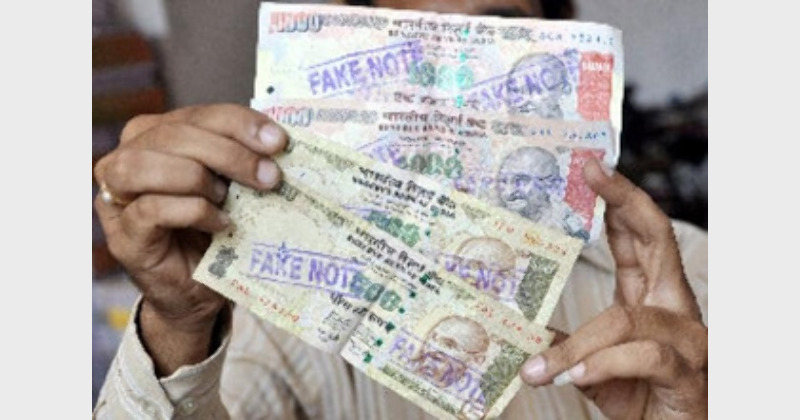
The other economic offense that we have great difficulty in controlling and which has destabilising effect on the economy and on national security is the circulation of counterfeit currency. Agencies of the Pakistan establishment play a major role in heinous crime. Dubai, Nepal and Bangladesh are used as transit for this purpose. The aim is two fold, namely the delegitimisation of the currency and the funding of terrorist outfits. This is not an easy battle to win since printing technology is not anybody’s monopoly. While the implications of its use in terror financing are well appreciated, its negative impact on the economy is underestimated. Specifically, it has prevented the emergence of the Indian rupee from emerging as an international currency in the larger neighbourhood. People forget that till the devaluation of 1966 by the Indira Gandhi Government acting on IMF diktat, the rupee was not only accepted from Singapore to Aden, it was in fact the legal tender of the Gulf states. Presently we allow only Nepal and Bhutan to source their imports from India in rupees, for fear of counterfeit currency entering India, we have imposed restrictions on these countries from holding rupee stocks and are also averse to allowing the rupee to be used by others, as we saw in the Iran oil case. Promoting the rupee as an international currency makes both political and economic sense. Greater regional economic integration would not only boost all economies but also raise our international profile.
Cyber crimes are on the upswing and one keeps hearing about the number of persons who fall for the old trick whereby they get emails from unknown sources either telling them that they have won a fortune, or that somebody they know has been a victim of crime in some foreign country and needs help. While the amounts lost per person may not be huge, the total losses are considerable. And this is just the tip of the iceberg. A few years ago, it came to light that senior executives of a foreign bank in India were systematically flinching large sums of money from account holders. The sad state of record keeping in banks and the abysmal level of security standards hints at much larger scams that we should be prepared for. Unfortunately, as a society we seem quite unprepared for cyber crimes. People discard their ATM receipts at the ATM itself, don’t change passwords or keep very obvious passwords—names of children, significant dates etc., and easily share confidential information on the phone with perfect strangers. The authorities also do not seem to be taking cyber crimes seriously, with half of all cases registered for distribution pornography electronically. Cases about hacking, frauds, forgery, cheating, breach of trust, etc are an insignificant number. We should learn from the US where the FBI hired a notorious hacker to help them get a grip about cyber crimes.
Though scams of different kinds have become endemic, and amounts involved only seem to increase each time, we don’t seem to be really serious about tackling it. Our entire debate about corruption in Government has unfortunately centred on creating institutions like the Lok Pal and giving the CBI functional autonomy, important as they are, that we are ignoring systemic issues that engender corrupt practices. The lack of accountability in Government, the incentives to capture rents through exercise of discretionary powers, the distortions in the supply of public goods by the Government and the rise of crony capitalism cannot be checked and reversed even if the best person/s are appointed to the Lok Pal or to the CBI. A critical look at the institutions of governance, clarity between competing roles (of policy maker, regulator and service provider), empowering different levels to perform their tasks appropriately, accountability to citizens at different levels etc must be undertaken, and we have to move beyond tamashas and nautankis.
No discussion on economic offenses would be complete without a reference to the rampant loot of public funds through the banking sector in an exercise called Corporate Debt Restructuring (CDR). Over the last year and a half, close to 2 lakh crore of bank debts of selected corporates, 30 or so, has been effectively rolled over. By lengthening the periods of repayment in return for debtors putting in minuscule amounts of additional capital, the banks are effectively become bankrupt. The Government, unless it privatises sections of the banking sector, would have to conservatively put in 1.5 lakh crore to capitalise the banks. This is a classic case of private loot at public expense. The RBI Governor, Raghuram Rajan, in his earlier avatar as an economist had written about saving Capitalism from Capitalists. Globally, such firms would have been allowed to go under. If they don’t share the extra profits they make when the going is good, why should not pay when the going is rough? But then since we are reluctant believers in markets and in basic legal principals, should we be surprised that there no outrage when the nation is being looted?








Comments