





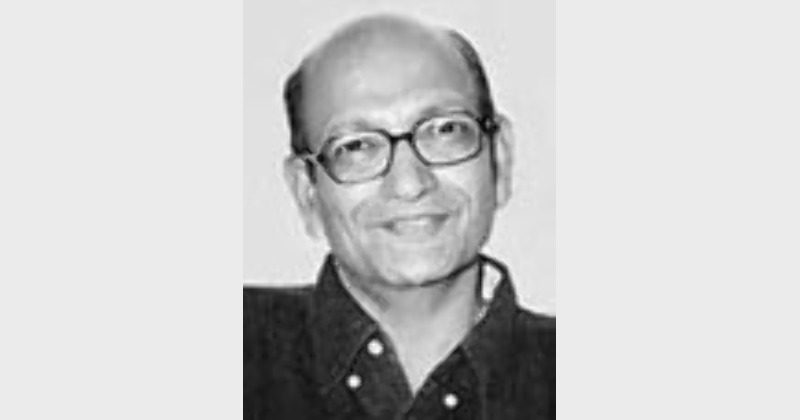
Dr Bharat Jhunjhunwala
 The consumer is agitated about the huge increase in prices of onions and tomatoes. He does not realise that this is a small problem. He is getting much larger benefits from imports of pulses and edible oils. The cost of production of these items in our country is high and their price is being controlled by cheap imports. We have to decide whether we want cheap tomatoes or pulses. If we become part of the global market then we will have to bear increased prices of tomatoes but we will get cheap pulses. If we want cheap tomatoes then we must be ready to pay more for pulses.
The Government has implemented a policy of providing agricultural subsidies on fertilizer, electricity and water; and restricting exports in order to contain domestic prices. I think this is counterproductive. Provision of subsidies brings down the prices temporarily—only as long as the subsidies are in place. Revenues of the Government are used up in provision of subsidies and public investment in roads, testing labs, cold storage and seed improvisation suffers. The cost of production remains high in absence of these investments. As a result the consumer is forced to pay more for the produce year after year. I had opportunity to visit a farm in the United States a few years ago. They had mapped the soil profile of every field in plots of 10 feet by 10 feet. This data was fed into the computer. The tractor would then dispense fertilizers depending upon the profile of each small plot. In this way every plant got the required dose of fertilizer, yields were high and cost of production was less. Such technological improvements are not taking place is India because Government revenues are being consumed in the provision of subsidies.
There is a similar impact of export restrictions. Exports take place when prices in India are less and those in the international markets are high. Restricting exports means that we are preventing our farmers form making profit from higher international prices. Competitors in other countries get the higher prices, however. Our competitors are able to make investments in controlled spread of fertilizers, tissue culture, and other technological advances. Our farmers have to continue with old practices because they do not make the profits required to make these investments. The present policy of provision of subsidies and imposition of export restrictions is counterproductive because it provides short term relief while it impose long term pain on the domestic consumer.
Thinking behind economic reforms was that subsidies will be reduced; open global market will be adopted and public investment in infrastructure and research will be enhanced. That was the correct direction. However, we have lost our way. Public investment has been nearly stagnant since the beginning of reforms while subsidies have multiplied many fold. We have not invested in quality control in particular. Our produce does not conform to the quality standards set by the importing countries. Cold storages are few and far. Roads and transport infrastructure is inadequate for shipping refrigerated items such as frozen peas. We have not been able to establish a chain of testing labs at district headquarters to assist our farmers meet the global quality parameters. As a result our farmers have not been able to get the increased income from opening of the global markets.
Two paths are open to us. One is to technologically upgrade our agriculture so that we can reduce our cost of production, bring domestic prices down and also compete in the global market. Other is to provide subsidies and impose export restrictions. The former is like providing light and table to the student so that he can study and get high marks. Letter is like providing gifts to the teacher and requesting him to give higher marks to the weak student. This does not deliver in the long run even if successful immediately.
More problems are lurking in the immediate future. Large amounts of agricultural lands are being diverted for urban colonies and highways. We will have to produce more from less land in future in order to feed our growing population. The problem of water will get worse too. Global warming is leading to melting of our glaciers. The supply of river water will increase temporarily while the accumulated ice melts. However, there will be drastic reduction when the glaciers have melted. Moreover, it is predicted that rainfall will be more intense but in short spells. Less water will percolate into our groundwater aquifers as a result Irrigation will suffer. We need to start technological upgrade now so that we are ready to face these problems when they arise.
This is not to say that all is dark. Our agricultural exports have nearly doubled since 2001. However there is no cause for celebration. Our agricultural imports have increased nearly fourfold in the same period. This means that our farmers have faced a double whammy. They have not been able to make profits when international prices are high because the Government has banned exports. At the same time they are faced with lower prices due to cheap imports.
We were told that the WTO would open up the global markets for our farmers. The opposite has happened. The WTO has led to opening of our markets to cheap imports but our farmers are unable to sell in foreign markets. Partly this is because of the domestic subsidies and non-tariff barriers put in place by the importing countries. But the bigger problem is that our produce is not up to the global standards in absence of investment in research, transportation and testing infrastructure. Therefore, in the main, policies of our Government are responsible for this sad result; not the WTO. We would have exported our way to success if we had invested in technological upgradation and allowed our farmers to export when the going was good.
Not all is lost. We must immediately scrap all agricultural subsidies and invest the money saved in improving agricultural infrastructure. Two, we must put pressure on the industrial countries to dismantle their domestic agricultural subsidies as was promised during the signing of the WTO agreement in 1995.








Comments