





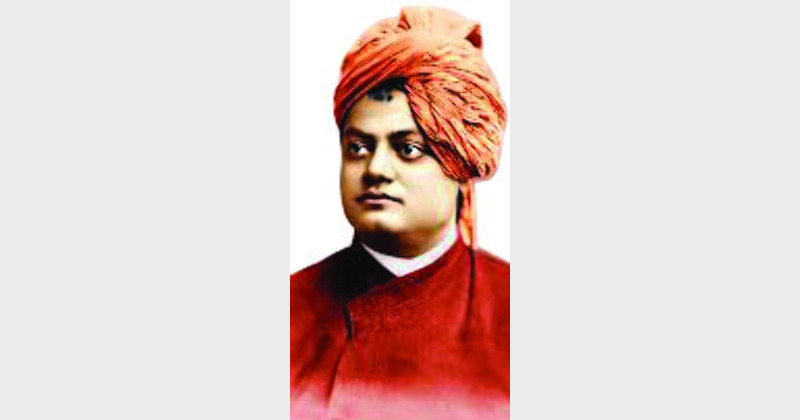
Relevance of Swami Vivekananda’s thoughts for Nation Rebuilding – Part II
Dr Ashok Modak
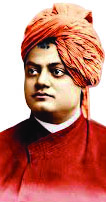 I have so far dealt with various minuses of our society and elaborated simultaneously how the thorough study of Swamiji’s speeches and writings is bound to impart ability to us to overcome minuses and vices of the contemporary society. Now I invite your attention to the pluses of our Motherland as they have made us confident of our potentialities. And as Swami Vivekananda shaped our ethos and made us capable of marching successfully on the path of nation rebuilding, elaboration of at least five pluses is quite appropriate here. What are those five pluses?
Our success in rebuilding nation.
It was on August 15, 1947 that India achieved political Independence, unfortunately at the cost of its Partition. It is of course a conviction on our part that India, as a nation has been in existence from centuries together. Has not Swamiji reminded us of the fact that India has withstood the shocks of centuries of hundreds of foreign invasions, of hundreds of upheavals of manners and customs? Swamiji has moreover assured us of the solid foundations of our nation. And the last 66 years have witnessed how we have succeeded in overcoming various obstacles and impediments on the path of nation rebuilding. We could withstand all these challenges in the post Independence decades because the renaissance movement conducive to nation building initiated and shaped by scores of social reformers and saints throughout India in pre-Independence period was carried forward quite effectively by Swami Vivekananda during the last decade of the 19th Century. Swamiji elaborated India’s contribution to the world in the speech titled as the ‘Work before us’ delivered at Madras on February 8, 1897. He said that India’s contribution to the world is like the gentle dew which falls unseen and unheard and yet brings into blossom fairest roses.
Our successful march on the path of democracy
The fact that India has proved its democratic credentials during post Independence sixty six years is least disputable. How can we forget that common Indian voters caused a defeat to Indiraji when the latter imposed Emergency and endangered democracy? What is essential at present is to recollect that it was Swami Vivekananda who hinted at the dawn of democracy throughout the globe and asked us to follow certain do’s and dont’s in order to make the democratic experiment a success! Swamiji thus asked us to save ourselves from the degeneration of democracy into oligopoly and from its perversion into plutocracy.
Swami Vivekananda’s viewpoint in this connection expressed in his interview granted to the Hindu in February 1897 is worth quotation here. “Kings having gone, the power is the people’s. We have, therefore, to wait till the people are educated, till they understand their needs and are ready and able to solve their problems. The tyranny of the minority is the worst tyranny in the world.”
Our remarkable pursuit of genuine secularism
We Indians are legitimately proud of the fact that post Independence India has pursued genuine secularism. We are also proud of the unique relationship that prevails in India between majority and minorities.
Our uniqueness or genuineness in the arena of secularism is reflected in three dimensions of our polity and society. Thus we refuse to discriminate between this person and that on the basis of caste, creed, sect or religion. Secondly, we offer heart-felt respects to all places of worship. Hindus feel that there are 33 crore of Gods. They convey to non-Hindus that they would be too happy to add some more Gods to the list of deities. Thirdly, our law makers rely unhesitatingly in fact gladly on the holy books of Muslims and Christians while drafting laws for contemporary Indian society as they are confident that no Hindu will oppose such a search for source material essential for drafting the laws. Ours is indeed a faith neutral polity.
Roots of the present pursuit of genuine secularism in India obviously lie in our culture and civilisation nourished by innumerable sadhus and saints.
Our achievements in the field or science and technology
It was the speech titled as ‘Paper on Hinduism’ presented on 19th September 1893 by Swamiji in the Chicago Parliament of religions which emphasised that the modern science was merely an echo of Vedanta. We intend to mention here four salient features of this speech.
A) High spiritual flights of Vedanta can be considered as precursor of modern science.
B) Hindu religion considers every being as a manifestation of spirit, which is pure and perfect, divine and immortal. This spirit is of course, trapped in a body. That is why; our goal is to manifest this divinity within by controlling nature, external and internal.
C) Hindu religion accepts that there are several ways worth pursuing for reaching the above mentioned goal. Hindu religion thus rejects dogmatism.
D) Hindu philosophy believes in the evolutionary cycle. Thus it is stated that the world emerges itself, that it stands on its feet, that it withers away itself and that it revives on its own.
The words such as creation, destruction, addition and subtraction are accordingly least acceptable to us.
Our social engineering: A miracle!
The Constituent Assembly of India rightly included in our Constitution certain reservation provisions in favour of Scheduled Castes and Scheduled Tribes. Realisation dawned on the members of the Constituent Assembly that our brothers and sisters belonging to SCs and STs do deserve reservations in various fields such as education, Government service and politics, etc, because our caste system caused unlimited agonies to them for centuries.
I would like to add a footnote to the discussion on social engineering. I have already mentioned that Vivekananda described Malbari houses as lunatic asylums as he had observed that Malbari had become “Don’t touchists”. Some disciples of Vivekananda then decided to campaign against untouchability there. The disciples thus wanted to accomplish Guru’s desire to wash out the stigma of Malbar. Luckily their efforts proved fruitful in 1936 as the priests of Guruvayur Temple opened the gates and allowed all Hindus to enter the temple. The lunatic asylum, which means the Bhrantalaya in Malyali language, thus became Teerthalaya. P Parameswaran, the President of Vivekananda Kendra has written a book in Malyalam From Bhrantalaya to Teerthalaya informs us how Swami Vivekananda‘s thoughts generated healthy waves and brought back the people on track.
(The writer is Ajunct Professor, University of Mumbai)






Comments