Residential segregation in the world’s large cities. A study
December 13, 2025
  • Read Ecopy
  • Circulation
  • Advertise
  • Careers
  • About Us
  • Contact Us
Android AppiPhone AppArattai
Organiser
  • ‌
  • Bharat
    • Assam
    • Bihar
    • Chhattisgarh
    • Jharkhand
    • Maharashtra
    • View All States
  • World
    • Asia
    • Europe
    • North America
    • South America
    • Africa
    • Australia
  • Editorial
  • International
  • Opinion
  • RSS @ 100
  • More
    • Op Sindoor
    • Analysis
    • Sports
    • Defence
    • Politics
    • Business
    • Economy
    • Culture
    • Special Report
    • Sci & Tech
    • Entertainment
    • G20
    • Azadi Ka Amrit Mahotsav
    • Vocal4Local
    • Web Stories
    • Education
    • Employment
    • Books
    • Interviews
    • Travel
    • Law
    • Health
    • Obituary
  • Subscribe
    • Subscribe Print Edition
    • Subscribe Ecopy
    • Read Ecopy
  • ‌
  • Bharat
    • Assam
    • Bihar
    • Chhattisgarh
    • Jharkhand
    • Maharashtra
    • View All States
  • World
    • Asia
    • Europe
    • North America
    • South America
    • Africa
    • Australia
  • Editorial
  • International
  • Opinion
  • RSS @ 100
  • More
    • Op Sindoor
    • Analysis
    • Sports
    • Defence
    • Politics
    • Business
    • Economy
    • Culture
    • Special Report
    • Sci & Tech
    • Entertainment
    • G20
    • Azadi Ka Amrit Mahotsav
    • Vocal4Local
    • Web Stories
    • Education
    • Employment
    • Books
    • Interviews
    • Travel
    • Law
    • Health
    • Obituary
  • Subscribe
    • Subscribe Print Edition
    • Subscribe Ecopy
    • Read Ecopy
Organiser
  • Home
  • Bharat
  • World
  • Operation Sindoor
  • Editorial
  • Analysis
  • Opinion
  • Culture
  • Defence
  • International Edition
  • RSS @ 100
  • Magazine
  • Read Ecopy
Home General

Residential segregation in the world’s large cities. A study

Archive ManagerArchive Manager
Dec 8, 2012, 12:00 am IST
in General
Follow on Google News
FacebookTwitterWhatsAppTelegramEmail

Manju Gupta

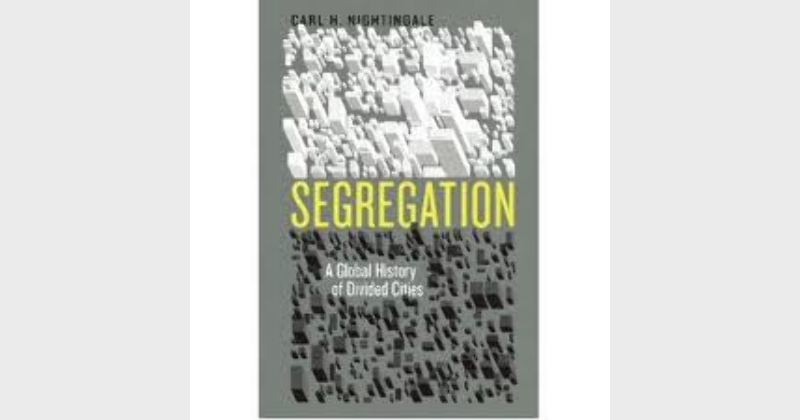
Segregation: A Global History of Divided Cities, Carl H Nightingale, University of Chicago Press, Pp 536, £ 21.38


THIS book is about residential segregation in cities around the world through the spread of coercive measures by powerful institutions and intellectual networks.
At Baltimore, Maryland, in December 1910, the whites began clamouring for new ways of asserting their political supremacy over the African-Americans by desiring a new technique of racial control, called ‘segregation’. In the name of segregation, the United States had passed laws since about 1900 to relegate the blacks to inferior Jim Crow schools, trainers, railroad station platforms, waiting rooms, theatres, restaurants, public bathrooms, amusement parks and even public water fountains. Employers and white workers imposed colour bars that kept certain high-prestige jobs off limits to blacks. Laws that prevented blacks from voting helped to reinforce the system.

The surge of enthusiasm for urban residential segregation resonated “not only in the United States, but even in Africa, the natural habitat of the black man.” Urban segregation designed to enhance elite groups’ power and wealth extended back to the ancient cities in Mesopotamia when a holy temple was built in the city of Eridu exclusively for the gods and from which ordinary mortals were kept out.

European colonial segregation dates as far back as the Middle Ages when English colonies in Ireland and Italian merchants in eastern Mediterranean reserved separate parts of overseas colonial towns for themselves. The idea of separating a ‘black town’ from a ‘white town’ dates back to 1700, when British officials demanded colour designations in the city of Madras.

The word ‘segregation’ was used for racial isolation in Hong Kong and Bombay in the 1890s. Monumental segregated colonies went up in places like Rabat, in French Morocco and New Delhi, in British India, signalling new arrogant ambitions for urban planning based on separate racial zones.

This book offers an update and elaboration of the fact that not only the idea that residential colour lines have proliferated across the world but also the main point that such movements to segregate cities spread because they were interconnected. Segregationists always worked within three kinds of institutions that were critical for West’s rise to global dominance – the governments, networks of intellectual exchange and institutions associated with the modern capitalist real estate industry. Of these, the empires of Britain, France and the United States supported and replicated by far the largest number of local movements for racial segregation across the world, relying on smaller-scale national, colonial or municipal government as well.

The author takes the reader on a sweeping voyage across time and space, ranging from the ancient roots of modern practices.
(The University of Chicago Press, Chicago – 60637)




ShareTweetSendShareSend
✮ Subscribe Organiser YouTube Channel. ✮
✮ Join Organiser's WhatsApp channel for Nationalist views beyond the news. ✮
Previous News

Criminals and fanatics thrive amidst riots and anarchy

Next News

Modi heads for a hat-trickBanks on bang for the buck, Congress freebies and banal talks

Related News

Major BJP gains in Kozhikode weaken the Left’s long-held grip on the city, signalling a dramatic shift in Kerala’s urban political landscape

Kerala Local Body Poll: BJP breaks 46-year Left monopoly in Kozhikode Corporation, triggers historic political shift

RSS Sarsanghchalak Dr Mohan Bhagwat

Virat Hindu Sammelan | Hindus do not consider uniformity is necessary for unity: Dr Mohan Bhagwat

PM Modi greets people in Kochi on his earlier visit to Kerala

Kerala Local Body Polls: PM Modi hails BJP–NDA win in Thiruvananthapuram corporation, calls it a watershed moment

Tamil Nadu: Madras HC summons ADGP, Chief Secretary in Karthigai Deepam row

Representative image

CBSE’s new exams promote application over memorisation; Implements NEP 2020 vision with concept-focused assessments

The verdict exposes the CPI(M)’s eroding grassroots support in Kerala, with a visible Hindu drift signalling a weakening Left grip under Chief Minister Pinarayi Vijayan

Kerala local polls jolt CPI(M) as Hindu shift to BJP signals Bengal-style collapse of the Left’s political fortress

Load More

Comments

The comments posted here/below/in the given space are not on behalf of Organiser. The person posting the comment will be in sole ownership of its responsibility. According to the central government's IT rules, obscene or offensive statement made against a person, religion, community or nation is a punishable offense, and legal action would be taken against people who indulge in such activities.

Latest News

Major BJP gains in Kozhikode weaken the Left’s long-held grip on the city, signalling a dramatic shift in Kerala’s urban political landscape

Kerala Local Body Poll: BJP breaks 46-year Left monopoly in Kozhikode Corporation, triggers historic political shift

RSS Sarsanghchalak Dr Mohan Bhagwat

Virat Hindu Sammelan | Hindus do not consider uniformity is necessary for unity: Dr Mohan Bhagwat

PM Modi greets people in Kochi on his earlier visit to Kerala

Kerala Local Body Polls: PM Modi hails BJP–NDA win in Thiruvananthapuram corporation, calls it a watershed moment

Tamil Nadu: Madras HC summons ADGP, Chief Secretary in Karthigai Deepam row

Representative image

CBSE’s new exams promote application over memorisation; Implements NEP 2020 vision with concept-focused assessments

The verdict exposes the CPI(M)’s eroding grassroots support in Kerala, with a visible Hindu drift signalling a weakening Left grip under Chief Minister Pinarayi Vijayan

Kerala local polls jolt CPI(M) as Hindu shift to BJP signals Bengal-style collapse of the Left’s political fortress

Representative Image

J&K: Grappling with a prolonged dry spell nowadays after flash floods of August, September disrupted road, rail traffic

New NCERT textbooks correct historical wrongs: Exposes forgotten brutality of invasions by Ghazni &

Pulser Sunil (Left) and Actor Dileep (Right)

Kerala actress rape case verdict: Dileep acquitted, Pulsar Suni gets 20 years rigorous imprisonment

A Representative image [ANI Photo]

Makhana Board holds first meeting; Rolls out Rs 476 crore development scheme

Load More
  • Privacy
  • Terms
  • Cookie Policy
  • Refund and Cancellation
  • Delivery and Shipping

© Bharat Prakashan (Delhi) Limited.
Tech-enabled by Ananthapuri Technologies

  • Home
  • Search Organiser
  • Bharat
    • Assam
    • Bihar
    • Chhattisgarh
    • Jharkhand
    • Maharashtra
    • View All States
  • World
    • Asia
    • Africa
    • North America
    • South America
    • Europe
    • Australia
  • Editorial
  • Operation Sindoor
  • Opinion
  • Analysis
  • Defence
  • Culture
  • Sports
  • Business
  • RSS @ 100
  • Entertainment
  • More ..
    • Sci & Tech
    • Vocal4Local
    • Special Report
    • Education
    • Employment
    • Books
    • Interviews
    • Travel
    • Health
    • Politics
    • Law
    • Economy
    • Obituary
  • Subscribe Magazine
  • Read Ecopy
  • Advertise
  • Circulation
  • Careers
  • About Us
  • Contact Us
  • Policies & Terms
    • Privacy Policy
    • Cookie Policy
    • Refund and Cancellation
    • Terms of Use

© Bharat Prakashan (Delhi) Limited.
Tech-enabled by Ananthapuri Technologies