






MV Kamath
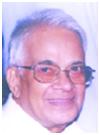 IN today’s messy world has anyone ever heard of one AO Hume, otherwise known by his full name Allan Octavian Hume or is aware of his relevance to India? One doesn’t expect the Sonia Congress Party or any of its sycophantic members to remember him but it so happens that it was he who was the chief architect of the Indian National Congress and for long its sole and courageous director. There is reason to remember him today if only for the simple reason that he passed away on July 31, 1912 and July 31, 2012 became the hundredth death anniversary of this great man.
The tragedy is that not just the Sonia Congress but the entire media has ignored him. Credit, therefore, should go to the monthly liberal magazine Freedom First for publishing a full-length article on Hume by an Associate Professor of History, SNDT University, Mumbai, Dr Prabha Ravi Shankar. Mohandas Karamchand Gandhi, who was yet to make his mark in 1912 nevertheless paid a handsome tribute to Hume. Hume, he wrote, “worked side by side with the leaders of the people, encouraging them with his kindly sympathy and urging them on to higher and nobler things”.
Harking back to those times, that is poor assessment of Hume’s contribution to India’s struggle for Independence. Hume, a Scotsman, arrived in India in 1849 when he was just 20 to serve as an officer of the Bengal Civil Service, and was to rise in his ranks in the years that followed. The so-called “Sepoy Mutiny” in 1857 shocked him no end and, as Prabha Ravi Shankar put it, he “became determined that there should be no more bloody rebellion in India and that the Indians should secure self-government without violence”. It was, by any definition, a brave stand to take. He paid for it. He was demoted from a top job and he had the courage to resign. More, he went about with dedicated determination to found the Indian National Congress with the primary aim, first of getting leaders from all over India – some 72 of them – to come together on a common platform and then onward to work together “selflessly and actively for India’s political, social and economic regeneration”.
He was openly critical of the then government in Delhi, presided over by successive Viceroys. When, for example, in 1892 he circulated a letter to members of the Congress in which reference was made to the growing poverty and violent discontent in India that could possibly threaten to break into yet another Indian rebellion, the government considered this as “seditious” and actually, many resident Englishmen wanted him to be deported back to England. But Hume couldn’t care less. His advice to Congressmen was to present a united front and work “selflessly and actively for India’s political, social and economic regeneration”.
Prabha Ravi Shankar quotes four lines from one of Hume’s poems in which he said: “Sons of Ind, why sit idle?/Wait yet for some Deva’s aid?/ Buckle to, be up and doing/Nations by themselves are made!” Fancy a Britisher saying such things in the 1880s! in 1903 when as Prabha Ravi Shankar put it, the “Congress was somewhat moribund”. Hume wrote a pamphlet entitled Call To Arms in which he denounced slackness, indifference and petty quarrels among Congressmen, reminding them that the goal of self-government can only be attained through self-reliance and self-sacrifice”. Who but a genuine lover of freedom for India would take such trouble to activate patriotism among its citizens? When he published his pamphlet Call To Arms Hume was not advocating a violent resurrection. What he meant was that Indian agitation should be non-violent and constitutional and “not to ravage and destroy but to fortilise and regenerate”.
Regeneration was, in fact, his code word. In a sense he pre-dated Mahatma Gandhi in his call to the young – as when he addressed a circular to the new graduates of Calcutta University on March 1, 1883 – “to scorn personal ease and make a resolute struggle to secure greater freedom for themselves and their country”. He set the graduates a three-fold objective: the fusion into one national whole of all the diverse forces that peopled the country, the gradual regeneration along lines spiritual, moral, social and political and the consolidation of the union between England and India. And all this was before Gandhi appeared on the Indian scene.
It is interesting to learn that many Indian leaders actually thought that Hume was much too radical and even went to the extent of opposing him! What is significant is that Hume was not interested in self-glorification. He never accepted the office of the president of the Congress, which could have been his for the mere asking, though he dominated the scene from 1885 to 1890. He was quite content to be designated as the party’s general secretary until 1906 and let it be remembered that this was at a time when the Indian political scene was inhabited by such distinguished men as Pherozeshah Mehta (1845-1915), DN Wacha (1844-1936), Gopal Krishna Gokhale (1866-1915), Bipin Chandra Pal (1858-1932) and Bal Gangadhar Tilak (1856-1920).
In an unspoken way he could be called their mentor. To his own countrymen, of course, he was a nuisance. Viceroy Dufferin (1884-1888) dismissed Hume as a “mischievous busybody, unscrupulous and very careless of truth” besides being “idiot enough”. Not very complimentary. But Hume didn’t mind. The Congress idolised him. Being downright practical, believing that no progress was possible without the Congress having a subsidiary of sorts in England itself he took the trouble to set up a British Committee of the Indian National Congress in London in 1889 and even raised Rs 45,000 for its maintenance – no small sum. He even founded a journal called India to propagate his views, and the cause of India.
As a biographer of his has noted, if Indians had some grievances, Hume attributed them to the callousness and insolence of the British bureaucracy. To him India deserved the highest respect.







Comments