





MV Kamath
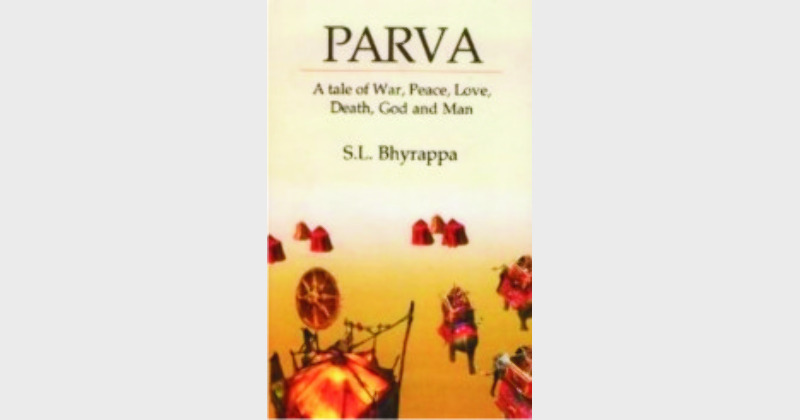
Parva: A Tale of War, Peace, Love, Death, God and Man: SL Bhyrappa; A Modern Kannada Classic, Translated by K Raghavendra Rao, Sahitya Akademi, Pp 950, Rs 450
 First, a note about the Kannada novelist SL Bhyrappa, author of this massive work, Parva. One of the foremost Indian literary figures of Karnataka, Bhyrappa is the author of more than twenty five novels, four volumes of literary criticism and an autobiography. He has been the recipient of several top awards, but it is generally conceded that of all his works, Parva stands out as one of the masterpieces of modern Indian literature. It is not a translation of Vyasa’s work. It is anything but. It is fiction based on Mahabharata, which means the author has taken full liberties in writing the text and if he presents, for example, Krishna, in a different light, he can hardly be taken to task.
Two things must be said in Bhyrappa’s favour: One, he has done extensive research in the manners and mores of the times in which Mahabharata took place. Two, he has dealt with literally scores of characters who haunt this work, in the context of their times. Krishna is thus plain Krishna, son of Vasudeva and Devaki and not an avataar. Dhritarashtra at one stage insolently asks: “Isn’t that fellow Krishna, the son of… full of tricks and strategies?”
Krishna is identified as having married eight women and not just to Rukmini and Stayabhama. The sexual forays of those times may shock today’s leaders, but an impotent husband could, in those days, willingly let his wife freely bear a child from a stranger under an accepted rule called Niyoga. Thus Kunti and Madri, the two wives of Pandu, bore children through sex with distinguished tribal leaders and not, as the Mahabharata loftily tell us, from Gods like Indra and Vayu. It is telling the truth as it is. Bhyrappa asks: “What is the sort of truth an imaginative writer should be after?” Good question. Those were times when a King was freely entitled to the sexual favours of his maids and this was considered normal practice. Dhritarashtra, it is said, had a hundred sons. Yes and no. He had eighteen sons from his legal wife Gandhari and the rest, eighty two, were sons born to serving maids. But since they were fathered by the blind King they came to be treated almost on par with his legal sons.
Indeed, reading this book one gets to know an entirely new world of sex prevalent in the Mahabharata era. Krishna apparently had “an insatiable appetite for women” and the eight he married are named such as Bhadra, Mitravinda, Neela, Kalindi and Lakshmanaa. As Bhyrappa notes: “(Krishna) had a form no woman could resist. A wizard in words. Razor sharp intelligence; wherever he went, they offered him brides…” Krishna, in this book, is a man for his times, not the God we worship. When the Battle of Kurukshetra starts and Arjun declines to fight, the conversation between him and Krishna is down to earth, almost vulgar. Sanjay, incidentally, isn’t blessed with divine vision. To know what is going on in the fighting, day-by-day, he has actually to visit the battleground to gain first hand knowledge, to return to give Dhritarashtra a report of the day’s happenings. The Gita does not, in the circumstances feature in Parva, which almost makes one feel it is a poor caricature of the original. What is, however, most impressive about this work is the sheer range of events it covers and it is as if one is personally present to hear the recorded conversations!
The author explains that men and women had equal status and rights. The children born in a clan were regarded as children of the whole clan. Every woman was every man’s wife and every man, every woman’s husband within a clan”. What this book does is not only tell a story but to tell us how society in the days of Mahabharata functioned. Even how a war is fought, how an army is structured and what, indeed, are the rules of the game. We are familiar with names like Krishna, Balarama, Vidura, Bhishma, Draupadi and so on but the names that are mentioned in this work come haunting, names like Bhrihadbala, Chandraketu, Meghavegha, Suvarch, Suryabha, Kirmira, Tushra, Alambhusha, Sunabha, Mahodara, Panditaka, Kundabheri… ad infinitum.
This book is more than just fiction: It is the social and political content of an era long gone. In substance, then, this work is a long narrative that cuts across time and space frightening in its sheer complexity. Rules exist, but they are broken. Relationships exist but they are discarded. Karna’s charioteer is Salya, the elder brother of Madri. But he doesn’t serve the Pandavas but acts as a charioteer to Karna and, in turn fails him.
It is Krishna who encourages Arjuna to kill Karna, unlawfully. When the author describes Kurukshetra with the rotting corpses, the broken limbs, the stinking mess of flesh and blood, it is nauseating, but even more nauseating are stories of broken relationships between man and man, man and woman, tribe and clan.
Reading this book requires strong nerves and equal courage to face bewilderment. Most Hindus are aware of the Gita. But in this book we are told that while, at first Krishna instructed only Arjuna, later others joined him, especially other commanders. Even some non- Kshatriyas. Believable? All that one can say is: read this book. Complex in its narration, frightening in its revelations Mahabharata as fictionalised by Bhyrappa, assumes a wholly new character. One feels like asking: Were those characters described by Bhyrappa really representative of the times portrayed in the Mahabharata? The answer lies in reading Parva; only be prepared for shock and growing mistrust. And a sense of being let down.
(Sahitya Akademi, 35, Ferozshah Road New Delhi-110 001)






Comments