
Pakistan has no right to talk on J&K
December 10, 2025
  • Read Ecopy
  • Circulation
  • Advertise
  • Careers
  • About Us
  • Contact Us
Android AppiPhone AppArattai
Organiser
  • ‌
  • Bharat
    • Assam
    • Bihar
    • Chhattisgarh
    • Jharkhand
    • Maharashtra
    • View All States
  • World
    • Asia
    • Europe
    • North America
    • South America
    • Africa
    • Australia
  • Editorial
  • International
  • Opinion
  • RSS @ 100
  • More
    • Op Sindoor
    • Analysis
    • Sports
    • Defence
    • Politics
    • Business
    • Economy
    • Culture
    • Special Report
    • Sci & Tech
    • Entertainment
    • G20
    • Azadi Ka Amrit Mahotsav
    • Vocal4Local
    • Web Stories
    • Education
    • Employment
    • Books
    • Interviews
    • Travel
    • Law
    • Health
    • Obituary
  • Subscribe
    • Subscribe Print Edition
    • Subscribe Ecopy
    • Read Ecopy
  • ‌
  • Bharat
    • Assam
    • Bihar
    • Chhattisgarh
    • Jharkhand
    • Maharashtra
    • View All States
  • World
    • Asia
    • Europe
    • North America
    • South America
    • Africa
    • Australia
  • Editorial
  • International
  • Opinion
  • RSS @ 100
  • More
    • Op Sindoor
    • Analysis
    • Sports
    • Defence
    • Politics
    • Business
    • Economy
    • Culture
    • Special Report
    • Sci & Tech
    • Entertainment
    • G20
    • Azadi Ka Amrit Mahotsav
    • Vocal4Local
    • Web Stories
    • Education
    • Employment
    • Books
    • Interviews
    • Travel
    • Law
    • Health
    • Obituary
  • Subscribe
    • Subscribe Print Edition
    • Subscribe Ecopy
    • Read Ecopy
Organiser
  • Home
  • Bharat
  • World
  • Operation Sindoor
  • Editorial
  • Analysis
  • Opinion
  • Culture
  • Defence
  • International Edition
  • RSS @ 100
  • Magazine
  • Read Ecopy
Home Bharat

Pakistan has no right to talk on J&K

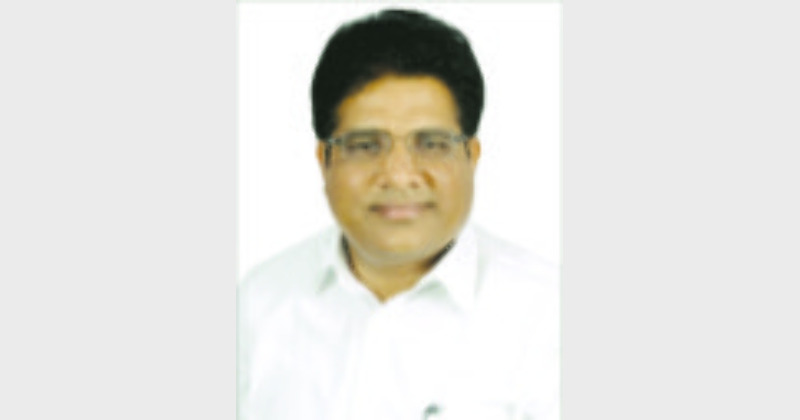
Pakistan has no right to talk on J&KBhupendra Yadav The Maharaja of Kashmir signed the Instrument of Accession with India on 26 October 1947, since by the instrument of accession Jammu & Kashmir had become a part of the territory of India.

Archive ManagerArchive Manager
Jul 22, 2012, 11:29 pm IST
in Bharat
Follow on Google News
FacebookTwitterWhatsAppTelegramEmail

Bhupendra Yadav

$img_titleThe Maharaja of Kashmir signed the Instrument of Accession with India on 26 October 1947, since by the instrument of accession Jammu & Kashmir had become a part of the territory of India.

In the Constituent Assembly, in which participation was also from Jammu & Kashmir which actually represents the will of the people of Jammu & Kashmir had discussion on the issue also. In the Constitution of India, Article 370 was made part  which initially had the heading as ‘temporary and transitional provision’, which was later on by the 13th Amendment Act, 1962 substituted by the word ‘temporary’, thus keeping the intent of the Article to be temporary only.

In October 1951, Jammu & Kashmir elected a Constituent Assembly to draft a constitution for the state, whereby hereditary rule was abolished, all disputes between the Centre and the State and between the State of Jammu & Kashmir and other States were to be decided by the Supreme Court of India. Provisions of Article 352, which empowers the central government to declare an emergency and suspend normal government functioning in the states, applied to Jammu & Kashmir in the case of external aggression.

One of the earliest and leading case regarding the impact of Art 370 to be decided by the Hon’ble Supreme Court was Prem Nath Kaul vs State of J&K, 1959 AIR 749, 1959 SCR Supl. (2) 270. In this judgment the Supreme Court traced the passing of power from the hands of Maharaja Hari Singh to the successor. The Court held that Article 370 in no way reduced the plenary powers of the Maharaja, nor did it try to impose the President’s will on the state of Jammu & Kashmir. What it did in fact, was that it vested authority in the Constituent Assembly to decide the relationship that the State wanted to establish with India. It also observed that the continuance of the exercise of powers conferred on the Parliament and the President by the relevant temporary provision of Article 370 (1) is made conditional on the final approval by the said Constituent Assembly in the said matters.

Another case was that of Mohammad Maqbool Damnoo v. State of Jammu & Kashmir 1972 AIR 963, 1972 SCR (2)1014. In this case the question of law was whether the Constitution of Jammu & Kashmir (Sixth Amendment) Act, 1965, which was passed by the President, in exercise of the powers conferred by clause (1) of Article 370 of the Constitution, with the concurrence of the Government of the State of Jammu & Kashmir and had received the assent of the Sadar-i-Riyasat, validly amended the Constitution of Jammu & Kashmir and validly provided for the appointment of a Governor in place of the Sadar-i-Riyasat, and therefore, the Governor was competent to give assent to the Jammu & Kashmir Preventive Detention (Amendment) Act, 1967. It was tried to be proved that an amendment of the J&K Constitution is not sufficient and that the Indian Constitution should also be amended if the Governor of Jammu & Kashmir is to have the authority to give assent to the Jammu & Kashmir Preventive Detention (Amendment) Act, 1967. The Court held that the Governor was made the head of the State by the proper means and so he would be the successor of the Sadar-i-Riyasat.

The present status of Article 370 is that the Supreme Court has accepted the temporary nature of it and left it alone as one of the outstanding questions of Indian history, but it has definitely held that the state of Jammu & Kashmir is legally and constitutionally part of Bharat. The attempt to again treat Jammu & Kashmir as distinct from India in the interlocutor’s report should be seen in this light. It is clearly an attempt to set back the clock to a time and era whose time itself has passed.

In the end there has been a suggestion that Article 370 should be made permanent and something on the lines of Article 371 A or the protection given to Naga tribes should be extended to the residents of the state. This is an apparently fallacious argument. Article 371-A is a protection to a people and therefore their customs and their way of life, while Article 370 deals with a territory. There is not a whisper in the entire report that the residents of the state have customs and norms distinct from the rest of the country which needs protection. The attempt therefore to hold out Article 371-A as a solution to the age old problem of Jammu & Kashmir is therefore disingenuous. In the present debate surrounding the report it is time for all of us to start calling a spade a spade, and therefore see through the legal impossibilities which seem to have been the suggestions of the interlocutors.


ShareTweetSendShareSend
✮ Subscribe Organiser YouTube Channel. ✮
✮ Join Organiser's WhatsApp channel for Nationalist views beyond the news. ✮
Previous News

Development need not be energy driven

Next News

Strike: A self-defeating trade union technique

Related News

Representative image

IMF praises UPI as world’s largest payment system, highlighting Modi govt’s digital vision outpacing Congress critics

RSS path Sanchalan

Karnataka: 518 path sanchalan of RSS held peacefully despite Congress hurdles; Narrative of communal tension foiled

Australian Prime Minister Anthony Albanese announced social media ban for children under the age of 16

‘By banning social media for under 16, we’re giving children a childhood’: Australian PM Albanese

PM Modi hails addition of Deepavali to UNESCO Intangible Heritage List

‘Soul of our civilisation’: PM Modi hails addition of Deepavali to UNESCO Intangible Heritage List

BJP launches protest against Karnataka govt over anti-farmer policies

Karnataka: BJP protest exposes state government’s anti-farmer policies, leaders detained

Pokhara International Airport

Pokhara Airport Scam Involves China: Nepal charges 55 in corruption case of NRs 8.36 billion; CAMC Engineering on radar

Load More

Comments

The comments posted here/below/in the given space are not on behalf of Organiser. The person posting the comment will be in sole ownership of its responsibility. According to the central government's IT rules, obscene or offensive statement made against a person, religion, community or nation is a punishable offense, and legal action would be taken against people who indulge in such activities.

Latest News

Representative image

IMF praises UPI as world’s largest payment system, highlighting Modi govt’s digital vision outpacing Congress critics

RSS path Sanchalan

Karnataka: 518 path sanchalan of RSS held peacefully despite Congress hurdles; Narrative of communal tension foiled

Australian Prime Minister Anthony Albanese announced social media ban for children under the age of 16

‘By banning social media for under 16, we’re giving children a childhood’: Australian PM Albanese

PM Modi hails addition of Deepavali to UNESCO Intangible Heritage List

‘Soul of our civilisation’: PM Modi hails addition of Deepavali to UNESCO Intangible Heritage List

BJP launches protest against Karnataka govt over anti-farmer policies

Karnataka: BJP protest exposes state government’s anti-farmer policies, leaders detained

Pokhara International Airport

Pokhara Airport Scam Involves China: Nepal charges 55 in corruption case of NRs 8.36 billion; CAMC Engineering on radar

11 Maoists surrender before police in Maharashtra, Image SS- ANI

Maharashtra: 11 Maoists carrying collective reward of Rs 82 lakhs surrender before police in Gadchiroli

Teo Chee Hean, Chairman of Temasek and Senior Advisor to Singapore Prime Minister

Bond between two nations is deeply rooted, name Singapore is derived from Sanskrit: Temasek’s Teo Chee Hean

Representative image

Delhi School Bomb Threat: Students safely evacuated; Police launch investigation

External Affairs Minister Dr. S Jaishankar

India bluntly flags democratic failure in Pakistan and surge in terror export; Remarks rattle Islamabad

Load More
  • Privacy
  • Terms
  • Cookie Policy
  • Refund and Cancellation
  • Delivery and Shipping

© Bharat Prakashan (Delhi) Limited.
Tech-enabled by Ananthapuri Technologies

  • Home
  • Search Organiser
  • Bharat
    • Assam
    • Bihar
    • Chhattisgarh
    • Jharkhand
    • Maharashtra
    • View All States
  • World
    • Asia
    • Africa
    • North America
    • South America
    • Europe
    • Australia
  • Editorial
  • Operation Sindoor
  • Opinion
  • Analysis
  • Defence
  • Culture
  • Sports
  • Business
  • RSS @ 100
  • Entertainment
  • More ..
    • Sci & Tech
    • Vocal4Local
    • Special Report
    • Education
    • Employment
    • Books
    • Interviews
    • Travel
    • Health
    • Politics
    • Law
    • Economy
    • Obituary
  • Subscribe Magazine
  • Read Ecopy
  • Advertise
  • Circulation
  • Careers
  • About Us
  • Contact Us
  • Policies & Terms
    • Privacy Policy
    • Cookie Policy
    • Refund and Cancellation
    • Terms of Use

© Bharat Prakashan (Delhi) Limited.
Tech-enabled by Ananthapuri Technologies