A study of state and minorities in 20th century Bengal
December 14, 2025
  • Read Ecopy
  • Circulation
  • Advertise
  • Careers
  • About Us
  • Contact Us
Android AppiPhone AppArattai
Organiser
  • ‌
  • Bharat
    • Assam
    • Bihar
    • Chhattisgarh
    • Jharkhand
    • Maharashtra
    • View All States
  • World
    • Asia
    • Europe
    • North America
    • South America
    • Africa
    • Australia
  • Editorial
  • International
  • Opinion
  • RSS @ 100
  • More
    • Op Sindoor
    • Analysis
    • Sports
    • Defence
    • Politics
    • Business
    • Economy
    • Culture
    • Special Report
    • Sci & Tech
    • Entertainment
    • G20
    • Azadi Ka Amrit Mahotsav
    • Vocal4Local
    • Web Stories
    • Education
    • Employment
    • Books
    • Interviews
    • Travel
    • Law
    • Health
    • Obituary
  • Subscribe
    • Subscribe Print Edition
    • Subscribe Ecopy
    • Read Ecopy
  • ‌
  • Bharat
    • Assam
    • Bihar
    • Chhattisgarh
    • Jharkhand
    • Maharashtra
    • View All States
  • World
    • Asia
    • Europe
    • North America
    • South America
    • Africa
    • Australia
  • Editorial
  • International
  • Opinion
  • RSS @ 100
  • More
    • Op Sindoor
    • Analysis
    • Sports
    • Defence
    • Politics
    • Business
    • Economy
    • Culture
    • Special Report
    • Sci & Tech
    • Entertainment
    • G20
    • Azadi Ka Amrit Mahotsav
    • Vocal4Local
    • Web Stories
    • Education
    • Employment
    • Books
    • Interviews
    • Travel
    • Law
    • Health
    • Obituary
  • Subscribe
    • Subscribe Print Edition
    • Subscribe Ecopy
    • Read Ecopy
Organiser
  • Home
  • Bharat
  • World
  • Operation Sindoor
  • Editorial
  • Analysis
  • Opinion
  • Culture
  • Defence
  • International Edition
  • RSS @ 100
  • Magazine
  • Read Ecopy
Home General

A study of state and minorities in 20th century Bengal

Archive ManagerArchive Manager
Dec 11, 2011, 12:00 am IST
in General
Follow on Google News
FacebookTwitterWhatsAppTelegramEmail

BOOKMARK-4

By Manju Gupta


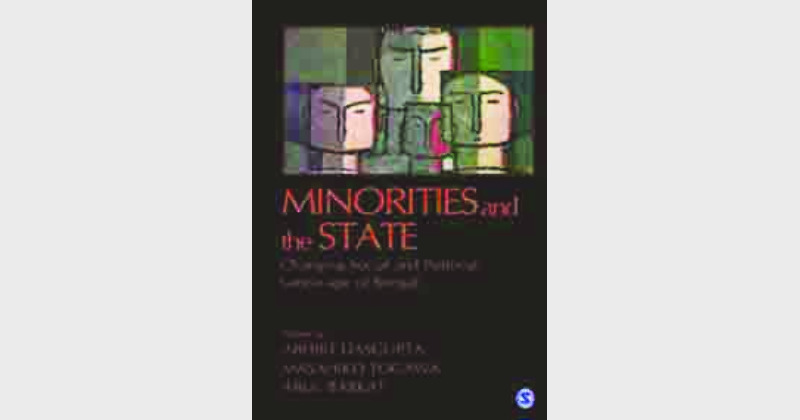
Minorities and the State: Changing Social and Political Landscape of Bengal
, Abhijit Dasgupta, Masahiko Togawa and Abdul Barkat, Sage Publications India Pvt Ltd, Pp 214, Rs 795

Relations between the state and different communities remained contentious throughout the 20th-century Bengal. In the 1920s, a group of Hindu political leaders in Calcutta argued on establishing a pact between the Hindus and Muslims regarding the rights of each country. However, conflicts over rights led to violent clashes. So the principle of secularism was adopted to ensure a sense of security among the minorities.

This book focuses on the religious divide between the Hindus in Bangladesh and the Muslims of West Bengal and Bangladesh, apart from the internal differentiation of the communities where caste, class, language which are such important marks of identity and often divide them internally.

This book is a compilation of papers and reports which deal specifically with the following themes: the formation of minority identity as the time of Partition in 1947; crises and coping strategies; state policies that affect minorities; minorities and local-level politics; and minorities and migrations.

In Part 1, Sekhar Bandyopadhyay, taking of communal riots in Calcutta in 1950 which raised a lot of hue and cry, seeks to unravel the conflicting views and approaches to the minority issue, the perceived role of the state as the protector of minority life and property – or conversely as an ‘appeaser’ of the minorities – and the interconnected nature of the problems of minorities in East and West Bengal.

Abhijit Dasgupta points out how state politics exclude minority community from the purview of affirmative action leading to the marginalisation of the Muslims in recent years. He advances three broad areas – affirmative action for ‘Dalit’ and ‘backward Muslims’, local-level politics and demographic change.

Samir Kumar Das in taking up the case of a special category of Muslims in West Bengal and who may be described as ‘immigrant Muslim’, studies the state-immigrant relations in the context of civilisation, territorisation and securitisation.

Tetsuya Nakatani takes up the case of the Hindu minority community and cites that at the time of Partition, many Hindus who had stayed back in Pakistan and moved to West Bengal subsequently, faced an uphill task of assimilation with the local communities.

In Part II, the five papers explore deprivation and different dimensions of minority life in Bangladesh. Abu Barkat criticises the state policies towards the minority. He notes that the enactment and implementation of the Enemy Property Act and its continuation in the name of Vested Property Act has had its distinct historical roots in Pakistani law. His research shows that in 1965-2006, approximately 1.2 million out of a total of 2.7 million Hindu households were directly and severely affected by the Enemy/Vested Property Act and have lost 2.6 million acres of their landed property.

Rangalal Sen observes that violence against religious minorities that erupted in the wake of the General Elections of 2001 in Bangladesh demonstrated that the socio-politically weaker sections of society could not exercise their legitimate voting rights according to their own choice because if they voted in favour of their candidate, they would have had to face serious consequences.

Masahiko Togawa examines the current situation of the Hindu minority in Bangladesh and discusses its social and historical backgrounds.

Sadeka Halim explains through a broad spectrum of issues the discrimination and violation of human rights against Hindu women in Bangladesh and this is especially because of marginalisation of Hindus in general as a consequence of the Partition of 1947 in East Bengal and later in Bangladesh.

Abu Dayen deals with the reflections of minority life in Bengali literature, examining the crises and conditions of Hindu minority as found in novels and short stories.

The three scholar-authors, through this collection of articles, emphasise the crises and coping strategies, migration and state- and local-level politics affecting the Hindu minorities.

(Sage Publications India Pvt Ltd, B1/I-1, Mohan Cooperative Industrial Area, Mathura Road, Post Bag 7, New Delhi – 110 044; www.sagepublications.com)


ShareTweetSendShareSend
✮ Subscribe Organiser YouTube Channel. ✮
✮ Join Organiser's WhatsApp channel for Nationalist views beyond the news. ✮
Previous News

BOOKMARK

Next News

SPECIAL INTERVIEW

Related News

Winning the narrative war

The need for strong narratives in Bharat

R. Ashoka, Leader of Opposition

Karnataka: Opposition condemns diversion & misuse of exclusive SCSP, TSP funds for guarantee schemes

Deceit and manipulation became symbolic of Congress governance

Special Intensive Revision: A red rag to the opposition

R Sreelekha, Kerala’s first woman IPS officer and former DGP, wins from the Sasthamangalam ward in the Trivandrum Corporation elections

Kerala Local Body Polls: BJP fields first woman IPS officer and ex-DGP R Sreelekha, wins big in Trivandrum Corporation

Representative Image

Indian New Gene Editing Protein: Future of healthcare, agriculture and biotechnology reforms

The rise of right-wing in the contemporary world

The resurgence of nationalist ideologies in contemporary world politics

Load More

Comments

The comments posted here/below/in the given space are not on behalf of Organiser. The person posting the comment will be in sole ownership of its responsibility. According to the central government's IT rules, obscene or offensive statement made against a person, religion, community or nation is a punishable offense, and legal action would be taken against people who indulge in such activities.

Latest News

Winning the narrative war

The need for strong narratives in Bharat

R. Ashoka, Leader of Opposition

Karnataka: Opposition condemns diversion & misuse of exclusive SCSP, TSP funds for guarantee schemes

Deceit and manipulation became symbolic of Congress governance

Special Intensive Revision: A red rag to the opposition

R Sreelekha, Kerala’s first woman IPS officer and former DGP, wins from the Sasthamangalam ward in the Trivandrum Corporation elections

Kerala Local Body Polls: BJP fields first woman IPS officer and ex-DGP R Sreelekha, wins big in Trivandrum Corporation

Representative Image

Indian New Gene Editing Protein: Future of healthcare, agriculture and biotechnology reforms

The rise of right-wing in the contemporary world

The resurgence of nationalist ideologies in contemporary world politics

J&K LG Manoj Sinha

J&K: LG Sinha lauds SKIMS staff in providing top medicare to people, improvement in medical infrastructure post-2019

More than 5 lakh people came together to chant Bhagwad Gita

Kolkata’s Chorus of the Gita: Five lakh voices, one eternal message

Representative Image

MUDA Scam in Karnataka: ED probe reveals former commissioner took Rs 22.47 crore bribe for illegal plot allotments

NCERT introduces Vasudhaiva Kutumbakam chapter in Class 7

NCERT introduces Vasudhaiva Kutumbakam chapter in Class 7 social science curriculum

Load More
  • Privacy
  • Terms
  • Cookie Policy
  • Refund and Cancellation
  • Delivery and Shipping

© Bharat Prakashan (Delhi) Limited.
Tech-enabled by Ananthapuri Technologies

  • Home
  • Search Organiser
  • Bharat
    • Assam
    • Bihar
    • Chhattisgarh
    • Jharkhand
    • Maharashtra
    • View All States
  • World
    • Asia
    • Africa
    • North America
    • South America
    • Europe
    • Australia
  • Editorial
  • Operation Sindoor
  • Opinion
  • Analysis
  • Defence
  • Culture
  • Sports
  • Business
  • RSS @ 100
  • Entertainment
  • More ..
    • Sci & Tech
    • Vocal4Local
    • Special Report
    • Education
    • Employment
    • Books
    • Interviews
    • Travel
    • Health
    • Politics
    • Law
    • Economy
    • Obituary
  • Subscribe Magazine
  • Read Ecopy
  • Advertise
  • Circulation
  • Careers
  • About Us
  • Contact Us
  • Policies & Terms
    • Privacy Policy
    • Cookie Policy
    • Refund and Cancellation
    • Terms of Use

© Bharat Prakashan (Delhi) Limited.
Tech-enabled by Ananthapuri Technologies