The Pancha Bhoota Sthalams are five ancient Mandirs dedicated to Bhagwan Shiva, each symbolising one of the Pancha Mahabhutas, the five fundamental elements that form the universe according to Hindu philosophy: Earth, Water, Fire, Air and Space. Spread across Tamil Nadu and Andhra Pradesh, these Mandirs are among the most revered pilgrimage sites in India, drawing devotees who seek to experience Shiva through the elemental forces of nature. Beyond their religious importance, they are architectural marvels and living repositories of India’s spiritual and cultural heritage.
Ekambareswarar Mandir, Kanchipuram – The Earth (Prithvi) Stalam
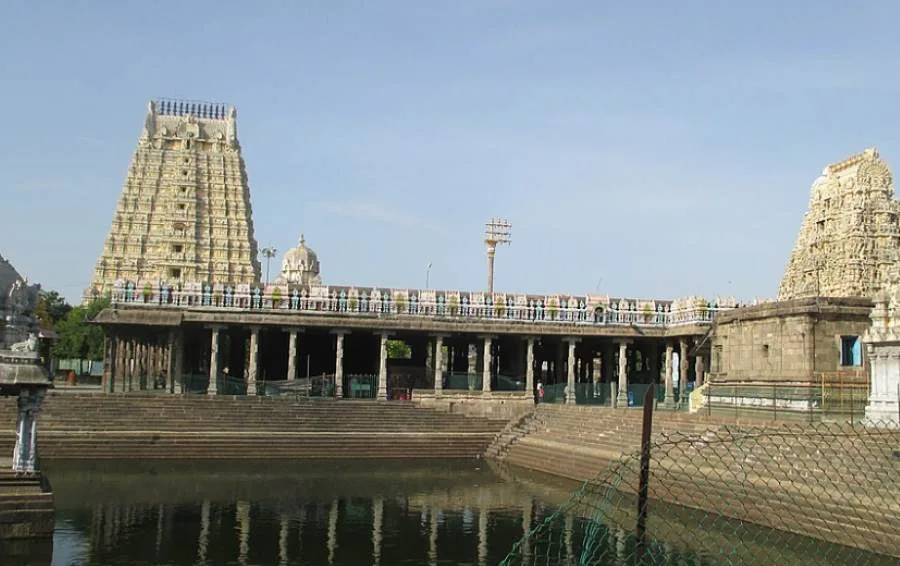
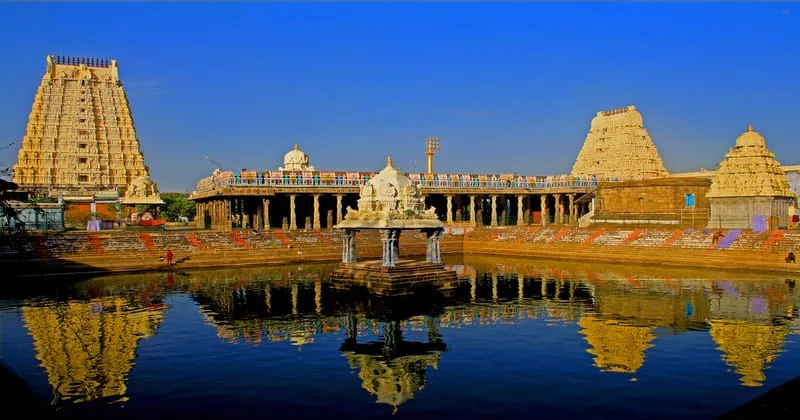
The Ekambareswarar Mandir in Kanchipuram represents the Earth element (Prithvi) and is one of the largest Shiva Mandirs in South India. According to legend, Maa Parvati fashioned a Shiva Linga from sacred sand beneath an ancient mango tree and worshipped it with deep devotion. When floodwaters threatened to wash it away, she embraced the linga, prompting Bhagwan Shiva to appear and accept her as his consort. Since the presiding deity is believed to be a sand linga, it is traditionally protected from direct ablutions.
Architectural Highlights
Massive 11-storey Rajagopuram
Thousand-pillared hall
Sacred mango tree believed to be over 3,000 years old
Vast temple complex reflecting Pallava, Chola, and Vijayanagara craftsmanship
Arunachaleswarar Mandir, Thiruvannamalai – The Fire (Agni) Stalam
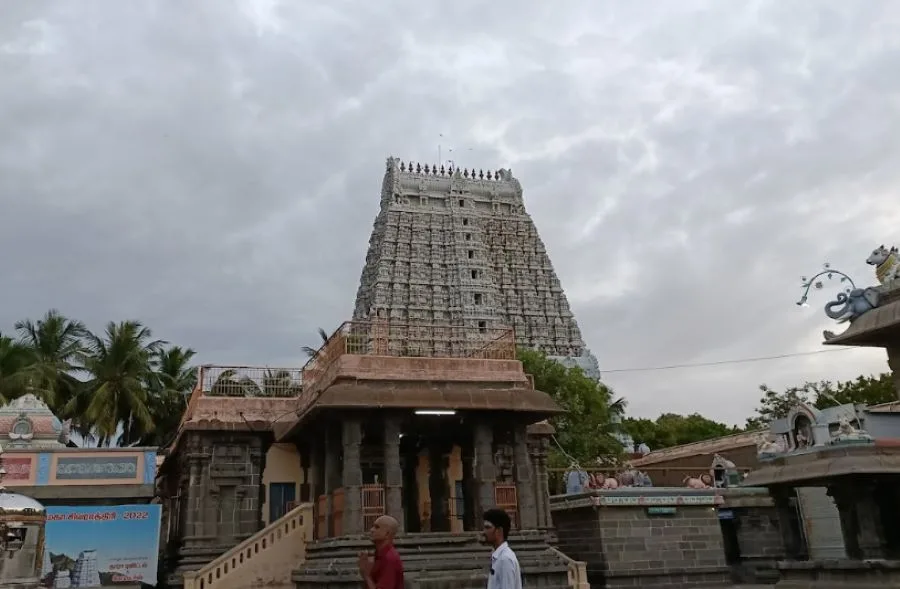
At the foot of the sacred Arunachala Hill stands the Arunachaleswarar Mandir, representing the Fire element (Agni). Hindu tradition recounts that Bhagwan Shiva manifested here as an infinite pillar of fire to settle a dispute between Brahma and Vishnu over who was supreme. Unable to find either the beginning or the end of the blazing column, both deities acknowledged Shiva’s boundless nature. Arunachala Hill is believed to be the physical manifestation of that eternal flame.
The Mandir is famed for the annual Karthigai Deepam festival, when a massive beacon is lit atop the hill, symbolising Shiva’s divine light. Fire represents knowledge, transformation and purification, and pilgrims often undertake the 14-kilometre Girivalam around the hill as an act of devotion.
Architectural Highlights
Nine towering gopurams
Huge Mandir tanks
Intricately carved mandapams
One of India’s largest temple complexes
Jambukeswarar Mandir, Thiruvanaikaval – The Water (Jala) Stalam
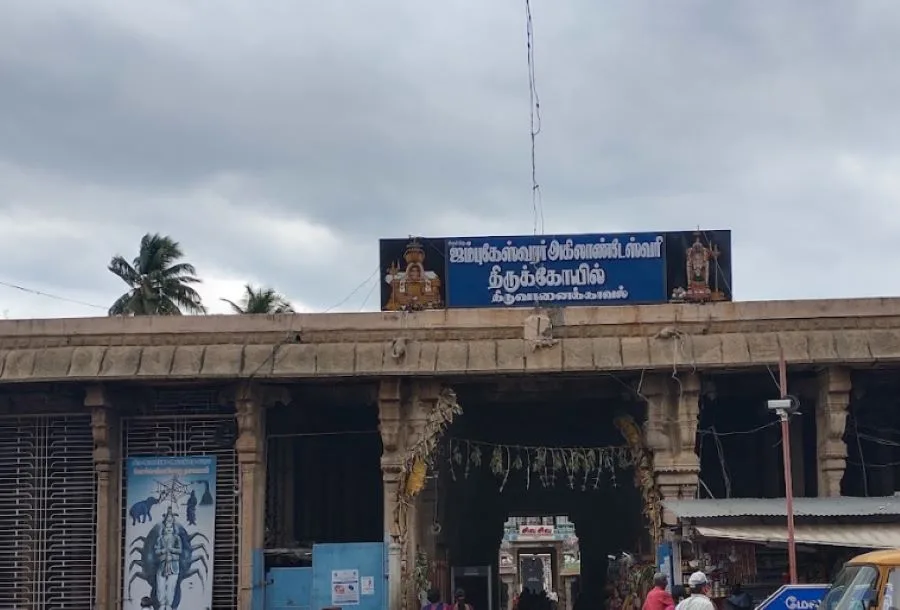
The Jambukeswarar Mandir at Thiruvanaikaval near Tiruchirappalli is dedicated to the Water element (Jala). The Mandirs most remarkable feature is the natural underground spring beneath the sanctum, which continuously keeps the Shiva Linga moist throughout the year. This enduring presence of water has long been regarded as a divine manifestation of the element.
According to tradition, Maa Parvati worshipped Bhagwan Shiva here under a Jambu tree, giving the Mandir its name. The Mandirs impressive architecture, with its massive enclosures and intricately carved halls, reflects the grandeur of the Chola period. Water symbolises purity, compassion and renewal, making the shrine a place where devotees seek emotional peace and spiritual cleansing.
Architectural Features
Five concentric enclosures
Seven magnificent gopurams
Fine Chola architecture
Srikalahasteeswara Mandir, Srikalahasti – The Air (Vayu) Stalam
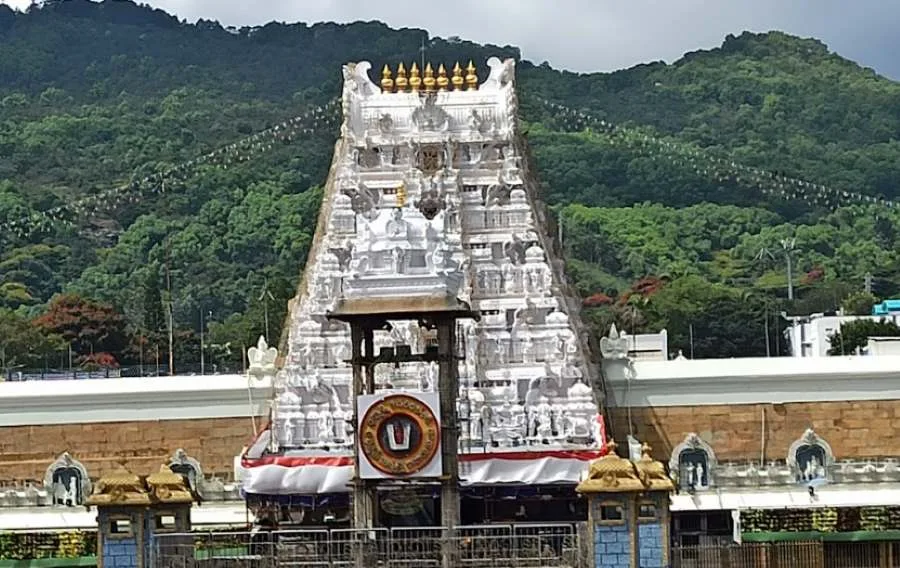
Located in Andhra Pradesh, the Srikalahasteeswara Mandir represents the Air element (Vayu). The Mandir derives its name from a spider, a serpent and an elephant, each of whom is believed to have worshipped Bhagwan Shiva with unwavering devotion and attained liberation.
The sanctum is associated with the invisible presence of air, symbolised by a lamp whose flame is said to flicker continuously despite the absence of noticeable wind. The Mandir is also one of the most important centres for Rahu-Ketu dosha remedies, attracting devotees from across the country. As the embodiment of air, the shrine represents life force, movement and the breath that sustains all living beings.
Thillai Nataraja Mandir, Chidambaram – The Space (Akasha) Stalam
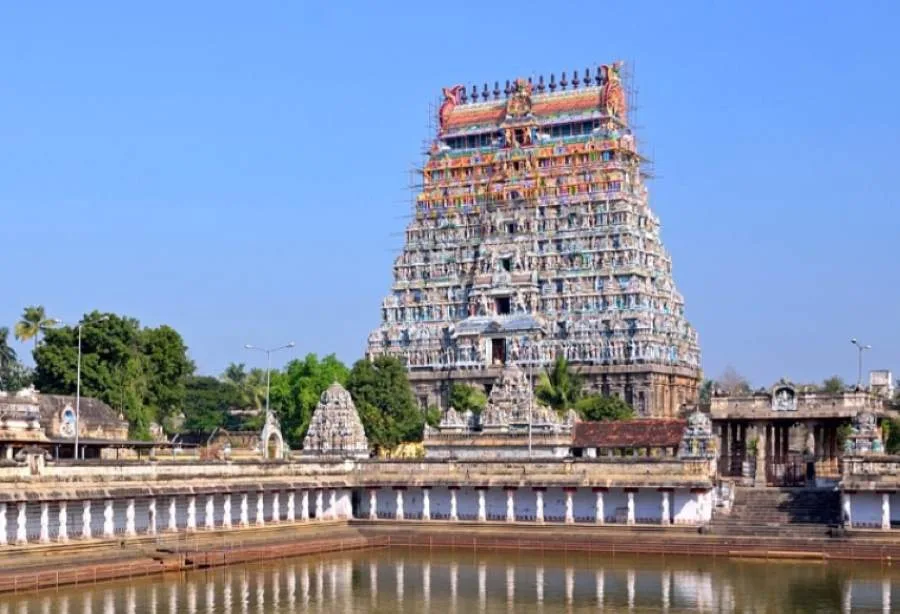
The Thillai Nataraja Mandir at Chidambaram represents the Space element (Akasha), the most subtle and all-pervading of the five elements. Unlike most Shiva Mandirs, the principal deity here is Bhagwan Shiva as Nataraja, the Cosmic Dancer, whose celestial dance symbolises the rhythm of creation, preservation and dissolution.
One of the Mandirs most intriguing traditions is the Chidambara Rahasya, or the “Secret of Chidambaram.” Alongside the murti of Nataraja lies an empty space concealed by a curtain, signifying the invisible and formless nature of the divine. This profound symbolism reflects the concept of Akasha, limitless space, consciousness and the infinite presence of God.
Architectural Highlights
Golden-roofed sanctum
Exquisite bronze Nataraja
Intricate sculptures depicting Bharatanatyam postures
Rich Chola architectural heritage
The Pancha Bhoota Sthalams are far more than a collection of ancient Mandirs. Together, they represent a profound spiritual philosophy that sees the universe and human existence as inseparable from the five elements of nature. A pilgrimage to these sacred shrines is not only an act of devotion to Bhagwan Shiva but also a journey through the elemental forces that sustain life. Rich in history and architectural splendour, the Pancha Bhoota Sthalams continue to inspire millions, offering a timeless reminder of the harmony between the divine, nature and humanity.