2nd WHO Global summit on traditional medicine
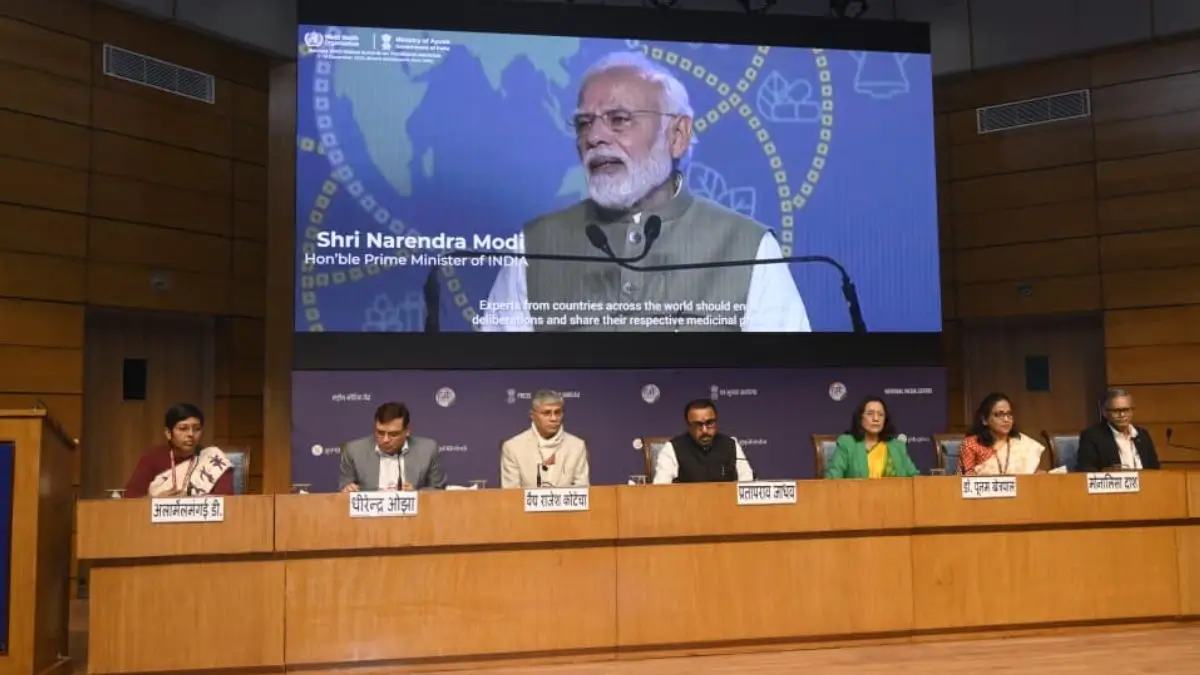
India has officially begun the countdown to the 2nd WHO Global Summit on Traditional Medicine, an event that is expected to draw delegates from over 100 countries to New Delhi later this year. At a Curtain Raiser held at the National Media Centre, the Ministry of Ayush outlined the summit’s themes, key discussions and global participation, signalling the start of an expansive international engagement process in the run-up to December 2025.
Union Minister of State (Independent Charge) for Ayush, Prataprao Jadhav, who presided over the event, described India’s role as host nation as both an honour and a responsibility. “India is proud to welcome the world once again. After the success of the first summit in Gujarat in 2023, this edition marks another milestone in our collective commitment to holistic health,” he said. Jadhav emphasised that traditional medicine is central to India’s civilisational ethos embodied in the principle, “Sarve Bhavantu Sukhinah, Sarve Santu Niramayah.”
Science, Balance and Global Well-being
The Minister announced that the 2025 summit will revolve around the theme “Restoring Balance: The Science and Practice of Health and Well-being.” This theme, he said, is designed to promote evidence-based dialogue between diverse stakeholders, including ministers, policymakers, researchers, global health leaders, industry bodies and practitioners of traditional medicine from around the world.
“With over 100 nations expected to participate, the summit will serve as a global platform to deepen cooperation on research, regulation, innovation and equitable access to traditional medicine,” Jadhav said.
He noted that this growing global interest reflects the increasing recognition of traditional systems, Ayurveda, Yoga & Naturopathy, Unani, Siddha, Sowa-Rigpa and Homoeopathy for their preventive, promotive and therapeutic value.
Ashwagandha to Take Centre Stage
One of the major highlights of the upcoming summit will be a dedicated three-day side event on Ashwagandha, one of India’s most internationally acclaimed medicinal plants. The Ministry of Ayush and the WHO Global Traditional Medicine Centre (WHO-GTMC), Jamnagar, will jointly organise the session titled “Ashwagandha: From Traditional Wisdom to Global Impact, Perspectives from Leading Global Experts.”
The event, scheduled alongside the main summit from 17-19 December, will bring together global specialists to deliberate on contemporary scientific evidence, including Ashwagandha’s adaptogenic, neuroprotective and immunomodulatory properties. Discussions will also focus on harmonising safety standards and building global acceptance for high-quality, science-backed Ayurvedic products.
Jadhav said the side event reflects India’s commitment to showcasing how traditional knowledge can be validated and integrated into global health systems through rigorous science.
India’s Growing Leadership in Traditional Medicine
In his address, the Minister highlighted India’s expanding global footprint in the field of traditional medicine. He pointed out that the establishment of the WHO Global Traditional Medicine Centre in Jamnagar is a testament to international faith in India’s knowledge systems.
The centre, he said, is already driving high-impact research, fostering collaborations and supporting countries seeking to integrate traditional medicine into their national health frameworks.
Jadhav also acknowledged the role of the media in shaping public perception. “The media has played a crucial role in building awareness, trust and scientific dialogue around traditional medicine. Your partnership remains essential,” he told the gathering.
Prime Minister Narendra Modi is expected to attend the summit’s closing ceremony, underscoring the importance the government attaches to this global engagement.
Dr. Poonam Khetrapal, Regional Director Emeritus of WHO South-East Asia Region and Senior Advisor on Traditional Medicine to the WHO Director-General, said the upcoming summit represents a pivotal opportunity to advance global health cooperation.
“The deliberations will shape a decade-long roadmap for evidence-based and equitable integration of traditional, complementary and Indigenous medicines into national health systems,” she said.
Dr. Khetrapal stressed the urgent need for stronger research frameworks, improved regulatory mechanisms and enhanced innovation to bridge the evidence gaps that persist in many traditional medicine practices worldwide. “We must prioritise safety, quality and efficacy to ensure that traditional medicine benefits people everywhere,” she added.
Diplomatic Outreach Already Underway
The Curtain Raiser follows a high-level Ambassadors’ Reception held on 9-10 November, where foreign diplomats were briefed about India’s partnership with the WHO and the strategic importance of the 2025 summit.
Officials said that multiple rounds of consultations, technical meetings, and bilateral engagements are planned in the coming months as part of India’s effort to ensure broad-based global participation.
The Ministry of Ayush said the summit aims to strengthen global commitment to holistic and integrative healthcare models, combining traditional wisdom and modern scientific validation. With rising global interest in preventive health, immunity, mental well-being and sustainable lifestyles, India hopes to lead the way in creating a more balanced and patient-centric global health architecture.
As India formally opens the global countdown to the 2nd WHO Global Summit on Traditional Medicine, the coming months will involve extensive coordination with international partners, scientific communities and industry leaders. The event is poised to elevate India’s role as a global hub for traditional medicine, reaffirming its vision of health, harmony and sustainable well-being for all.

Leave a Comment