





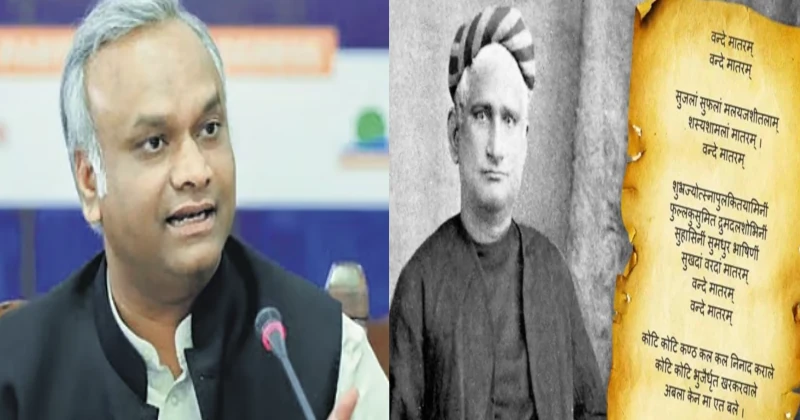
A fresh controversy erupted after Karnataka Minister Priyank Kharge questioned the Rashtriya Swayamsevak Sangh (RSS)’s association with Vande Mataram and implied that its workers played no role in India’s freedom struggle. His remarks triggered a wave of rebuttals from historians, commentators, and individuals aligned with nationalist organisations, who described the statements as historically incomplete and overlooking significant documented contributions of early RSS figures.
To all the WhatsApp University graduates and those raised on Congress-certified “history” — here’s a reality check.
Congress has long behaved as if the freedom struggle was their personal property, erasing or belittling the sacrifices of others who bled for this nation. But the… pic.twitter.com/ek5vwR3JLO
— THESingh (I ❤️Mahadev) (@IamVishnu_Singh) December 9, 2025
Kharge’s sharp criticism centred on the RSS’s daily prayer “Namaste Sada Vatsale Matribhume” and the organisation’s traditions. In response, critics argued that the issue cannot be reduced to symbolism, alleging that Kharge’s comments ignore decades of historical evidence showing the involvement of several prominent RSS figures in anti-colonial activities.
Those defending the RSS presented multiple archival references and testimonies that challenge the narrative that the organisation or its members remained aloof from the freedom movement.
Key points frequently cited include:
1. Dr Keshav Baliram Hedgewar’s early participation
Before founding the RSS in 1925, Dr. Hedgewar was an active Congress member:
- He joined the 1920 Non-Cooperation Movement, mobilising youth in Nagpur.
- He was arrested and jailed for his role, a fact recorded in regional archives.
- In 1930, he participated in the Salt Satyagraha in Vidarbha and again faced imprisonment.
- Supporters argue these events demonstrate his direct participation in Congress-led agitations before the RSS existed as an organisation.
2. Instructions During the 1930 Independence Day Observance
On 26 January 1930, the day the Congress declared Poorna Swaraj:
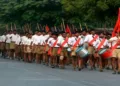
- Hedgewar reportedly instructed RSS shakhas to assemble, salute the saffron flag, and educate swayamsevaks about independence.
- Multiple swayamsevaks were arrested during related civil disobedience activities.
- Historians note that while the RSS as an organisation did not officially join the Congress movement,
- Hedgewar encouraged individual participation, which many undertook.
3. Shelter to Revolutionaries
Supporters cite specific instances where RSS-linked individuals provided refuge to prominent revolutionaries:
- Rajguru, associate of Bhagat Singh, is said to have been sheltered in Nagpur by swayamsevaks an account supported by Rajguru’s family.
- Leaders like Aruna Asaf Ali were reportedly helped by civic figures sympathetic to the RSS such as Lala Hans Raj Gupta.
- Revolutionary leader Nana Patil was protected by Pandit Damodar Satvalekar, known for close nationalist affiliations.
These points are used to counter the narrative that RSS members “never shed blood” or “never risked their lives.”
4. Golwalkar’s Directives During Quit India Movement (1942)
Though the RSS did not officially join the Quit India call:
- M.S. Golwalkar is documented as urging swayamsevaks to remain ready to sacrifice their lives for the country during the volatile period.
- Many regional units operated underground, often assisting local revolutionaries in avoiding arrest.




Comments