





NEW DELHI: Amid the ongoing discussion on Vande Mataram in Parliament, several Congress leaders alleged that the Rashtriya Swayamsevak Sangh (RSS) and its Swayamsevaks never honoured the national song. This claim is not only misleading but historically false. Congress is once again attempting to spread misinformation to malign RSS.
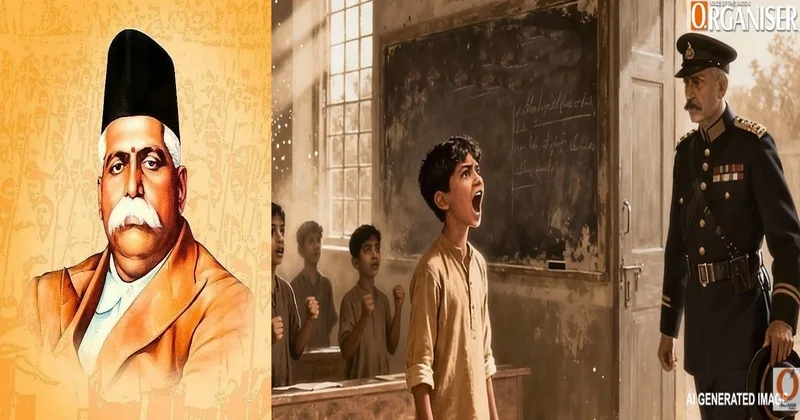
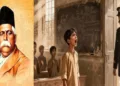
Notably, in 1907, the chanting of Vande Mataram at public places was banned under the Risley Circular. At that time, Keshav Baliram Hedgewar, then a school student and later the founder and first Sarsanghchalak of the RSS (in 1925), defiantly stood up to the colonial diktat.
When a government inspector visited Neel City School, young Hedgewar boldly chanted Vande Mataram in the classroom. The school administration immediately expelled him. This incident reflects not only his early defiance of British rule but also his unwavering patriotic spirit.
This was not an isolated moment. Earlier, in 1897, during the celebration of Queen Victoria’s Diamond Jubilee, sweets were distributed to students. An eight-year-old Keshav Hedgewar refused to accept them, throwing them straight into the garbage, a symbolic rejection of colonial authority.
These episodes were early manifestations of a nationalism that would later inspire millions. After his schooling, Dr Hedgewar went on to pursue medical studies. Although Mumbai was the natural choice due to its superior facilities, he deliberately chose Calcutta, then the epicentre of revolutionary activity. There, he joined Anushilan Samiti, the foremost revolutionary organisation, and worked closely with several freedom fighters.
All these acts by RSS Founding Sarsanghchalak completely shatters the misinformation spread by Congress that “no RSS man participated in the freedom struggle.” In fact, historical evidence proves the opposite.
During the Quit India Movement in August 1942, when Mahatma Gandhi gave the call to “Quit India” at Gowalia Tank in Mumbai, British forces immediately arrested senior leaders. Yet the movement gained momentum across the country, including the Vidarbha region. Agitations erupted in Baoli (Amravati), Ashti (Wardha), and Chimur (Chandrapur). The uprising in Chimur was so intense that even Berlin Radio reported it.
The Chimur movement was jointly led by Uddhavrao Korekar of Congress and Sangh officials Dada Naik, Baburao Begde, and Annaji Siras. An RSS swaymsevak, Balaji Rajapurkar from Chimur was also martyred in British firing.
The agitation was organised jointly by Sri Gurudev Seva Mandal, founded by Shri Tukadoji Maharaj, and RSS Swayamsevaks, who together mobilised satyagrahis and coordinated underground resistance. In the Chimur struggle alone, 125 satyagrahis were prosecuted and countless others were jailed.
Beyond Chimur, numerous RSS Swayamsevaks actively participated in Quit India protests across India:
• Jaidevji Pathak (Rajasthan), later associated with Vidya Bharati
• Dr Annasaheb Deshpande at Arvi (Vidarbha)
• Balasaheb Deshpande in Jashpur (Chhattisgarh), later founded Vanvasi Kalyan Ashram
• Vasantrao Oak, Delhi Prant Pracharak
• Noted lawyer Krishna Vallabhprasad Narayan Singh (Babuaji), who became Sanghchalak of Bihar
• In Delhi, Chandrakant Bhardwaj, who faced a British bullet in his leg and later became a celebrated poet of Sangh songs
• In eastern Uttar Pradesh, Madhavrao Deode, later became Prant Pracharak
• In Ujjain (Madhya Pradesh), Dattatreya Gangadhar (Bhaiyaji) Kasture, Sangh Pracharak
Many RSS Swayamsevaks were also engaged in underground resistance work. Freedom fighter Aruna Asaf Ali was sheltered by Hansraj Gupta in Delhi. In Maharashtra, revolutionary leader Nana Patil of Satara was given refuge by Pandit Satavalekar, Sanghchalak of Aundh.






Comments