





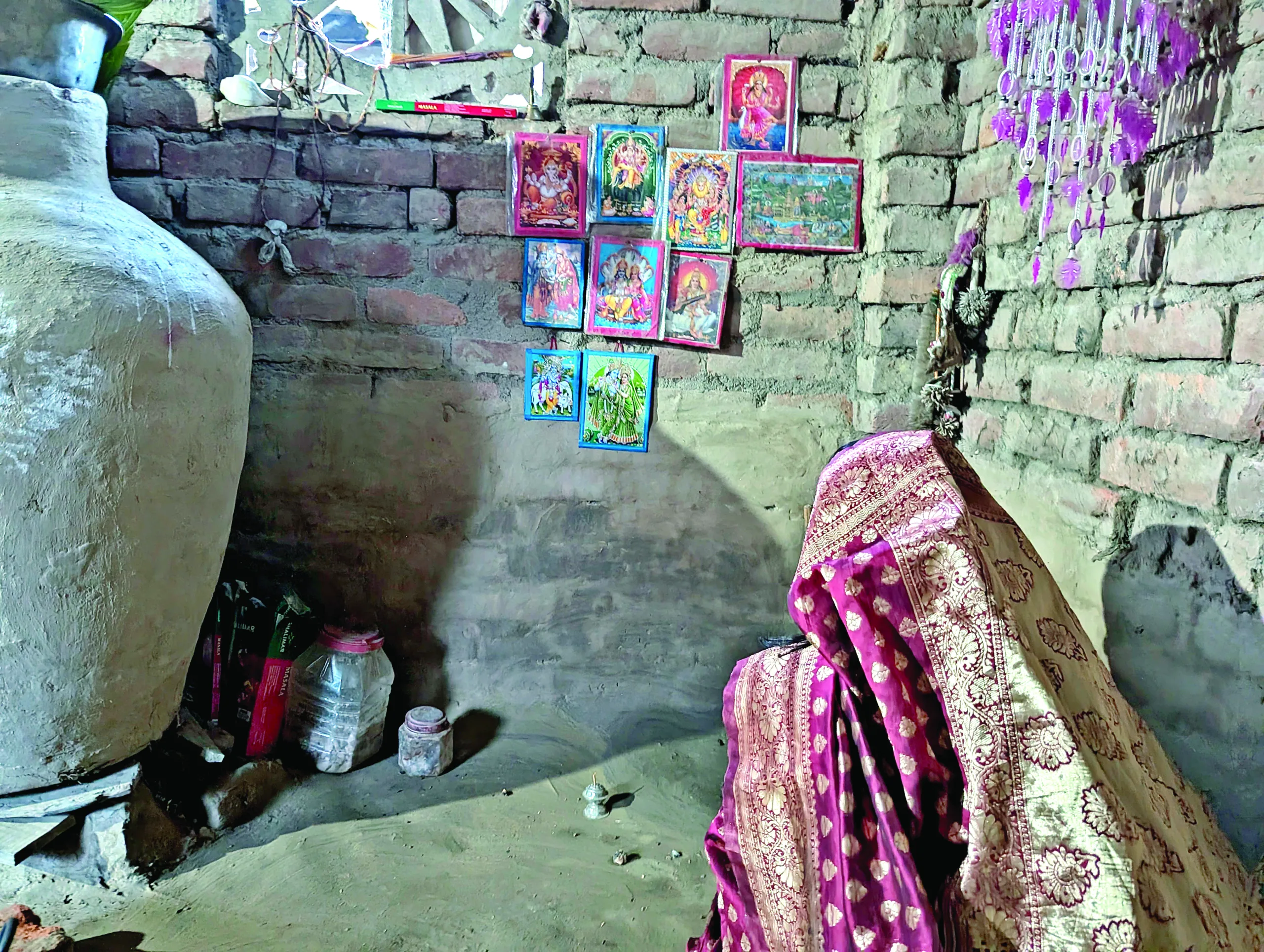
In April 22, this year, in the distant serene location of Kashmir’s Pahalgam, armed Islamist terrorists killed innocent people asking their religions, their names, at point blank range, in front of their wives, women, sisters saying, “Go tell Modi.” The same cases happen almost on a regular basis wherein, Hindus face systematic attacks and are being targeted for merely being Hindus, either by Islamist forces or by the Missionaries.
Sanatanis Facing Persecution
Every year, on December 10, the world celebrates International Human Rights Day, but one question never surfaces: Why do Hindu human rights remain invisible in global discourse? Despite being one of the world’s largest religious communities, Hindus face violence, discrimination, forced conversions, demographic collapse, and ethnic cleansing, yet rarely receive recognition as victims. Their persecution is dismissed as “internal politics.” The silence persists even though the data, testimonies, and patterns of violence are undeniable. The world treats Hindu suffering as inconvenient, politically unfashionable, or unworthy of global urgency. This is the blind spot this story confronts head-on.
Acting as Silent Spectators
Despite facing violence, discrimination, and forced displacement, Hindu communities frequently do not receive international attention or protection accorded to other minorities. Systematic persecution, including targeted attacks and forced migration in countries like Pakistan and Bangladesh is overlooked by many international human rights bodies.
International platforms like the United Nations and major human rights organisations rarely spotlight the persecution of Hindus, which leads to inadequate policy responses and lack of preventive measures. Hindu advocacy groups have called on these institutions to recognise the ideological motives behind such violence and to provide equitable attention to Hindu human rights issues. This recognition is crucial to safeguarding religious freedoms, cultural heritage, and life security for Hindu populations worldwide.
Admit Violence Faced by Hindus
On this International Human Rights Day, it becomes our duty to advocate for the visibility and acknowledgment of Hindu human rights. The need of the hour is to confront challenges on the world stage to ensure justice and dignity for all.
Hindu rights matter because Hindu lives matter. The Hindu civilisation has endured centuries of invasions, massacres, and cultural destruction. In modern times, Hindus in Pakistan, Bangladesh, Afghanistan, and parts of Bharat remain targets of violent extremism. Ignoring the suffering of one of the world’s oldest and most peaceful civilisations undermines the very principle of universal human rights. A human-rights system that excludes a billion people is not a moral system, it is a political one.
International human-rights agencies often claim they lack “comprehensive documentation” of Hindu persecution. The truth is simpler: nobody wants to document it. Hindu suffering doesn’t fit the ideological templates that dominate global rights narratives. Hindus are simplistically viewed through the lens of “majority in India,” which erases the fact that in Pakistan, Bangladesh, Afghanistan, Malaysia, Sri Lanka, Bhutan, Nepal’s Terai region, and parts of the West, Hindus are vulnerable minorities. The result is a persistent erasure: Hindu killings become “communal clashes,” forced conversions become “voluntary decisions,” and ethnic cleansing is reframed as “migration.” This systematic reframing shields perpetrators, many of them Islamist extremist groups and Christian forces leaving Hindu victims without international solidarity.
Why do Hindu human rights not matter enough to be recognised, documented, or defended?
Hindus make up almost one-sixth of the planet’s population, a civilisation that introduced ideas of Ahimsa, Atman, Dharmic ethics, and universal compassion long before the West discovered humanism. Yet in the modern human-rights discourse, Hindus rarely appear as victims, even when they endure forced conversions, mob attacks, temple destruction, targeted killings, political persecution, or ethnic cleansing.
Hindus are one of the world’s most persecuted, yet least acknowledged communities.
From Kashmir to Karachi, from Dhaka to Leicester, from Kerala to Canada, the patterns of violence are unmistakable. And yet, in UN halls, global conferences, and human-rights publications, Hindu suffering either vanishes or is strategically reframed as political noise.
Hindu human rights remain ignored, unrecognised, or underrepresented in India and worldwide due to several interconnected reasons. In India, despite Hindus being the majority, the focus of human rights attention often shifts toward alleged violations against minority groups, leading to a perception that Hindu issues are less urgent or overlooked. This creates gaps in addressing concerns such as violence against Hindus or discriminatory practices that affect them.
Furthermore, Hindu experiences of discrimination or violence are sometimes dismissed as internal social or political matters rather than recognised as human rights violations warranting global intervention. There is also a lack of coordinated global Hindu advocacy at major human rights platforms, resulting in insufficient acknowledgment of their plight in policy-making circles.
Global Hindu advocacy remains fragmented compared to Jewish, Christian, or Muslim networks, leaving Hindus underrepresented in global forums. Western academia often frames Hindu identity through postcolonial theories and caste narratives, portraying Hindus as potential oppressors, not victims. Acknowledging persecution of Hindus by Islamist groups in South Asia requires confronting a geopolitical reality many governments avoid. The result is a deeply political silence: Hindu suffering is not ideologically useful.
Just three weeks back, the November 12, tracker had logged over 88 cases of assault, desecration, intimidation and coercive proselytisation among tribal and economically vulnerable Hindu families. Similarly, the November 6, bulletin was even more severe: 5 Hindus killed, 2 women raped, 27 people abused, along with multiple reports of intimidation, extortion, and grooming-linked violence.
These successive weekly reports show a consistent and alarming pattern: Hindu communities in multiple States are facing organised hostility that ranges from physical violence to social coercion and religious desecration. The sheer frequency and intensity of the attacks recorded in just one month demonstrate why Hindu human rights cannot remain absent from global human-rights discourse, especially when many of these incidents receive little or no coverage in mainstream media. The growing pattern of temple vandalism, hate crimes, and institutional apathy across Western nations reveals a deeper moral failure: Hindu communities are increasingly unsafe, unheard, and unprotected in countries that claim to champion human rights. Whether in Karachi, Leicester, Toronto, or California, Hindus face targeted violence, intimidation, and erasure, yet their suffering rarely enters global conversations. International bodies, media institutions, and academic networks consistently sidestep or downplay these incidents, treating Hindu persecution as politically inconvenient rather than a legitimate human-rights crisis. This silence is not passive; it is structural. When a billion-strong civilisation finds its trauma dismissed, reframed, or ignored, the global human-rights framework reveals its ideological biases and moral contradictions.
What remains at stake is not only the physical safety of Hindus but the credibility of the international human-rights system itself. A world that celebrates Human Rights Day while refusing to acknowledge Hindu human-rights violations betrays its own principles. Until global institutions recognise Hindu persecution with honesty and urgency, Hindus across South Asia and the diaspora will continue to face violence without justice, displacement without acknowledgement, and discrimination without remedy. Hindu rights are human rights and unless the world accepts this truth, the cycle of invisibility and impunity will persist, deepening a global blind spot that endangers millions.








Comments