





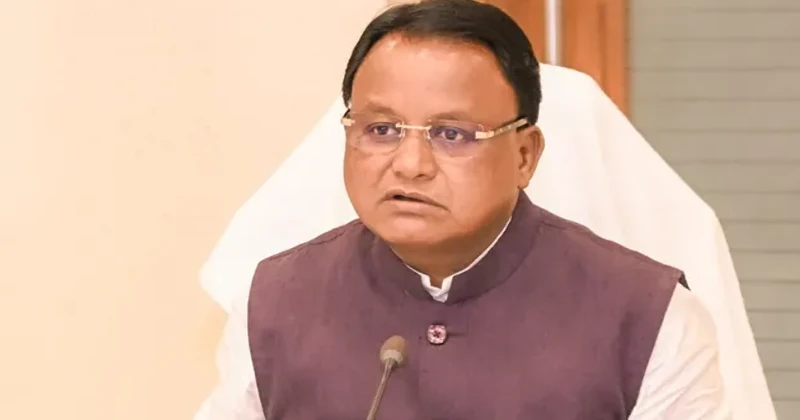
Chief Minister Mohan Charan Majhi informed the Odisha Assembly that 12 Maoists surrendered to the police while 21 were killed in encounters over the past 18 months, reflecting intensified operations in Red Terror affected regions of the state.
Responding to a question from Congress MLA Taraprasad Bahinipati, the Chief Minister said that between June 1, 2024, and November 30, 2025, a total of 12 Maoists laid down arms and opted to return to the mainstream. During the same period, 21 Maoists were neutralised in police encounters across various districts.
A significant majority of these fatalities 17 out of 21 took place along the Odisha–Chhattisgarh border, where joint security operations have been stepped up considerably. Majhi emphasised that the state government is committed to weakening Maoist influence through strengthened policing and sustained developmental initiatives.
As part of its counter-Maoist strategy, the government has recently revised and expanded the incentive-based Surrender and Rehabilitation Scheme, making it more attractive for cadres willing to abandon violence. The revised policy, effective from November 27, 2025, provides higher financial support and enhanced reintegration assistance to surrendered Maoists.
Highlighting the current LWE landscape, the Chief Minister said that Kandhamal district continues to be categorised as an LWE-affected district, while Kalahandi, Koraput, Malkangiri, Nabarangpur, Nuapada and Rayagada have been placed under the Legacy & Thrust (L&T) category. Along with two additional notified areas, a total of nine districts in Odisha are covered under the Security Related Expenditure (SRE) scheme as of the first week of November 2025.
Majhi reiterated the government’s commitment to curbing extremism through a combination of security action, improved welfare measures, and a robust rehabilitation framework aimed at bringing more Maoists back into the social mainstream.
It may be noted that to eradicate Maoism in the state, the Odisha government has launched a revised Maoist surrender and rehabilitation policy just days ago, featuring a provision for maximum financial assistance of up to Rs 1.20 crore, along with enhanced reward money for surrendered firearms.
According to a notification issued by the government, surrendered cadres will be classified into two categories—A and B. High-ranking cadres such as central committee secretaries, central military commission chiefs, politburo members, central committee members, state committee members or those holding equivalent positions, special zonal committee members and regional committee members fall under Category A.
Active surrendered Maoists carrying a reward of Rs 5 lakh or more will receive an additional lump-sum incentive of Rs 10 lakh. This amount will be deposited as a fixed deposit in any bank by the district SP in the name of the surrendered Maoist. The interest earned during the three-year lock-in period will be paid periodically to the individual.
After three years, the full amount will be released in a lump sum, subject to satisfactory behaviour and conduct, as determined by the Surrender and Rehabilitation Committee based on recommendations from the district SP.
The revised policy also includes conditional provisions such as a house under the Antyodaya Gruha Yojana (AG), a one-time marriage incentive of ₹25,000, and free enrollment in short-term skill development programmes offered by the Centre and the state government. These benefits aim to support the socio-economic reintegration of surrendered cadres and discourage a return to extremist activities.








Comments