





Prime Minister Narendra Modi made his remark during India’s successful counter-strike, Operation Sindoor, against terror camps in Pakistan and Pakistan-occupied Kashmir, launched in retaliation for the Pahalgam terror attack. Declaring that “water and blood do not flow together,” Modi underscored India’s decision to suspend the supply of river water to Pakistan in response to the attack.
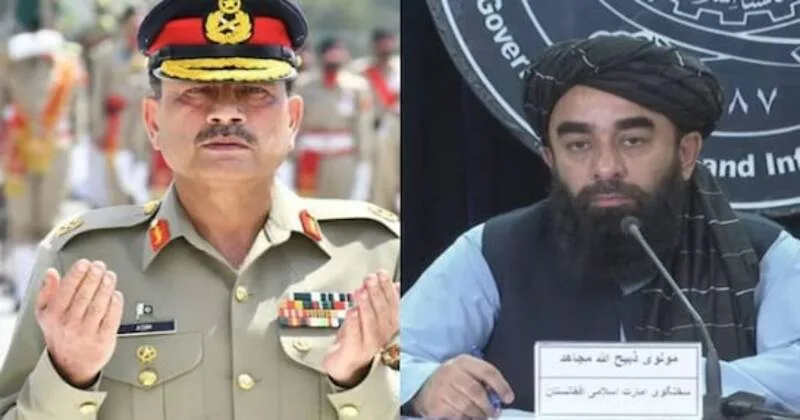
Interestingly, a similar expression was recently used by Pakistan’s military spokesperson. The Director General of Inter-Services Public Relations (DG ISPR), Ahmed Sharif Chaudhry, while speaking about Afghanistan, stated that “blood and trade do not go together.” However, that rhetoric is now rebounding against Pakistan itself. Pakistan’s attempt to pressure Afghanistan and the Taliban by shutting border crossings for several days has failed. Afghanistan, a landlocked country long dependent on Pakistan for trade and transit, has seen its access blocked as Pakistan kept border routes closed for more than 45 days amid rising tensions. In response, the Taliban announced that it would no longer trade with Pakistan and began exploring alternative routes through Iran, India, Turkmenistan, Kyrgyzstan, Tajikistan, and Uzbekistan.
The situation worsened for Pakistan when Afghanistan also declined to reopen its border. Previously, Pakistani goods destined for Central Asian republics such as Turkmenistan, Kyrgyzstan, Tajikistan, and Uzbekistan transited through Afghan territory. With those routes now effectively closed, Pakistan’s trade with these countries has nearly come to a standstill. The breakdown in trade ties with Afghanistan and the consequent disruption of commerce with Central Asia have triggered anger among Pakistani traders. Protests have erupted in Khyber-Pakhtunkhwa, with demonstrators demanding that the border be reopened immediately. Business organisations have warned that Pakistan has suffered losses running into trillions of rupees due to the prolonged border closure.
Economic analysts within Pakistan have also cautioned that escalating tensions with Afghanistan are causing severe internal damage. Social media platforms are flooded with images and videos showing agricultural produce piling up in warehouses, markets, and shopping precincts, reflecting collapsing export channels and falling domestic demand. Afghanistan, despite being one of the poorest countries in the world with a per capita GDP lower than that of several African nations, has seen its fragile economy further weakened by the standoff with Pakistan. Nevertheless, the Taliban regime is attempting to recover by diversifying its economic partnerships and strengthening links with other regional players, including India.
Meanwhile, Pakistan’s Foreign Minister Ishaq Dar has stated that the United Nations has urged Pakistan to reopen the border. He said the matter would be discussed with Prime Minister Shehbaz Sharif and Army Chief Asim Munir. However, political observers note that even if the prime minister favours reopening trade routes, the final decision will rest with the army chief. India, it is worth noting, had already suspended all bilateral trade with Pakistan in 2019.







Comments